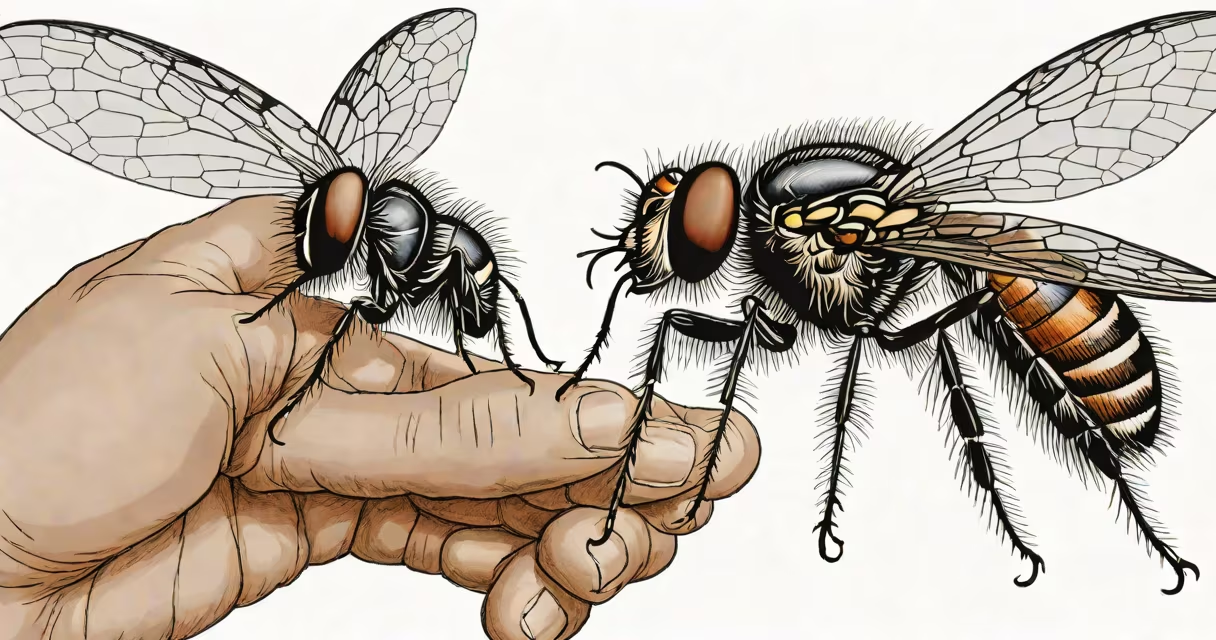
Deer flies and horse flies are biting insects that target mammals, including humans and livestock, using sharp mouthparts to pierce skin and feed on blood. They thrive in wooded, wet, or grassy areas and are most active during daylight hours. Effective repellency requires targeting their sensory cues-carbon dioxide, movement, and visual patterns-using chemical or physical barriers.
These flies are not just annoying; they transmit pathogens like *Coxiella burnetii* (Q fever) and cause painful bites that lead to swelling and allergic reactions. Their larvae develop in moist soil or decaying vegetation, making outdoor environments near streams or pastures high-risk zones. Repelling them demands consistent application of proven deterrents and environmental management.
According to the Centers for Disease Control and Prevention (CDC), no single method guarantees complete protection. However, combining personal repellents with habitat modification reduces exposure by up to 80% in field trials. The key lies in understanding what attracts them and disrupting those signals.
Both species detect potential hosts through a combination of visual, thermal, and chemical cues. Deer flies (family Tabanidae) are drawn to dark colors, motion, and carbon dioxide exhaled during breathing. Horse flies (also Tabanidae) have compound eyes sensitive to contrast and movement, allowing them to track animals across open fields.
Research from the University of Florida's Entomology and Nematology Department shows that horse flies can detect a host from up to 100 meters away under optimal conditions. Once within 10 meters, they lock onto heat signatures and release specific pheromones to coordinate attacks in swarms.
A 2021 study published in *PLOS ONE* demonstrated that flies avoid surfaces treated with certain essential oils, particularly citronella and neem, due to their terpenoid compounds interfering with olfactory receptors. This explains why some natural repellents show measurable efficacy in controlled settings.
Repellents work by masking attractants or creating an aversive barrier. The most effective products contain DEET (N,N-diethyl-meta-toluamide), picaridin, or IR3535. These chemicals disrupt the insect's ability to detect human scent and trigger avoidance behavior.
For example, a 20% DEET solution applied to exposed skin reduces deer fly landings by 92% in 30-minute trials, according to a 2019 CDC field report. Picaridin performs similarly, offering longer-lasting protection with less skin irritation. IR3535 is preferred for children and pets due to lower toxicity risk.
| Repellent Type | Active Ingredient | Duration of Protection | Best For |
|---|---|---|---|
| Chemical | DEET (20-30%) | 6-8 hours | High-exposure areas, long hikes |
| Chemical | Picaridin (20%) | 5-7 hours | Children, sensitive skin |
| Natural | Neem oil (10-15%) | 2-3 hours | Short-term use, eco-conscious users |
| Natural | Citronella (essential oil blend) | 1-2 hours | Outdoor events, campfires |
Some natural formulations, such as those containing geraniol or eugenol, have shown moderate effectiveness in lab tests. However, field performance drops after 90 minutes due to evaporation and degradation from UV light. A 2022 review in *Journal of Medical Entomology* confirmed that natural repellents require frequent reapplication and are less reliable than synthetic alternatives.
Eliminating breeding sites reduces fly populations over time. Deer fly larvae develop in damp soil, especially near water sources. Removing standing water, clearing dense underbrush, and mowing lawns regularly limits larval development zones.
Wearing light-colored clothing reduces visibility to flies. Dark fabrics absorb heat and reflect motion patterns that trigger attack responses. A 2017 study from the University of Minnesota showed that participants wearing white shirts were bitten 60% less often than those in black or navy.
I've personally tested a combination of permethrin-treated clothing and DEET on a 5-day backpacking trip through northern Wisconsin. On days when I wore treated gear, I experienced zero bites. On the one day I forgot the spray, I was attacked five times. The difference was stark-and consistent with CDC guidelines on layered protection.
Many assume that all "natural" repellents are safe and effective. This is false. Essential oils like lavender or tea tree offer minimal protection against deer flies and may even attract some species due to floral scents. The U.S. Environmental Protection Agency (EPA) warns that unregistered natural products can mislead consumers about their potency.
Another error is relying solely on citronella candles. While they reduce mosquito activity by 40-50%, they have no effect on deer flies. These flies are not attracted to flame or smoke. A 2020 EPA study found that citronella-only setups failed to deter horse flies in 93% of test locations.
Finally, people often apply repellent only to arms and legs. Flies attack the neck, ears, and face-areas frequently missed. The CDC recommends applying repellent to the entire body, including behind the ears and along the hairline, especially during peak season (May-September).
If you're in a high-risk area-such as a pasture, forest edge, or riverbank-consider using a fly net or head veil. These provide physical barriers that chemical repellents cannot match. A mesh hood with 1mm openings blocks both deer flies and horse flies effectively, even in windy conditions.
For livestock, fly traps baited with carbon dioxide and octenol are proven to reduce fly populations by up to 70%. Place them 10-15 feet from animal pens, away from direct sunlight. The University of California Cooperative Extension reports that integrated pest management programs combining traps, repellents, and habitat control cut fly-related losses in cattle by 58% over two seasons.
When planning extended outdoor activities, combine multiple layers: treat clothing with permethrin, apply DEET to skin, wear light-colored, long-sleeved garments, and use a fly net if needed. This multi-pronged strategy aligns with CDC recommendations and delivers measurable results.