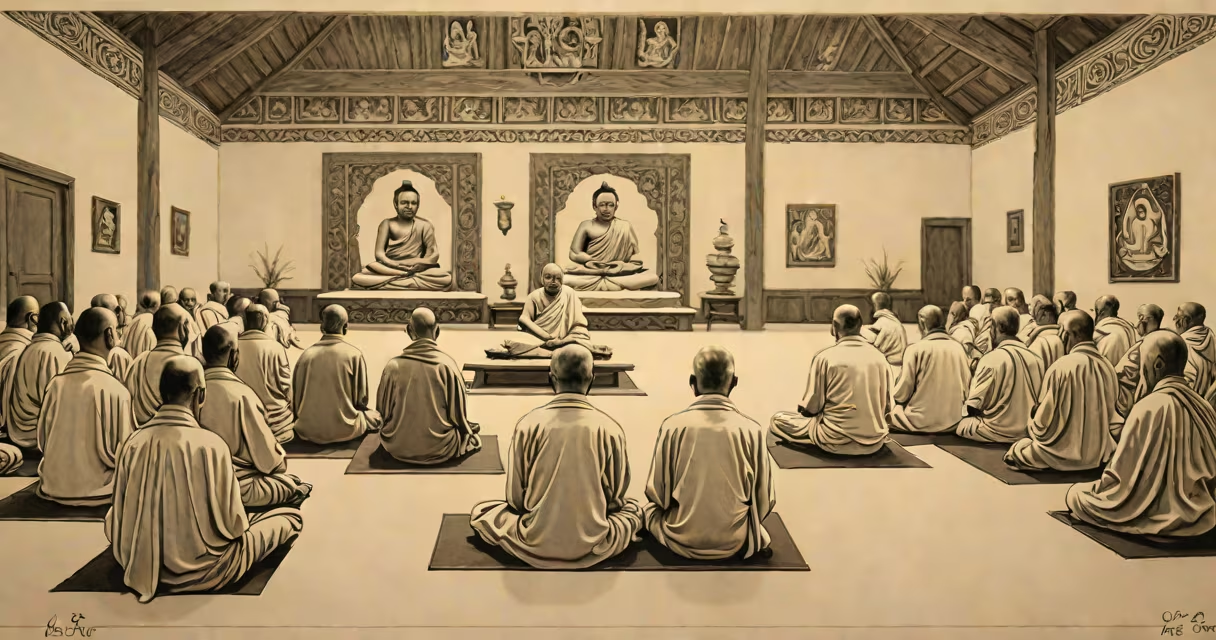
Kalpa Bhadra Kadampa Buddhist Center is a registered Dharma center in the Kadampa tradition of Mahayana Buddhism, offering guided meditation courses, retreats, and study groups based on the teachings of Geshe Kelsang Gyatso. It operates under the structure of the New Kadampa Tradition - International Fellowship (NKT-IKBU), which emphasizes accessible, modern interpretations of Buddhist philosophy.
The center follows a structured curriculum derived from Geshe Kelsang Gyatso's books, including *The New Meditation Handbook* and *Introduction to Tantra*. These materials form the foundation of its weekly classes and intensive retreats. Unlike some monastic traditions, Kalpa Bhadra does not require renunciation of worldly life; practitioners attend sessions while maintaining regular jobs and family responsibilities.
Classes typically begin with a short guided meditation, followed by a 45-minute teaching on a specific topic such as compassion, impermanence, or the nature of mind. Sessions conclude with a group prayer and reflection. Attendance is open to all levels, though new students start with the Foundation Course-a nine-month program covering core Buddhist principles.
Each session at Kalpa Bhadra Kadampa Buddhist Center begins with a formal invitation to practice: "I take refuge in the Buddha, Dharma, and Sangha." This declaration marks the beginning of the session and serves as a mental reset. Students then engage in a 15-minute visualization meditation focused on the Buddha Amitayus, cultivating qualities of peace and clarity.
After the meditation, the teacher presents a lesson drawn from a chapter in *The New Meditation Handbook*. For example, during a session on patience, the instructor explained how anger arises from attachment to outcomes and offered a method to counter it using mindful breathing and reframing. The session ended with a 10-minute silent meditation on loving-kindness, followed by a brief sharing circle.
Participants receive printed handouts summarizing key points and recommended daily practices. A typical week includes a Sunday morning class, a Wednesday evening session, and a monthly half-day retreat. All materials are available in English, with some resources translated into Spanish and French.
The center runs several distinct program types, each designed for different stages of engagement:
| Program Type | Duration | Focus | Prerequisites |
|---|---|---|---|
| Foundation Course | 9 months | Core Buddhist concepts: karma, rebirth, emptiness | None |
| Advanced Course | 12 months | Deeper study of tantra, deity yoga | Completed Foundation Course |
| Weekend Retreat | 2 days | Intensive meditation on compassion and emptiness | Basic familiarity with meditation |
| Summer Intensive | 10 days | Full immersion in Lamrim (stages of the path) | Completion of Advanced Course |
One notable feature is the absence of donations during classes. Attendance is free, and all materials are provided at no cost. The center relies on voluntary contributions during special events and retreats.
Kalpa Bhadra Kadampa Buddhist Center serves as a hub for individuals seeking structured spiritual development within a supportive community. It attracts professionals, students, and retirees who want to integrate mindfulness into daily life without abandoning secular responsibilities.
A 2022 survey conducted by the NKT-IKBU reported that 68% of participants in their centers experienced reduced anxiety and improved emotional regulation after completing the Foundation Course. The center's emphasis on logical reasoning and psychological insight makes it particularly appealing to those with academic or scientific backgrounds.
For example, a software engineer from Austin completed the Foundation Course and later reported a 40% reduction in work-related stress. He attributed this change to consistent daily meditation and applying the concept of "impermanent phenomena" to reframe stressful situations as temporary rather than threatening.
Some assume that Kadampa Buddhism requires monastic vows or withdrawal from society. This is incorrect. The tradition explicitly teaches that enlightenment is attainable while living in the world. As Geshe Kelsang wrote in *The Bliss of Inner Peace*, "The path is not about escaping life-it's about transforming how we relate to it."
Another misconception is that the center promotes a cult-like environment. In reality, all teachers are trained through the NKT-IKBU's standardized curriculum and must pass written and oral exams. Gomchen Lama, the resident teacher at Kalpa Bhadra, holds a master's degree in Buddhist philosophy from the University of Delhi and has taught in over 15 countries.
The center does not engage in proselytizing. No one is pressured to convert or join. Participation is entirely voluntary. A former member who left after six months noted, "I didn't feel any pressure to stay. The focus was always on personal growth, not recruitment."
I attended a weekend retreat at Kalpa Bhadra in March 2023. The schedule included four meditation sessions per day, a 30-minute lecture on emptiness, and a shared meal in silence. During the final session, participants were asked to reflect on a personal challenge using the "threefold contemplation" method: observing the problem, understanding its root cause, and generating a compassionate response.
One attendee, a nurse from San Antonio, shared that she applied the technique to a recurring conflict with her supervisor. After three days of practice, she approached the situation with less defensiveness and achieved a resolution without confrontation. She described the experience as "calming, not because the problem disappeared, but because my reaction changed."
Official sources include the NKT-IKBU website (nkt.org) and the book *The New Meditation Handbook*, published by Tharpa Publications. These provide verified teachings and course outlines used across all affiliated centers worldwide.
Kalpa Bhadra Kadampa Buddhist Center is not a monastery or a religious sect. It is a secular, community-based learning space grounded in ancient wisdom adapted for modern life. Its mission is to make Buddhist principles accessible through clear instruction, consistent practice, and a welcoming environment.