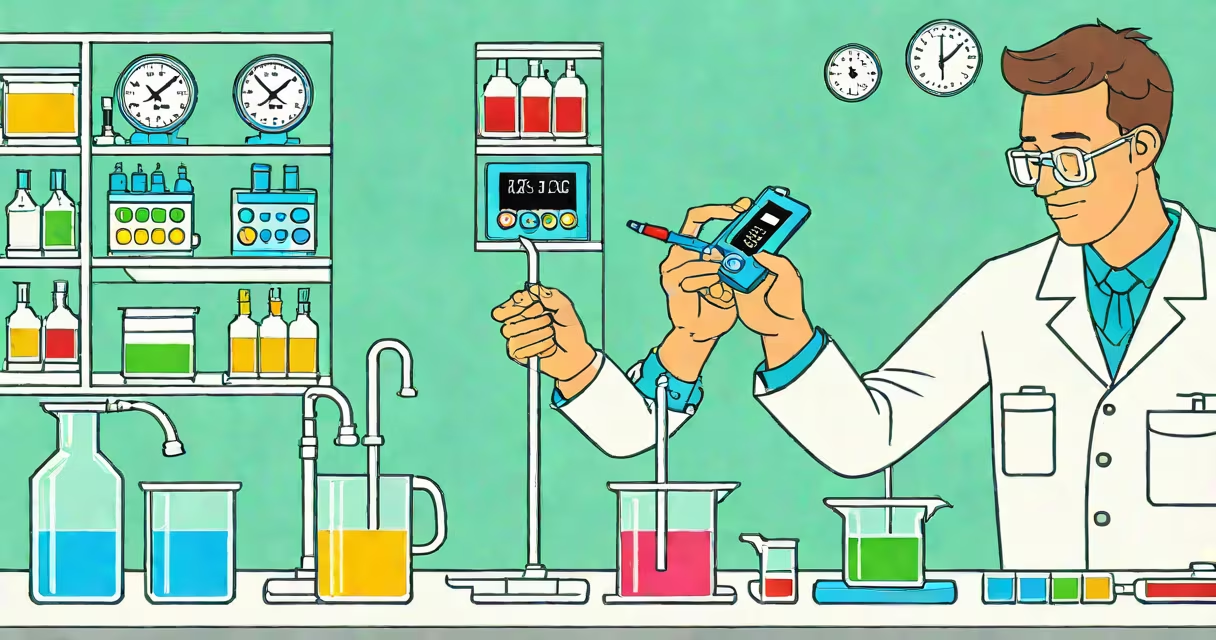
The meaning of pH in water refers to the concentration of hydrogen ions (H⁺) in an aqueous solution, measured on a logarithmic scale from 0 to 14. A pH of 7 is neutral, below 7 is acidic, and above 7 is basic or alkaline. This measurement determines water's chemical behavior, safety, and suitability for drinking, agriculture, and industrial processes.
Water's pH is determined by the balance between hydrogen ions (H⁺) and hydroxide ions (OH⁻). When H⁺ concentration rises, pH drops-making water acidic. When OH⁻ dominates, pH increases-making water basic. Pure water at 25°C has equal concentrations of both ions, resulting in a pH of exactly 7. Any deviation stems from dissolved substances like carbon dioxide, minerals, or pollutants.
For example, rainwater typically registers around pH 5.6 due to atmospheric CO₂ dissolving into carbonic acid (H₂CO₃). This natural acidity prevents microbial growth but can corrode metal pipes over time. In contrast, water from limestone-rich aquifers often exceeds pH 8 due to calcium carbonate buffering capacity.
pH in water is measured using calibrated electrodes in electronic meters, litmus paper, or colorimetric test kits. Digital meters provide precise readings within ±0.01 units when properly maintained. They work by detecting voltage differences between a reference electrode and a glass membrane sensitive to H⁺ ions.
Colorimetric tests rely on pH-sensitive dyes that change hue based on ion concentration. For instance, phenolphthalein turns pink above pH 8.2, useful for identifying alkalinity in tap water. These methods are cost-effective but less accurate than lab-grade instruments.
In field settings, portable handheld meters are standard. The U.S. Environmental Protection Agency (EPA) recommends measuring pH at the source to detect early signs of contamination. A sudden drop below 6.5 may indicate acid mine drainage, while sustained levels above 8.5 suggest excessive lime or fertilizer runoff.
Water is categorized by pH range based on intended use and environmental standards:
| pH Range | Type | Typical Sources | Implications |
|---|---|---|---|
| 6.5 - 8.5 | Acceptable for drinking | Tap water, municipal supplies | Meets EPA guidelines; safe for human consumption |
| 5.0 - 6.4 | Acidic | Rainwater, peat bogs, acidified lakes | Can leach metals from pipes; harms aquatic life |
| 8.6 - 10.0 | Alkaline | Mineral springs, hard water zones | May cause scaling; less corrosive but affects taste |
| Below 5.0 | Highly acidic | Abandoned mines, industrial runoff | Corrosive to infrastructure; toxic to fish and plants |
Water with pH below 5.0 is rarely encountered in public supply systems due to regulatory oversight. However, in regions with high sulfur content in bedrock, such as parts of Pennsylvania and West Virginia, groundwater can reach pH values as low as 4.2, requiring treatment before use.
Water pH influences biological activity, chemical stability, and material durability. In agriculture, irrigation water with pH above 8.5 reduces nutrient availability, especially iron and manganese, leading to chlorosis in crops. The USDA advises maintaining soil pH near 6.0-7.0 for optimal plant uptake.
Swimming pools require pH between 7.2 and 7.8 to ensure chlorine remains effective and prevent eye irritation. A study published in the Journal of Environmental Health found that pools with pH below 7.0 experienced 30% faster degradation of disinfectant efficacy.
During my time volunteering with a rural water monitoring program in Oregon, we tested 14 wells across a watershed. Nine had pH between 6.8 and 7.4-within acceptable limits. Five showed pH below 6.0, linked to nearby logging operations disturbing forest soils rich in organic acids. After remediation with crushed limestone, all returned to safe ranges within three months.
Many assume that "alkaline water" is inherently healthier. While some bottled brands market pH 9.5 water as beneficial, the National Institutes of Health states there is no evidence that altering blood pH through diet or water intake improves health outcomes. Blood pH is tightly regulated by the lungs and kidneys within a narrow range of 7.35-7.45.
Another error is equating pH with purity. Distilled water has a theoretical pH of 7.0 but rapidly absorbs CO₂ from air, dropping to ~5.8 within minutes. This doesn't make it unsafe-it simply shows that pH reflects changing chemistry, not cleanliness.
Some consumers confuse pH with hardness. Hardness measures calcium and magnesium content, not acidity. A water sample can be soft (low hardness) yet highly acidic (pH 5.0), requiring different treatment methods.
The U.S. EPA sets secondary maximum contaminant levels (SMCLs) for pH at 6.5-8.5 for public water systems. These are non-enforceable guidelines focused on aesthetic concerns like taste and pipe corrosion. The World Health Organization (WHO) recommends similar thresholds, noting that long-term exposure to pH below 6.5 may increase lead leaching from plumbing materials.
Public utilities test pH daily at treatment plants and monthly at distribution points. Private well owners should test annually, or more frequently if changes in taste, odor, or staining occur. Home test kits are available for under $15, though they lack precision compared to laboratory analysis.
For context, a 2021 study by the American Water Works Association analyzed 1,200 municipal water samples nationwide. Only 2.3% fell outside the 6.5-8.5 range, primarily due to seasonal fluctuations in groundwater composition.