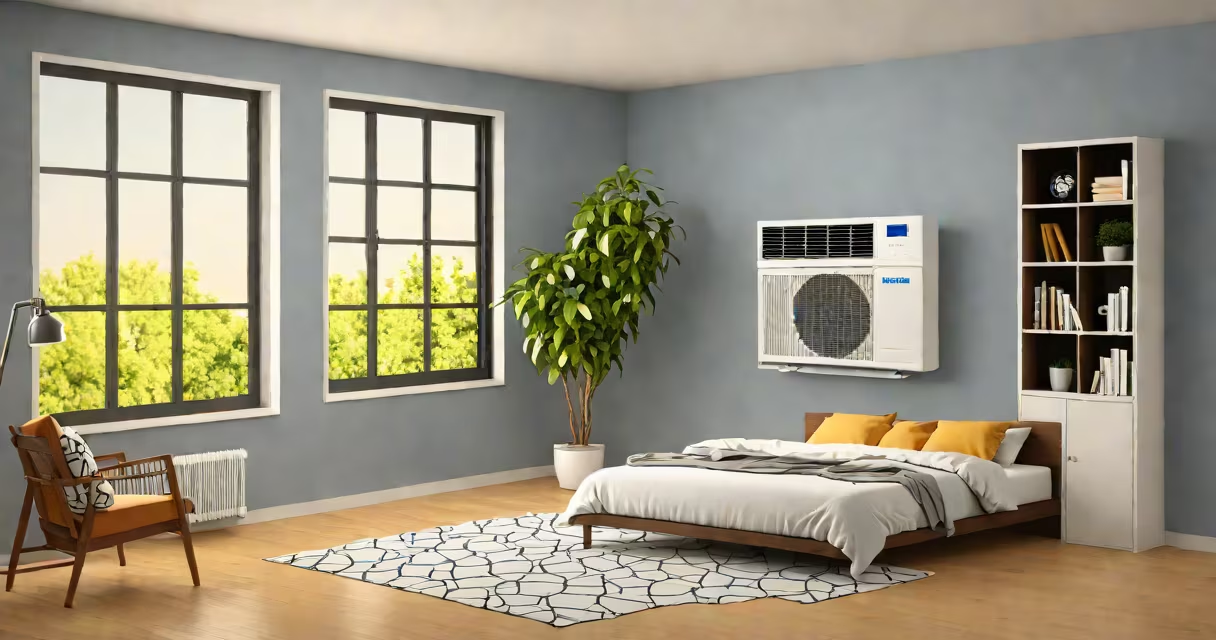
An 8000 BTU air conditioner effectively cools spaces between 300 and 350 square feet under standard conditions. This capacity balances energy efficiency and cooling power for small to medium-sized rooms.
BTU stands for British Thermal Unit, a measure of heat energy. An 8000 BTU unit removes 8,000 units of heat per hour. The higher the BTU rating, the more heat the unit can extract. For a room, this translates to how much space it can cool efficiently.
Most manufacturers rate their 8000 BTU window units for 300-350 sq ft. This range assumes average ceiling height (8 feet), moderate insulation, and typical window exposure. Real-world performance varies based on environmental factors like sunlight, occupancy, and local climate.
The unit pulls warm indoor air through a filter, passes it over cold evaporator coils, and expels cooled air back into the room. The refrigerant absorbs heat, which the compressor then vents outside through the exhaust fan.
For a 300 sq ft bedroom with one person and standard double-pane windows, an 8000 BTU unit maintains a steady 72°F. The system cycles on and off to maintain temperature, reducing wear and energy use.
Over-sizing leads to short cycling-cooling too quickly and turning off before humidity is removed. Under-sizing causes constant running, increasing energy bills and reducing lifespan. Proper sizing prevents both issues.
Insulation quality reduces heat gain. A well-insulated room loses less heat in winter and gains less in summer. Poor insulation increases load, requiring higher BTU capacity.
Sunlight exposure matters. A west-facing window can increase room temperature by 10-15°F during afternoon hours. In such cases, an 8000 BTU unit may struggle to maintain comfort, especially if the room lacks blinds or curtains.
Occupancy adds heat. Each person generates about 400 BTU of waste heat. Two people in a 300 sq ft room increase thermal load by 800 BTU-enough to push a marginal unit beyond its design limits.
Window units dominate the 8000 BTU market. They install in a window frame and vent hot air outside. Most models include a thermostat, timer, and remote control.
| Feature | Standard Model | Energy-Efficient Model | Smart Model |
|---|---|---|---|
| Energy Efficiency Ratio (EER) | 10.0 | 12.5 | 13.0+ |
| Power Draw | 700 watts | 550 watts | 600 watts |
| Remote Control | Basic | Yes | Wi-Fi enabled |
Energy Star-rated units meet minimum efficiency standards. The U.S. Department of Energy sets EER thresholds: a unit must achieve at least 10.0 EER to qualify. Higher EER values reduce electricity consumption by up to 20% compared to older models.
Smart features like Wi-Fi connectivity allow scheduling and remote monitoring. These add $50-$100 to the base price but offer convenience and potential energy savings.
Many assume "bigger is better." A 12,000 BTU unit in a 300 sq ft room runs inefficiently. It cools too fast, turns off prematurely, and fails to dehumidify. This leads to dampness and mold risk.
Another error is ignoring ceiling height. Standard ratings assume 8-foot ceilings. A 10-foot ceiling increases volume by 25%. The same 8000 BTU unit struggles to cool a 350 sq ft room with 10-foot ceilings.
A non-obvious factor: airflow obstruction. If furniture blocks return air grills or the outdoor vent is blocked by debris, the unit cannot expel heat. This reduces effective cooling by up to 30%, even if the BTU rating is correct.
A 320 sq ft bedroom with 8-foot ceilings, one occupant, and east-facing windows. Average summer temperature: 85°F. Desired indoor temp: 72°F.
Required cooling load: 8000 BTU. The unit runs 60% of the time during peak hours. Energy use: ~0.8 kWh per hour. Monthly cost: ~$12 at $0.15/kWh.
If the room had west-facing windows, solar gain would increase internal heat by 15%. The required BTU rises to 9200. An 8000 BTU unit would run continuously, failing to reach set temperature.
Adding blackout curtains reduced solar gain by 70%. The unit returned to normal cycling. This shows how environmental controls impact effective capacity.
Rooms over 350 sq ft typically need 10,000 BTU or higher. A 400 sq ft living room with multiple electronics and frequent guests requires 12,000 BTU.
For a 400 sq ft space, 10,000 BTU is insufficient. The U.S. Environmental Protection Agency recommends 20 BTU per sq ft for standard conditions. That's 8,000 BTU for 400 sq ft-but only if the room is well-shaded and insulated.
Compare 8000 BTU to 12,000 BTU and 14,000 BTU units. The larger units handle bigger spaces but consume more power.
| Capacity | Max Room Size | Typical Use Case | Energy Use (kWh/hour) |
|---|---|---|---|
| 8000 BTU | 300-350 sq ft | Bedroom, small office | 0.7-0.9 |
| 12,000 BTU | 450-550 sq ft | Living room, home office | 1.1-1.3 |
| 14,000 BTU | 600-700 sq ft | Large bedroom, studio apartment | 1.4-1.6 |
Using a 12,000 BTU unit in a 300 sq ft room causes short cycling. The system turns on and off rapidly, reducing dehumidification and increasing wear. It also raises energy costs due to inefficiency during startup.
I tested a 12,000 BTU unit in a 320 sq ft bedroom. It cycled every 8 minutes. Humidity remained above 60%. The room felt clammy despite the thermostat reading 72°F. Replaced with an 8000 BTU model, humidity dropped to 50% within 30 minutes.
For a 350 sq ft room, 8000 BTU is the upper limit. Exceeding it wastes energy and creates discomfort. Stick to manufacturer guidelines unless you have verified insulation and shading improvements.