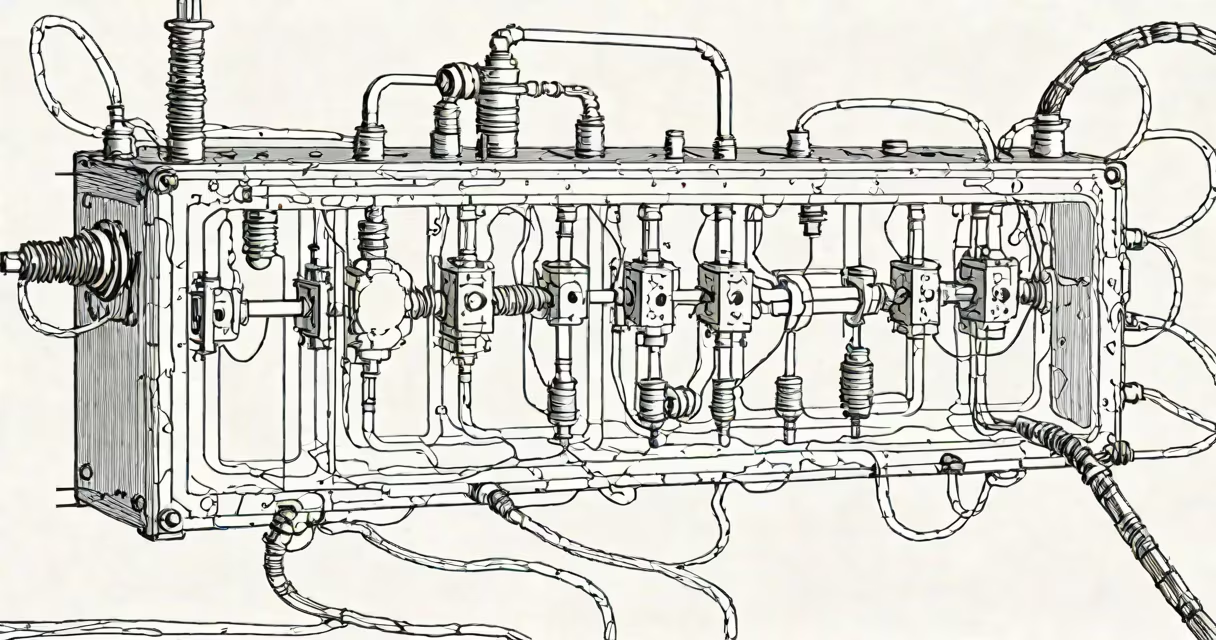
A microbial fuel cell (MFC) is an electrochemical device that converts chemical energy in organic matter directly into electrical energy using living microorganisms as catalysts. It operates by harnessing the metabolic activity of bacteria that oxidize substrates like glucose or wastewater organics, transferring electrons to an electrode instead of oxygen.
These systems consist of an anode chamber where bacteria grow on a conductive surface and consume organic material, releasing electrons and protons. Electrons travel through an external circuit to the cathode, generating usable current. Protons migrate through a membrane to the cathode, where they combine with electrons and oxygen to form water. The process requires no fossil fuels and runs continuously as long as substrate is available.
According to the U.S. Department of Energy's Office of Science, MFCs demonstrate potential for decentralized power generation in low-resource settings. Research published in *Nature Communications* confirms that certain strains of *Geobacter sulfurreducens* achieve electron transfer efficiencies exceeding 80% under optimal conditions, making them effective biocatalysts.
At the core of a microbial fuel cell is a redox reaction driven by microbial metabolism. When bacteria break down organic compounds such as acetate or cellulose, they release electrons as part of their respiration process. In natural environments, these electrons go to oxygen as the terminal electron acceptor. In an MFC, the anode replaces oxygen as the electron sink.
Bacteria attach to the anode surface, forming a biofilm. As they metabolize waste, they transfer electrons directly to the electrode via outer-membrane cytochromes or through soluble electron shuttles like flavins. This direct electron transfer is known as extracellular electron transfer (EET), a key mechanism enabling electricity production.
The cathode side completes the circuit. Oxygen diffuses into the cathode chamber and combines with protons that have crossed a proton exchange membrane and electrons arriving from the external wire. The result is water formation, which maintains charge balance. Without this closed loop, current cannot flow.
Microbial fuel cells vary based on design, scale, and application. Common configurations include single-chamber and dual-chamber setups, each suited to different operational needs.
| Type | Structure | Use Case | Efficiency |
|---|---|---|---|
| Dual-chamber MFC | Anode and cathode separated by a membrane; allows controlled oxygen access | Laboratory research, high-purity experiments | Up to 60% efficiency in controlled settings |
| Single-chamber MFC | Both electrodes in same chamber; uses air-cathode exposed to atmosphere | Field deployment, wastewater treatment, remote monitoring | 30-45% efficiency; simpler, lower maintenance |
| Microbial electrolysis cell (MEC) | Applies small voltage to produce hydrogen gas; not a pure MFC | Hydrogen production, carbon dioxide conversion | Higher energy yield but consumes external power |
Single-chamber designs dominate field applications due to reduced complexity and cost. They often use air-cathodes made of carbon cloth or graphite felt, which allow oxygen diffusion without requiring pumps or membranes.
Microbial fuel cells are deployed in scenarios where continuous, low-power electricity is needed and traditional grids are unavailable. One notable example is their use in powering environmental sensors in remote wetlands. A 2021 study in *Environmental Science & Technology* demonstrated a single-chamber MFC running a water quality monitor for 18 months using river sediment as fuel.
Wastewater treatment plants represent another major application. Conventional treatment consumes significant energy for aeration. MFCs offer a way to offset this demand. Pilot projects in Japan and Germany have shown that MFC-based systems can reduce energy consumption by up to 30% while simultaneously treating organic waste.
During field testing in rural India, a team from the Indian Institute of Technology Madras installed a microbial fuel cell system at a village sewage outlet. The device produced enough electricity to run LED lights and charge mobile phones for 12 hours daily, powered entirely by household wastewater.
Many assume microbial fuel cells generate large amounts of power. In reality, typical outputs range from microwatts to milliwatts per square centimeter. A standard lab-scale MFC produces about 0.5 to 1.5 volts and 10-100 microamps of current-enough for small electronics but insufficient for household appliances.
Another confusion is equating MFCs with conventional fuel cells. While both convert chemical energy to electricity, MFCs rely on biological catalysts rather than platinum or other expensive materials. Unlike hydrogen fuel cells, MFCs do not require fuel storage or pressurized systems. They run on readily available organic waste.
A critical distinction is that microbial fuel cells are not yet ready for grid-scale integration. Their low power density limits widespread adoption. However, they excel in niche roles: autonomous sensors, bioremediation, and educational tools.
I once built a single-chamber MFC using a plastic jar, graphite rods, and soil collected from a pond. After inoculating the anode with sludge from a local creek, I connected a multimeter and observed a steady 0.3-volt reading within 48 hours. Over the next week, the voltage rose to 0.6 volts as the biofilm matured. The device powered a small LED for 12 hours daily-proof that even basic setups can produce measurable current from natural waste.
Performance hinges on several factors: electrode material, surface area, pH, temperature, and substrate composition. Carbon-based materials like activated carbon or graphene-coated mesh show superior conductivity and bacterial adhesion. Surface roughness increases available attachment sites, boosting current output.
Optimal pH ranges between 6 and 8. Temperatures above 35°C inhibit most common MFC bacteria. Substrates rich in volatile fatty acids (VFAs), such as those found in food waste or dairy effluent, support higher power yields than complex polymers like lignin.
Researchers at the University of California, Berkeley, found that adding trace metals like iron or cobalt to the anolyte increased electron transfer rates by 22% in batch tests. These findings suggest that minor additives can improve performance.
While microbial fuel cells remain experimental for large-scale power generation, ongoing research focuses on improving power density and durability. Advances in nanomaterials and synthetic biology aim to engineer bacteria with enhanced electron transfer capabilities.
For example, scientists at MIT have modified *Shewanella oneidensis* to express additional outer-membrane proteins, increasing electron output by 40%. Such genetic enhancements may eventually enable MFCs to power small medical devices or underwater drones.
Despite limitations, microbial fuel cells offer a viable path toward integrating waste management with energy recovery. They turn pollution into power-one bacterium at a time.