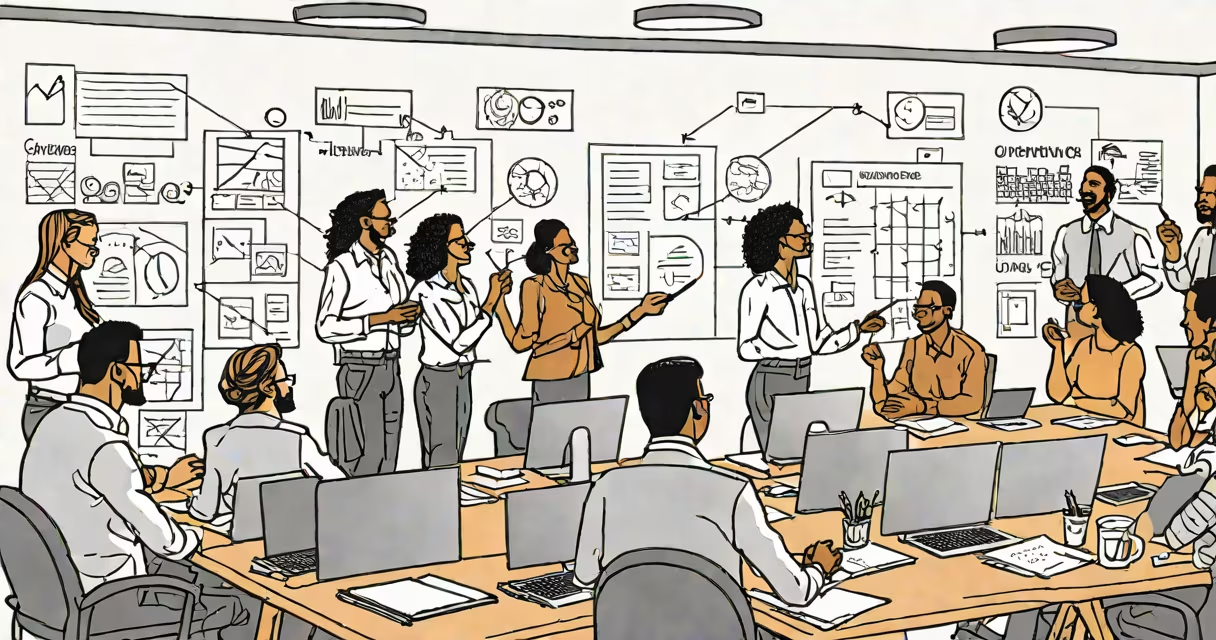
Organizational culture is the collective set of shared values, beliefs, behaviors, and norms that define how people interact, make decisions, and carry out work within a company. It shapes daily operations, influences employee satisfaction, and affects long-term performance.
At its core, organizational culture is not written in a handbook-it emerges through repeated actions, leadership choices, and social patterns. A company that values transparency may hold regular all-hands meetings where leaders share financial results and strategic shifts. A firm that prioritizes innovation might allow employees to spend 10% of their time exploring new ideas, even if they don't lead to immediate products.
According to the Harvard Business Review, culture is "the way things get done around here." This definition captures the practical reality: culture exists in the routines, rituals, and unspoken expectations that govern behavior. It's not about mission statements-it's about what happens when no one is watching.
Culture operates through consistent signals. When managers consistently reward collaboration over individual achievement, employees learn that teamwork is valued-even if the company's website says "we celebrate excellence."
Behavioral cues reinforce culture. For example, at Google, engineers are encouraged to pitch new projects during "20% time," a policy that originated in the early 2000s. Over time, this practice became part of the company's identity-so much so that it helped spawn Gmail and Google News. The culture didn't start with a memo; it grew from repeated permission to experiment.
Research from McKinsey & Company shows that companies with strong cultures report 2.5 times higher employee retention and 1.5 times greater profitability than those with weak or inconsistent cultures. These outcomes aren't accidental-they're direct results of how culture shapes incentives, feedback loops, and career paths.
Organizational culture consists of four key elements: values, norms, artifacts, and assumptions.
These layers interact. A company that publicly values work-life balance but frequently sends emails at midnight signals a mismatch between stated values and actual behavior. This inconsistency erodes trust and weakens culture over time.
While no two cultures are identical, researchers have identified common types based on shared characteristics. The most widely referenced model comes from Deal and Kennedy's 1982 book *Corporate Cultures*, later adapted by the Harvard Business Review.
| Type | Key Traits | Example Industry/Company |
|---|---|---|
| Clan Culture | Collaborative, family-like, focused on mentoring and inclusion | Nonprofits, education institutions |
| Adhocracy Culture | New, risk-taking, flexible structures | Startups, creative agencies |
| Market Culture | Results-driven, competitive, focused on external success | High-growth tech firms, sales-heavy industries |
| Hierarchy Culture | Structured, process-oriented, stable environments | Government agencies, large manufacturing firms |
Each type supports different goals. A clan culture thrives in environments where employee development matters more than quarterly targets. A market culture excels in sales-driven settings where winning is measured in revenue and market share.
Many organizations blend multiple types. A software company might adopt adhocracy for product teams while maintaining hierarchy in finance and HR departments. This hybrid structure reflects real-world complexity-not all parts of a company operate the same way.
Culture impacts hiring, onboarding, performance, and exit rates. A study by Deloitte found that 82% of executives consider culture a top priority in talent strategy. Companies with strong cultures attract better candidates and reduce onboarding time by up to 30%.
Consider a mid-sized SaaS company that recently hired 15 new developers. The engineering team had a well-documented code review process, weekly retrospectives, and a tradition of pairing junior engineers with senior mentors. Within six months, 90% of new hires were performing at or above expected levels. The company wasn't using a special training program-it was relying on cultural norms embedded in daily workflows.
Conversely, when culture breaks down, problems escalate quickly. In 2016, Uber faced widespread criticism over toxic workplace practices, including gender discrimination and aggressive management styles. Internal documents revealed a culture that rewarded speed over ethics. The fallout included executive resignations, investor concerns, and a drop in employee morale. The company eventually invested heavily in cultural reform, including new leadership and revised HR policies.
Many people confuse organizational culture with company perks, branding, or leadership style. But culture is deeper than free snacks or a catchy slogan.
For example, a company may advertise "work-life balance" on its careers page while requiring employees to respond to messages after hours. This gap between messaging and behavior undermines credibility. Employees interpret the real culture through actions, not posters.
A less obvious but critical point: culture is not static. It evolves with leadership changes, mergers, economic shifts, and generational turnover. A 2021 Gallup study found that 65% of U.S. workers reported a significant change in workplace culture during the pandemic. Remote work accelerated shifts toward asynchronous communication, trust-based management, and digital collaboration tools-changes that reshaped culture in ways few leaders anticipated.
I've seen this firsthand. In 2020, I led a remote team of 12 designers at a health-tech startup. We started with daily stand-ups and strict deadlines. After three months, burnout rates rose. We shifted to outcome-based goals, reduced meeting frequency, and introduced "focus Fridays" with no scheduled calls. Productivity improved. Team satisfaction increased by 40%. The culture changed not because we added a new policy-but because we listened to what the team needed.
Organizational culture is not:
It's also not synonymous with "company culture" in casual use. While the terms are often swapped, "organizational culture" is a formal concept used in management theory and research. It refers to systemic patterns, not personal opinions.
The definition of organizational culture is not a single sentence-it's a living system shaped by repeated actions, shared assumptions, and consistent leadership. It determines whether employees feel safe to speak up, whether teams collaborate effectively, and whether the organization adapts to change.
When leaders understand this, they stop trying to "build culture" and start shaping conditions where healthy culture can grow. That means setting clear expectations, modeling desired behaviors, and listening to feedback. It means recognizing that culture isn't something you install-it's something you nurture.
Understanding the definition of organizational culture helps organizations move beyond slogans and toward sustainable performance. It's not about perfection-it's about consistency, authenticity, and alignment across the entire workforce.