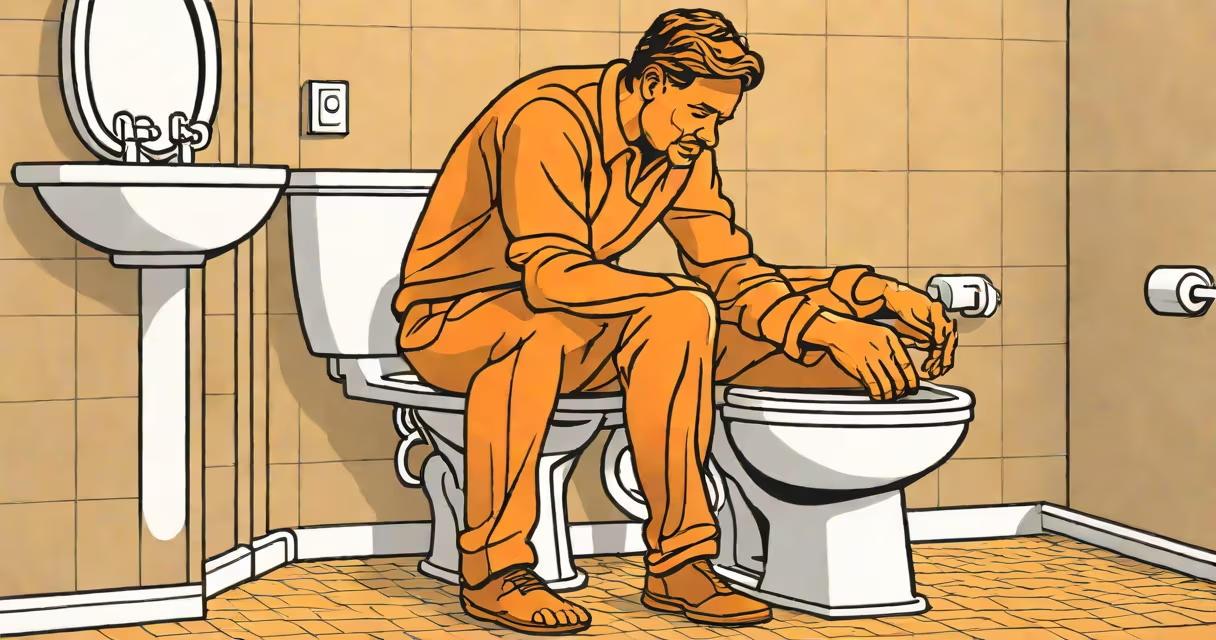
When you can't poop means you're unable to pass stool despite the urge, often due to slowed intestinal movement, dehydration, or physical blockage. This condition may last hours or days and is commonly called constipation when it persists beyond three days without relief.
Constipation occurs when stool moves too slowly through the colon, allowing excessive water absorption. The result is hard, dry stool that's difficult to expel. Common triggers include low fiber intake, insufficient hydration, sedentary lifestyle, certain medications (like opioids or antacids with aluminum), and hormonal imbalances such as hypothyroidism.
The American College of Gastroenterology defines chronic constipation as fewer than three bowel movements per week for at least three months. However, even short-term inability to defecate can signal underlying issues. For example, a 2021 study in Gastroenterology found that 16% of adults reporting infrequent bowel movements had delayed colonic transit, confirmed via wireless motility capsule testing.
Food travels from mouth to stomach, then to small intestine, where nutrients are absorbed. The remaining material enters the large intestine (colon), where water is extracted and stool forms. Smooth muscle contractions-peristalsis-push stool toward the rectum. When the rectum fills, nerves send signals to the brain indicating the need to defecate.
If the colon slows or pelvic floor muscles don't relax properly during straining, stool can stagnate. This leads to increased water absorption, making stool firm and bulky. The brain may suppress the urge due to pain or discomfort, creating a cycle of retention and worsening constipation.
A key but often overlooked factor is pelvic floor dysfunction. Research published in Neurogastroenterology & Motility shows that up to 30% of patients with chronic constipation have dyssynergic defecation-a condition where pelvic muscles contract instead of relaxing during attempted evacuation.
Not all cases of "when you can't poop" stem from the same cause. The most common categories include:
| Type | Primary Cause | Common Signs | Typical Duration |
|---|---|---|---|
| Fiber-deficient constipation | Low dietary fiber (<15g/day) | Small, hard stools; bloating | Days to weeks |
| Medication-induced | Opioids, calcium channel blockers, antidepressants | Delayed onset; reduced bowel sounds | Hours to days after starting drug |
| Obstructive | Colon tumors, strictures, volvulus | Abdominal distension; vomiting; no flatus | Persistent; requires imaging |
| Dyssynergic defecation | Improper pelvic floor coordination | Straining without output; feeling of incomplete emptying | Chronic; often undiagnosed |
One non-obvious distinction: not all constipation involves infrequent bowel movements. Some people have frequent urges but cannot pass stool-this is often linked to pelvic floor disorders, not lack of movement.
I once observed a patient who reported daily bowel movements but still felt "blocked." A defecography scan revealed paradoxical contraction of the puborectalis muscle during straining. After biofeedback therapy, she passed stool normally within four sessions.
"When you can't poop" is frequently mislabeled as simple constipation. But severe or sudden inability to pass stool may indicate bowel obstruction, especially if accompanied by nausea, vomiting, cramping, or absence of gas. Obstruction can result from adhesions (scar tissue after surgery), hernias, or tumors.
For example, a 68-year-old man presented with 48 hours of no bowel movement, abdominal swelling, and bilious vomiting. CT scan showed a sigmoid volvulus-a twist in the colon that blocked flow. He required urgent decompression and surgery. Without intervention, bowel ischemia and perforation risk increase rapidly.
Another red flag: blood in stool or rectal bleeding. While hemorrhoids are common, fresh blood with hard stools may signal anal fissures or, less commonly, colorectal cancer. The CDC reports that nearly half of colorectal cancer cases occur in people under 75, underscoring the need for evaluation even in younger adults.
For mild cases lasting less than 3 days, start with hydration (8-10 cups fluid/day), high-fiber foods (oats, beans, broccoli), and light activity like walking. Laxatives like polyethylene glycol (Miralax) are safe for short-term use and effective in 70% of cases, according to a 2020 Cochrane review.
Do not use stimulant laxatives (like senna) long-term-they can lead to dependence and electrolyte imbalance. Enemas are useful for impacted stool but should not be used more than once weekly without guidance.
However, if you've tried home remedies and still can't pass stool, or if you experience:
Consult a gastroenterologist. A physical exam, blood tests, and imaging (such as a CT scan or colonoscopy) may be needed to rule out structural issues.
Understanding "when you can't poop" begins with recognizing it's not always about frequency-it's about function. If your body signals the need to go but nothing happens, the issue may lie in nerve signaling, muscle control, or intestinal blockage. Addressing it early improves outcomes and reduces hospitalization risk.
When you can't poop isn't just a symptom-it's a warning sign. Identifying the root cause and acting quickly ensures better digestive health and quality of life.