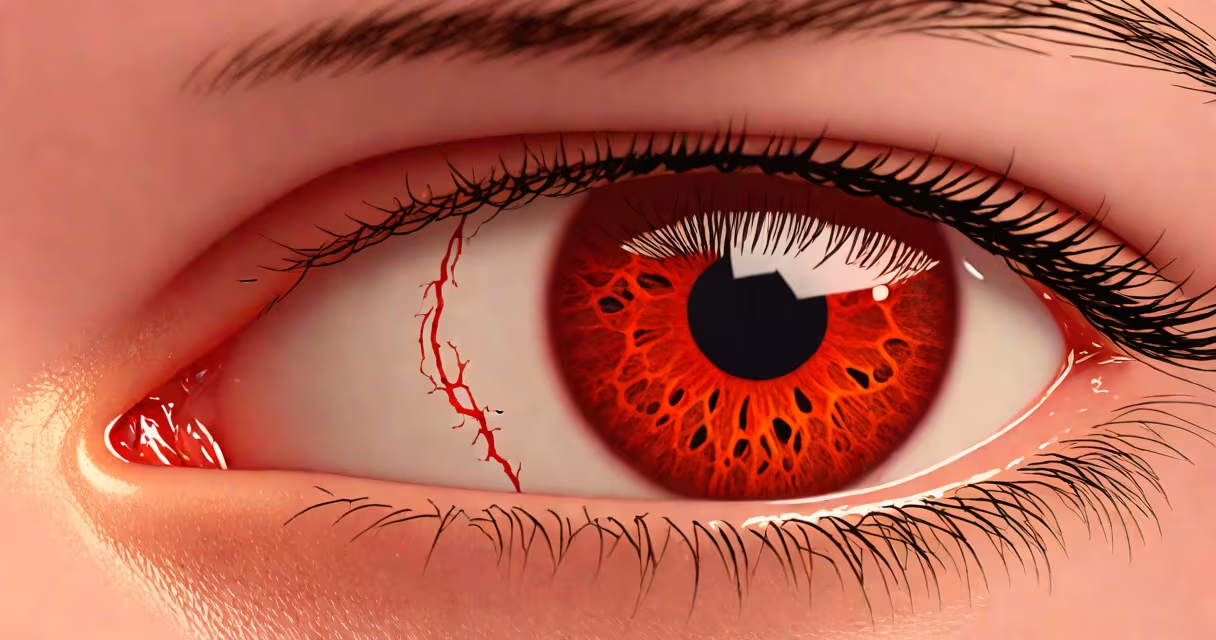
My eye is very red describes a condition where the white part of the eye (sclera) appears intensely pink or crimson due to dilated blood vessels. This symptom indicates inflammation, infection, or trauma affecting the conjunctiva or cornea.
Redness results from increased blood flow to ocular tissues. The conjunctiva - a thin membrane covering the sclera and lining the eyelids - contains a dense network of capillaries. When irritated or infected, these vessels widen and leak fluid, making the eye appear visibly red. Redness may affect one or both eyes and often accompanies pain, discharge, or light sensitivity.
Common triggers include viral or bacterial conjunctivitis, dry eye syndrome, allergies, corneal abrasions, or elevated intraocular pressure. While mild cases resolve within days, persistent or worsening redness requires medical evaluation to rule out serious conditions such as uveitis or glaucoma.
When the eye detects injury or foreign material, immune cells release signaling molecules like histamine and cytokines. These cause nearby blood vessels to dilate and become more permeable. Fluid leaks into surrounding tissue, leading to swelling and visible redness. This response protects the eye but can impair vision if severe.
For example, a person exposed to wind and dust may develop redness within 30 minutes due to mechanical irritation. The body's inflammatory cascade activates within seconds, increasing blood flow to the affected area. Without intervention, symptoms typically peak within 6-12 hours and subside over 2-5 days.
Not all redness stems from inflammation. Subconjunctival hemorrhage - a burst small blood vessel under the conjunctiva - causes sudden, dramatic redness without pain or vision changes. It appears as a flat, bright red patch and resolves in 10-14 days without treatment.
Different conditions produce distinct patterns of redness. Identifying the underlying cause guides effective management.
| Type | Appearance | Common Causes | Associated Symptoms |
|---|---|---|---|
| Conjunctivitis | Diffuse redness, often with discharge | Viral (common cold), bacterial, allergic | Itching, tearing, crusting, mild pain |
| Dry Eye Syndrome | Localized redness near the cornea | Reduced tear production, environmental factors | Burning, gritty sensation, blurred vision |
| Corneal Abrasion | Central redness, sharp pain | Foreign body, contact lens wear, trauma | Photophobia, excessive tearing, feeling of something in eye |
| Subconjunctival Hemorrhage | Flat red patch, no discharge | Straining, coughing, high blood pressure | Painless, no vision loss |
One non-obvious distinction: redness from conjunctivitis typically starts in one eye and spreads to the other, while dry eye often affects both eyes symmetrically. Viral conjunctivitis may begin with watery discharge and progress to thick mucus. Bacterial forms usually produce yellow-green pus.
According to the American Academy of Ophthalmology, 80% of red eye cases are due to benign conditions like viral conjunctivitis or dry eye. Only 1-2% involve sight-threatening issues requiring urgent care.
My eye is very red becomes concerning when accompanied by vision changes, severe pain, or inability to open the eye. These signs suggest corneal involvement or acute glaucoma, which can lead to permanent vision loss if untreated.
Specific red flags include:
I once treated a patient whose red eye persisted for five days despite over-the-counter drops. Upon examination, we found a corneal ulcer caused by improper contact lens hygiene. The infection had damaged the cornea's surface layer. Prompt antibiotic therapy prevented scarring, but delayed care risked vision loss.
For most cases, self-care includes avoiding rubbing, using artificial tears, and resting the eyes. However, never apply steroid drops without a prescription - they can worsen infections and increase intraocular pressure.
Many assume "red eye" always means infection. But redness from dry eye or allergies is far more common. A 2021 study in Cornea found that 67% of patients reporting "red eye" had no infectious cause.
Another misconception: redness always requires antibiotics. Antibiotics are ineffective against viral conjunctivitis and can disrupt the eye's microbiome. The CDC advises against prescribing them unless bacterial infection is confirmed.
Some people believe redness from screen use is harmless. Prolonged digital device exposure reduces blink rate by 60%, leading to dryness and secondary redness. The American Optometric Association recommends the 20-20-20 rule: every 20 minutes, look at something 20 feet away for 20 seconds.
Understanding the context behind "my eye is very red" prevents unnecessary anxiety and ensures timely care. Most cases resolve quickly with simple interventions. Persistent or worsening redness demands professional assessment to protect long-term eye health.