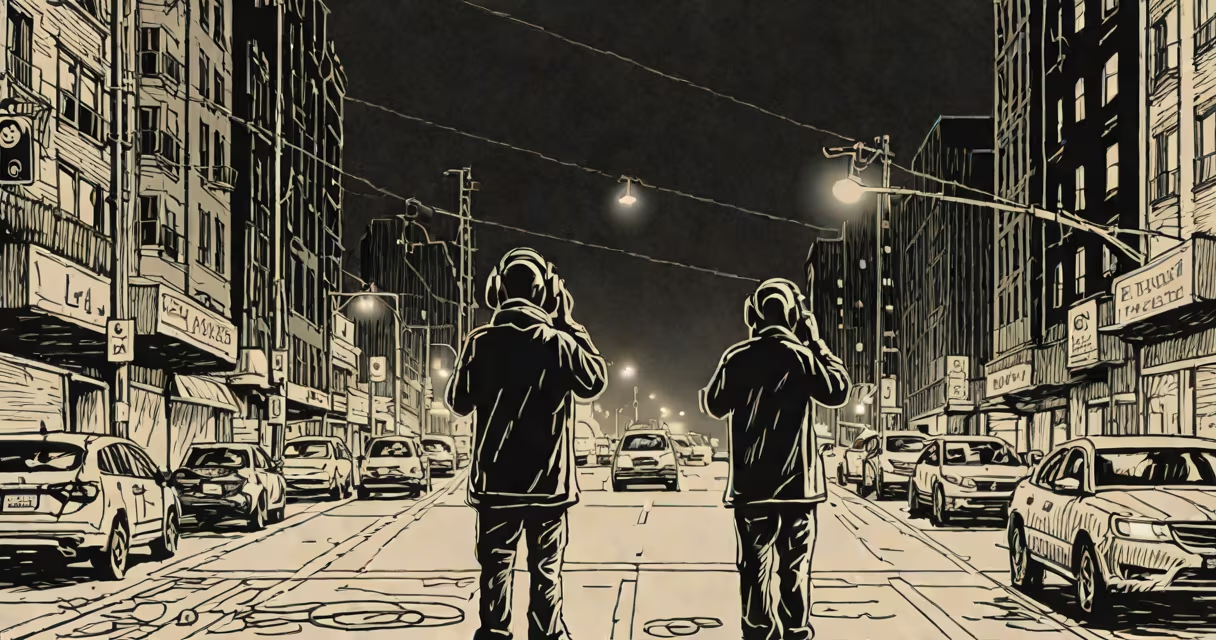
Noise pollution types refer to distinct categories of excessive or unwanted sound that disrupt environments and harm human and animal health. These include traffic, industrial, urban, and underwater sources, each with measurable impacts on ecosystems and well-being.
Sound becomes pollution when it exceeds safe thresholds and interferes with daily life, sleep, or biological functions. The World Health Organization (WHO) defines harmful noise exposure as levels above 55 decibels during the day and 40 decibels at night in residential areas. Prolonged exposure to such levels increases risks for hypertension, hearing loss, and cognitive impairment in children.
Sound travels through air, water, or solid materials as pressure waves. When sound intensity surpasses 85 decibels sustained over time, it damages hair cells in the inner ear, leading to permanent hearing loss. The louder and longer the exposure, the greater the risk. For example, a chainsaw operating at 110 dB can cause irreversible damage in under a minute.
Urban noise pollution stems from transportation systems, construction, and public events. Traffic noise accounts for over 60% of total environmental noise in European cities, according to the European Environment Agency. Industrial zones generate high-frequency vibrations from machinery, often exceeding 100 dB near factory walls. These sounds travel farther than low-frequency ones due to wave propagation physics.
Underwater noise pollution behaves differently. Sound travels four times faster in water than in air. Ship engines, seismic surveys, and military sonar produce intense low-frequency pulses that can travel thousands of kilometers. Whales rely on these frequencies for communication and navigation. Disruption leads to strandings and reduced reproductive success, as documented in cetacean populations off the U.S. West Coast.
The following table outlines major noise pollution types, their typical sources, average decibel levels, and primary effects.
| Noise Pollution Type | Common Sources | Average Decibel Level | Primary Impact |
|---|---|---|---|
| Traffic noise | Highways, buses, motorcycles | 70-90 dB | Stress, sleep disturbance, cardiovascular strain |
| Industrial noise | Machinery, factories, power plants | 85-110 dB | Hearing loss, reduced productivity |
| Urban noise | Construction, loudspeakers, nightlife | 65-85 dB | Reduced concentration, mental fatigue |
| Underwater noise | Shipping, sonar, offshore drilling | 150-230 dB (re 1 µPa) | Marine mammal disorientation, habitat displacement |
Each category operates within specific frequency ranges. Traffic noise peaks between 500 Hz and 2 kHz-frequencies that humans perceive as most intrusive. Industrial noise often includes broadband components, making it harder to filter out. Underwater noise is dominated by low frequencies below 1 kHz, which propagate long distances and interfere with whale vocalizations.
Urban centers bear the highest burden. In New York City, nighttime noise levels near subway lines exceed 60 dB in 40% of neighborhoods, disrupting sleep patterns. A 2021 study in *The Lancet Planetary Health* linked chronic exposure to urban noise with a 20% higher risk of stroke among adults aged 45-65.
Industrial zones near residential areas pose acute threats. In India's National Capital Region, factories operating near schools emit continuous noise above 80 dB. Children exposed to such levels show delayed reading comprehension and attention deficits, per a 2020 study published in *Environmental Research*.
Underwater noise affects marine ecosystems globally. The International Maritime Organization reports that global ship traffic increased by 30% between 2000 and 2020, contributing to rising ambient noise in oceans. In the North Atlantic, blue whales have altered call timing and volume in response to increased vessel traffic, reducing effective communication range by up to 50%.
Many assume noise pollution only affects hearing. But WHO identifies it as a leading environmental health risk, second only to air pollution. Noise-induced stress triggers cortisol release, increasing blood pressure and insulin resistance over time.
Another misconception is that quiet environments eliminate risk. Even low-level background noise-such as distant traffic or HVAC systems-can degrade cognitive performance. A 2018 study in *Nature Communications* showed that students in classrooms with constant low-level noise scored 10% lower on memory tests than those in quieter settings.
Some confuse noise pollution with sound design. While both involve sound, noise pollution lacks purpose or structure. A symphony orchestra produces complex audio intended for listening. A jackhammer generates chaotic, repetitive vibrations that serve no functional role beyond destruction.
In 2019, Berlin proposed expanding Tegel Airport into a new central hub. Local residents raised concerns about increased flight noise. Measurements showed that existing flight paths already generated peak noise levels of 85 dB during takeoffs, exceeding WHO safety limits for daytime exposure.
After community protests and independent monitoring, the project was revised. Flight routes were adjusted to avoid densely populated districts. Noise barriers were installed along residential streets. Post-adjustment readings showed a 15% reduction in average noise exposure for nearby neighborhoods.
This case illustrates how identifying noise pollution types enables targeted interventions. Without categorizing sources-aircraft, ground operations, maintenance trucks-effective mitigation would be impossible.
Understanding noise pollution types is essential for policy, urban planning, and personal protection. Recognizing traffic, industrial, urban, and underwater sources allows communities to advocate for regulations, enforce zoning laws, and adopt protective measures. For example, installing double-glazed windows reduces indoor noise by 30 dB, while planting trees along highways can absorb up to 10 dB of traffic sound.
Identifying noise pollution types is not just academic-it's a foundation for healthier living spaces and resilient ecosystems.