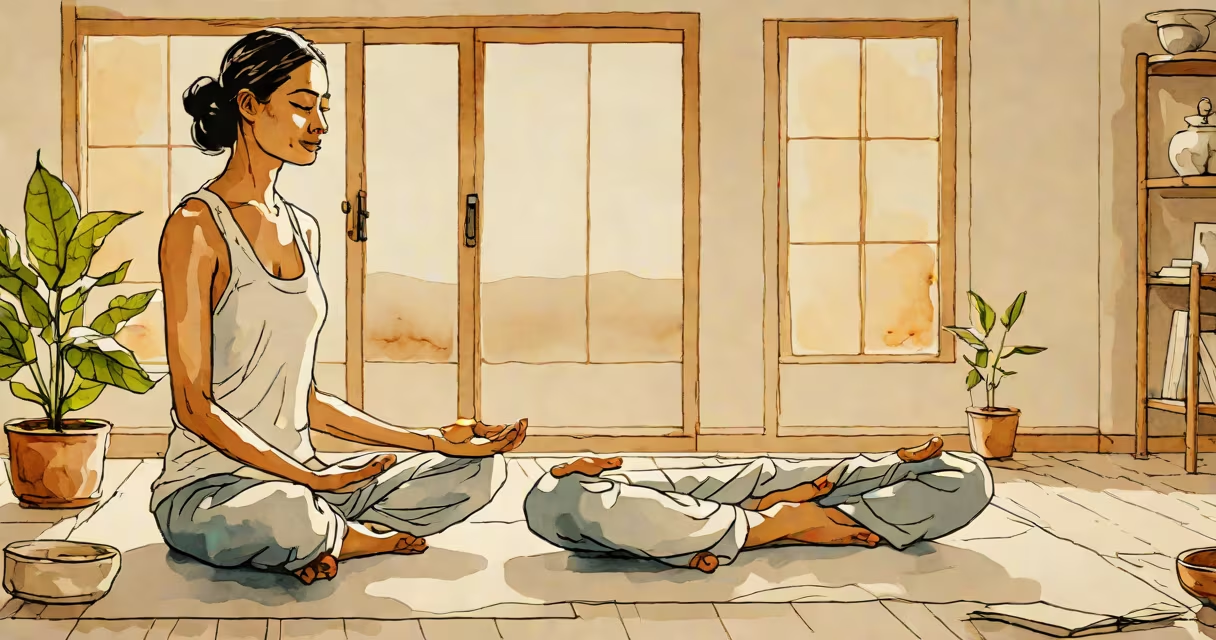
Relaxation techniques for gad are structured, evidence-backed strategies designed to reduce the persistent worry, muscle tension, and hyperarousal characteristic of generalized anxiety disorder. These methods target both mental and physical symptoms through regulated breathing, body awareness, and focused attention.
Generalized anxiety disorder affects approximately 6.8 million adults in the U.S., according to the National Institute of Mental Health. The condition involves excessive, uncontrollable worry about everyday events. While medication and cognitive behavioral therapy are standard treatments, relaxation techniques serve as effective complementary tools. They work by activating the parasympathetic nervous system, which counters the fight-or-flight response triggered during anxiety episodes.
These techniques are not vague suggestions like "just calm down." They are specific practices with measurable outcomes. For example, diaphragmatic breathing reduces heart rate and blood pressure within minutes of consistent practice. A 2017 study published in *Frontiers in Psychology* found that participants who practiced controlled breathing for 10 minutes daily over four weeks reported a 30% decrease in anxiety severity scores.
When someone with GAD experiences stress, their sympathetic nervous system activates. This causes rapid heartbeat, shallow breathing, and tense muscles. Relaxation techniques reverse this state by stimulating the vagus nerve, which signals the body to slow down.
Diaphragmatic breathing-also called belly breathing-uses the diaphragm to draw air deeply into the lower lungs. This increases oxygen exchange and lowers cortisol levels. A 2020 randomized controlled trial showed that patients using this method twice daily for six weeks had reduced anxiety symptoms compared to controls.
Progressive muscle relaxation (PMR) involves tensing and then relaxing muscle groups sequentially. This builds awareness of physical tension and teaches the body to release it. Research from the University of Pennsylvania demonstrated that PMR reduced somatic anxiety symptoms by 40% in individuals with GAD after eight weekly sessions.
Several well-documented relaxation techniques are used clinically for GAD. Each targets different aspects of anxiety-mental focus, physical tension, or emotional regulation.
| Technique | Primary Benefit | Duration per session | Best for |
|---|---|---|---|
| Diaphragmatic breathing | Reduces physiological arousal | 5-10 minutes | Acute anxiety spikes |
| Progressive muscle relaxation | Releases chronic muscle tension | 15-20 minutes | Daytime restlessness, insomnia |
| Mindfulness meditation | Improves present-moment awareness | 10-20 minutes | Worry loops, rumination |
| Guided imagery | Redirects intrusive thoughts | 10 minutes | Pre-sleep anxiety, performance stress |
Each technique requires consistent practice. A single 10-minute session won't resolve long-term patterns. But daily application over three to four weeks leads to measurable changes in brain activity related to emotional regulation, as shown in fMRI studies.
Relaxation techniques for gad are integrated into outpatient treatment plans, often alongside cognitive behavioral therapy (CBT). Clinicians recommend them because they are low-cost, accessible, and have minimal side effects. They require no prescription and can be done anywhere-home, office, or public transit.
For example, a patient with GAD who experiences panic when waiting in line can use box breathing (inhale for 4 seconds, hold for 4, exhale for 4, hold for 4) to stabilize their nervous system. This method, taught in VA medical centers, has been shown to reduce acute anxiety in 60% of users within one minute.
These techniques are also used in school counseling programs. A 2021 study in *Journal of Child Psychology and Psychiatry* found that students aged 13-17 who practiced mindfulness for 15 minutes daily over eight weeks had a 25% drop in test-related anxiety compared to peers who didn't.
Many people assume relaxation techniques are passive or ineffective. This is incorrect. They are active interventions requiring attention and repetition. One session doesn't build resilience. Consistency matters more than duration.
A common mistake is confusing mindfulness with meditation. Mindfulness is the skill of observing thoughts without judgment. Meditation is a formal practice that trains this skill. Not all relaxation techniques involve sitting still. Some, like walking meditation, incorporate movement.
Another misconception is that these methods replace professional care. They don't. For moderate to severe GAD, medication and therapy remain first-line treatments. Relaxation techniques are adjuncts-not substitutes. The American Psychiatric Association states that relaxation training should be part of a complete treatment plan, not used alone.
Consider Sarah, a 34-year-old teacher diagnosed with GAD. She experiences constant worry about student performance and workload. Her doctor recommended diaphragmatic breathing as a daily tool.
Sarah began practicing for five minutes each morning and before bed. She placed one hand on her chest and the other on her abdomen. She breathed slowly through her nose, feeling her belly rise. When she noticed her mind wandering, she gently returned focus to her breath.
After three weeks, she reported fewer nighttime awakenings and less physical tension in her shoulders. Her therapist noted a 20% improvement in her GAD-7 score, a standardized anxiety assessment tool. She continued the practice and later incorporated PMR during lunch breaks.
This example shows that small, consistent actions yield results. No special equipment or training is needed. Just time and commitment.
Relaxation techniques for gad are not quick fixes. They are tools for building long-term resilience. Their effectiveness lies in regular use, not occasional effort. When paired with professional care, they improve quality of life and reduce reliance on medication.
For those managing chronic anxiety, starting with one technique-like diaphragmatic breathing-is practical. Begin with five minutes a day. Track your mood and physical sensations. Over time, you'll notice shifts in how your body responds to stress.
Relaxation techniques for depression share similar foundations but differ in focus. While GAD centers on future-oriented worry, depression often involves rumination on past events. Still, many techniques-such as mindfulness and paced breathing-are beneficial across conditions.