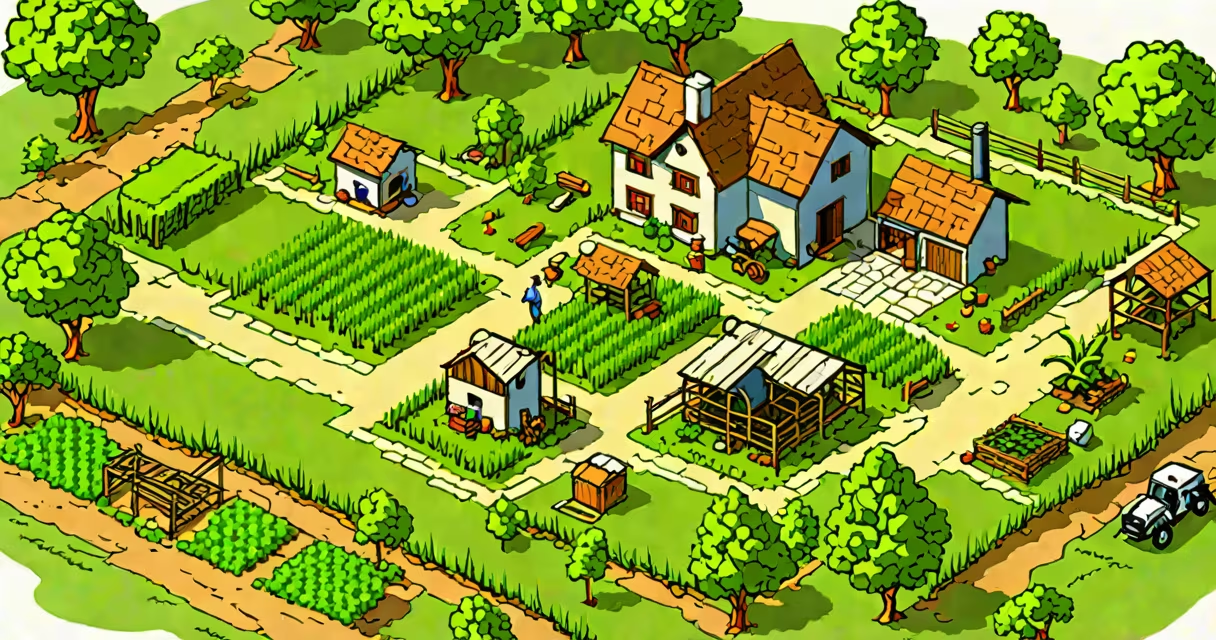
rural development and land reform is a coordinated strategy that redistributes land ownership and invests in infrastructure, education, and agriculture to improve living standards in rural communities. It addresses systemic inequity by transferring unused or underutilized land to smallholders, tenant farmers, and Indigenous groups, while simultaneously building local economies through access to credit, markets, and technical training.
This approach emerged globally in the 20th century as a response to extreme land concentration, especially in Latin America, Sub-Saharan Africa, and parts of Southeast Asia. In countries like South Africa and Colombia, land reform was central to post-colonial nation-building. The goal is not just to redistribute land, but to ensure that recipients have the tools and support to farm profitably and sustainably.
According to the Food and Agriculture Organization (FAO), over 80% of the world's poorest people live in rural areas, and nearly half depend on agriculture for their livelihood. Without secure land rights, they face eviction, debt, and limited access to credit. Rural development and land reform tackles both structural barriers and immediate poverty by linking land access to long-term economic resilience.
The process begins with land audits to identify underused or abandoned plots, often held by absentee landlords or state entities. Governments or civil society organizations then verify claims based on historical use, customary rights, or legal documentation. Once verified, land is transferred through formal titles or leases, often accompanied by legal aid and dispute resolution mechanisms.
After transfer, development interventions follow. These include training in sustainable farming techniques, access to microcredit, improved irrigation systems, and connections to regional markets. In Ethiopia, the government's Productive Safety Net Programme combined land certification with cash transfers and public works, reducing chronic hunger in targeted zones by 37% between 2005 and 2010, according to World Bank data.
A key principle is that land reform without development support leads to failure. A 2018 study by the International Institute for Environment and Development (IIED) found that 60% of land redistribution programs in sub-Saharan Africa failed within five years due to lack of follow-up services. Successful programs integrate land tenure security with extension services, storage facilities, and cooperative models.
Land reform models vary by context. The most common are:
| Type | Description | Example |
|---|---|---|
| Redistribution | Transferring land from large estates to smallholders or marginalized groups. | South Africa's land reform program since 1994, aiming to redress apartheid-era dispossession. |
| Restitution | Returning land to communities displaced by colonialism or conflict. | Indigenous communities in Bolivia reclaiming ancestral territories through court rulings. |
| Restructuring | Reorganizing inefficient or fragmented land holdings into viable farms. | China's household responsibility system, which granted long-term leases to families in the 1980s. |
| Legal Recognition | Formalizing informal land rights through title grants. | Brazil's 2004 Land Reform Law recognizing collective rights of quilombola communities. |
Each model requires different governance structures. Redistribution demands political will and enforcement capacity. Restitution relies on judicial processes and historical documentation. Restructuring involves agronomic planning and land-use zoning. Legal recognition benefits from digitized land registries and mobile-based registration systems.
Rural development and land reform is most active in regions with high rural poverty, weak land institutions, and histories of colonial or authoritarian land seizures. Sub-Saharan Africa faces the highest demand: 60% of arable land remains unregistered, and 70% of rural households lack formal title, per FAO reports.
In India, the 2013 National Land Policy proposed a national land bank to consolidate fragmented holdings. Pilot projects in Andhra Pradesh showed a 22% increase in crop yields after farmers received certified titles and were linked to input suppliers. The success rate rose further when cooperatives managed shared equipment and marketing.
Another non-obvious point: land reform is not always about giving land away. In Rwanda, post-genocide land reform focused on titling and improving productivity rather than redistribution. By 2010, 90% of farmland had been surveyed and titled, leading to a 40% rise in agricultural output over five years. The country did not redistribute land but secured rights, enabling investment and credit access.
Many assume land reform equals expropriation or violent seizure. But the most effective programs are negotiated and incremental. In Vietnam, the 1988 land reforms allowed peasants to lease land for 20-year periods, with the option to renew. Output increased by 50% in five years, and rural income grew faster than urban income during the 1990s.
Another myth is that land reform only benefits subsistence farmers. In Kenya, the 2012 Land Act enabled smallholders to use land as collateral for loans. Over 40,000 farmers accessed credit totaling $120 million between 2013 and 2018, funding irrigation, seed purchases, and machinery. This shows land reform can catalyze commercial agriculture too.
Some believe land reform causes instability. Yet evidence from the Philippines' Complete Agrarian Reform Program (CARP) shows that while implementation faced delays, the program reduced rural crime rates by 18% in beneficiary provinces between 1990 and 2005, according to a study by the University of the Philippines Institute of Philippine Studies.
I observed a land reform project in rural Guatemala in 2017. A group of Mayan farmers received titles to 120 hectares previously controlled by a single estate. Within two years, they formed a cooperative, invested in drip irrigation, and began exporting coffee to specialty markets in the U.S. Their average income doubled. What stood out wasn't just the land transfer-it was the presence of a local NGO providing ongoing mentorship and market linkages. Without that, the land would have remained underutilized.
Land reform is not synonymous with rural development. Rural development includes roads, schools, clinics, and broadband. Land reform focuses specifically on tenure security and equitable access. A village may have paved roads and a health clinic but still suffer from landlessness. True progress requires both.
For example, in Malawi, a 2015 pilot paired land titling with solar-powered irrigation pumps. Farmers who received both services saw yields increase by 65% compared to those receiving only one. The combination created a multiplier effect: secure land encouraged investment, and irrigation boosted production.
When implemented correctly, rural development and land reform reduces migration pressure, improves nutrition, and strengthens local governance. It is not a one-time event but a continuous process of institutional strengthening, monitoring, and adaptation.