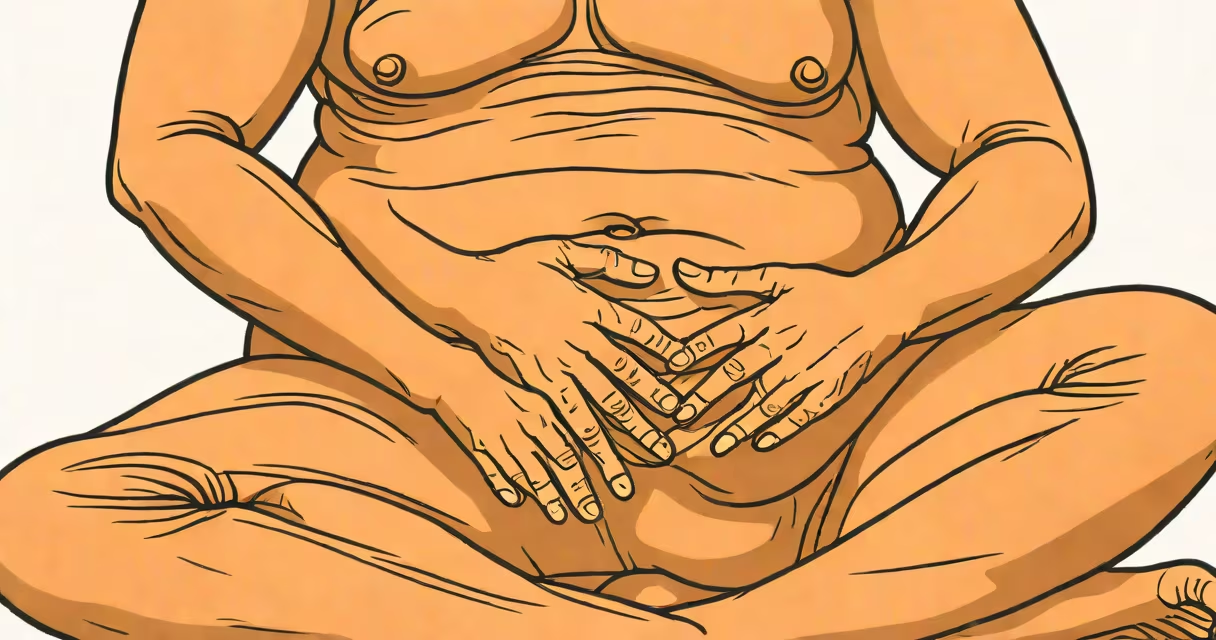
Severe lower abdomen bloating describes pronounced swelling, tightness, or pressure in the lower abdominal region that affects comfort and function. It often results from gas accumulation, fluid retention, or underlying medical conditions involving the intestines, reproductive organs, or pelvic floor. This symptom is not normal digestive discomfort and may indicate a need for clinical evaluation.
Unlike mild bloating after eating, severe lower abdomen bloating persists beyond typical digestion time, can restrict movement, and may be accompanied by pain, nausea, or changes in bowel habits. It frequently arises from conditions such as irritable bowel syndrome (IBS), endometriosis, ovarian cysts, or intestinal obstruction. The sensation is often described as "distended," "heavily full," or "tight like a drum."
When bloating reaches this intensity, it disrupts daily life. A 2021 study in The American Journal of Gastroenterology found that patients reporting severe abdominal bloating were twice as likely to have a diagnosed gastrointestinal disorder compared to those with mild symptoms. Persistent bloating is not simply a dietary issue-it's a physiological signal requiring attention.
Bloating occurs when excess gas, fluid, or stool accumulates in the intestines or pelvic cavity. In severe cases, the abdominal wall stretches under pressure, triggering stretch receptors that send pain signals to the brain. This creates a feedback loop where discomfort increases awareness of the bloated state.
Gas buildup often stems from bacterial fermentation of undigested carbohydrates in the colon. For example, consuming 20 grams of fructose (about one large apple) can trigger significant gas production in individuals with fructose malabsorption. Fluid retention may result from hormonal fluctuations during the menstrual cycle, especially in women with premenstrual syndrome (PMS) or polycystic ovary syndrome (PCOS).
More serious causes involve structural issues. A 2020 review in Frontiers in Medicine identified endometriosis as a leading cause of chronic lower abdominal bloating in women under 40. Lesions on pelvic organs can obstruct intestinal flow or compress nerves, leading to both bloating and referred pain. In men, severe bloating may stem from diverticulitis or colorectal tumors, which physically narrow the bowel lumen.
While bloating is a symptom, its root causes fall into distinct categories based on origin:
| Type | Primary Cause | Common Triggers | Typical Patient Profile |
|---|---|---|---|
| Gastrointestinal | IBS, SIBO, food intolerances | Lactose, fructose, gluten, high-FODMAP foods | Adults with recurrent bloating after meals |
| Gynecological | Endometriosis, PCOS, ovarian cysts | Menses, hormonal shifts, ovulation | Women aged 18-45 with cyclical symptoms |
| Obstructive | Intestinal blockage, hernias, tumors | Progressive worsening, vomiting, constipation | Anyone over 50 with new-onset bloating |
| Fluid-related | Ascites, heart failure, kidney disease | Weight gain, swollen ankles, shortness of breath | Older adults with comorbidities |
One non-obvious distinction: bloating caused by ovarian cysts often presents as unilateral (one-sided) lower abdominal fullness, unlike generalized bloating from IBS. A woman experiencing bloating that worsens premenstrually and resolves after menstruation may have PCOS-related insulin resistance driving fluid retention.
As a clinician, I've seen patients misattribute severe bloating to stress or diet alone. One patient reported bloating lasting six weeks despite eliminating dairy and wheat. An ultrasound revealed a 6 cm ovarian cyst pressing on the sigmoid colon-removal resolved her symptoms. This illustrates that bloating isn't always gut-based.
Many assume bloating is purely digestive. But severe lower abdomen bloating can originate in the pelvis, spine, or even the nervous system. Pelvic floor dysfunction-where muscles fail to relax properly-can trap gas and cause persistent bloating. A 2022 study in Neurogastroenterology & Motility found that 38% of patients with unexplained bloating had abnormal pelvic floor muscle activity during defecation.
Another misconception: bloating always involves visible swelling. Some people experience internal pressure without external distension. A patient with endometriosis described "feeling like my insides are packed with sand" despite no visible bulge. This internal sensation is a key warning sign.
Red flags include sudden onset, inability to pass gas or stool, fever, weight loss, or bloating that doesn't improve with dietary changes. These suggest mechanical obstruction or malignancy. The National Institute of Diabetes and Digestive and Kidney Diseases (NIDDK) states that new bloating in adults over 50 warrants imaging within 48 hours.
If severe lower abdomen bloating lasts longer than 7 days, interferes with sleep or work, or is associated with blood in stool, vomiting, or fever, consult a healthcare provider. Initial evaluation includes physical exam, blood tests, and imaging such as CT or transvaginal ultrasound.
For functional causes like IBS, a low-FODMAP diet reduces bloating in 70% of patients, according to a 2019 trial published in Gut. Eliminating high-FODMAP foods like onions, garlic, and wheat for four weeks can reduce gas volume by up to 50%. Probiotics like *Bifidobacterium infantis* 35624 have shown efficacy in reducing bloating by 40% over eight weeks.
For gynecological origins, hormonal therapy or laparoscopic excision of endometriosis lesions can resolve bloating. A 2023 study in Human Reproduction showed that 78% of women with endometriosis experienced reduced bloating after surgical treatment.
Management is not one-size-fits-all. A 32-year-old woman with severe bloating after intercourse was initially diagnosed with IBS. Further testing revealed endometriosis affecting the uterosacral ligaments. After laparoscopic ablation, her bloating decreased by 90% and she regained normal sexual function. This case underscores that severe lower abdomen bloating may require interdisciplinary care.