STEM in K-12 refers to the integration of science, technology, engineering, and mathematics into coordinated, project-based learning experiences for students from kindergarten through 12th grade. This approach emphasizes real-world problem solving, critical thinking, and collaboration over rote memorization.
STEM in K-12 is not a single subject but a structured educational structure designed to prepare students for careers in science, technology, engineering, and math fields. It emerged from concerns about declining U.S. performance in international math and science assessments, prompting reforms in curriculum design and teaching methods.
The National Science Foundation defines STEM education as "an integrated approach to learning that connects disciplines through authentic, inquiry-based experiences." According to the U.S. Department of Education, schools implementing STEM programs see higher student engagement and improved performance in standardized math and science tests.
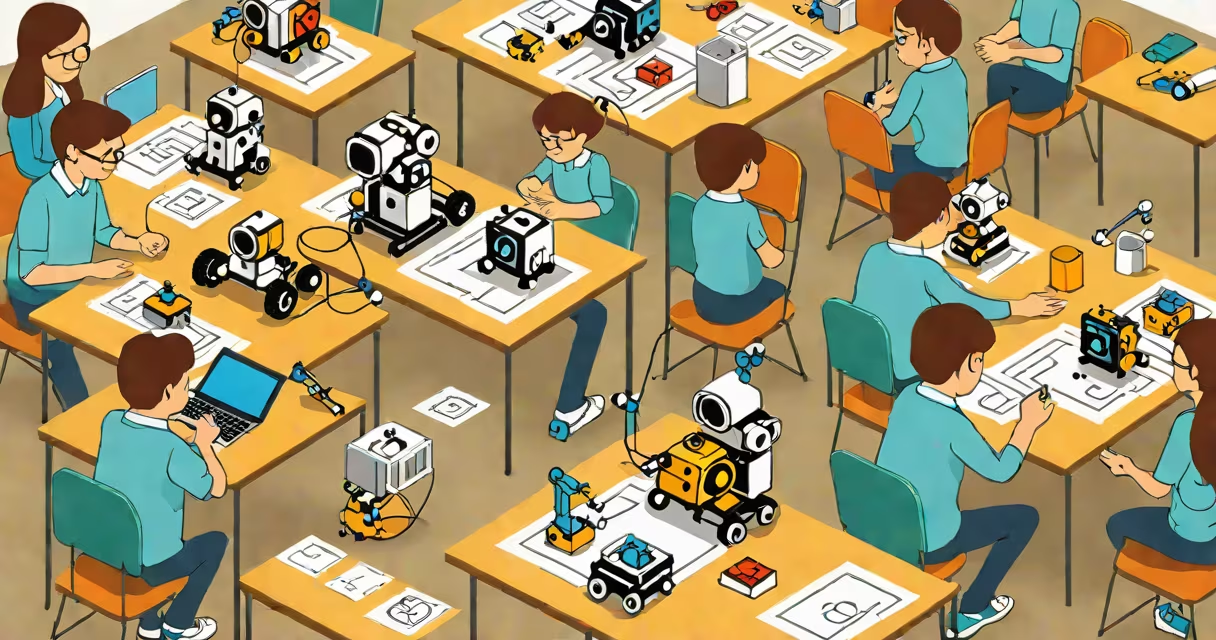
Classrooms using STEM in K-12 follow a design-thinking model. Students identify a problem-such as designing a water filtration system for a community-or create a solution, like programming a robot to go through a maze. They then apply scientific inquiry, mathematical modeling, technological tools, and engineering principles to test and refine their ideas.
Each phase of a typical STEM activity includes defining the problem, researching constraints, prototyping solutions, testing results, and iterating based on feedback. For example, a middle school class might build solar-powered cars using recycled materials, measure speed and efficiency, and adjust wheel size or panel angles to improve performance.
Teachers act as facilitators rather than lecturers. They guide students through questioning, troubleshooting, and peer review. The focus shifts from knowing facts to doing science-conducting experiments, analyzing data, and communicating findings.
STEM in K-12 combines four disciplines, though they're rarely taught in isolation. Instead, they're interwoven into interdisciplinary units. The table below outlines how each component contributes to student learning.
| Discipline | Role in K-12 STEM | Example Activity |
|---|---|---|
| Science | Investigates natural phenomena through experimentation and observation. | Testing which soil types grow bean plants fastest under different light conditions. |
| Technology | Applies digital tools and systems to solve problems. | Using Arduino microcontrollers to monitor temperature in a greenhouse. |
| Engineering | Designs and builds functional solutions to challenges. | Constructing a bridge from popsicle sticks that supports 500 grams. |
| Mathematics | Provides quantitative analysis and modeling for decision-making. | Calculating fuel efficiency of model cars based on weight and distance traveled. |
Some schools adopt specialized models. Project-Based Learning (PBL) structures entire units around open-ended challenges. Inquiry-Based Learning focuses on student-led questions and research. Integrated STEM curricula, such as those developed by the National Science Teaching Association, align standards across subjects to ensure coherence from grade to grade.
STEM in K-12 is implemented in public, private, charter, and magnet schools across the United States. High-performing districts like Fairfax County Public Schools in Virginia and the Chicago Public Schools system have adopted district-wide STEM frameworks. These programs often begin in elementary school and continue through high school, with increasing complexity.
Research shows that early exposure to STEM improves long-term academic outcomes. A 2021 study published in the Journal of Research in Science Teaching found that students who participated in STEM-focused curricula in grades 6-8 were 30% more likely to pursue advanced math and science courses in high school.
States like Massachusetts and California require all public schools to offer STEM instruction aligned with state standards. The Every Student Succeeds Act (ESSA) provides federal funding for STEM initiatives, especially in underserved communities. Schools receiving Title II grants often use funds to train teachers in STEM pedagogy and purchase lab equipment.
STEM in K-12 is frequently mistaken for computer science or coding-only programs. While technology components are central, STEM is broader. It includes biology labs, physics simulations, architectural design, and statistical analysis-not just programming.
A common error is assuming STEM requires expensive equipment. Many successful K-12 STEM projects use low-cost or household materials. For example, a group of 5th graders in rural Iowa built wind turbines from plastic bottles, cardboard, and small motors. Their prototype generated enough power to light an LED for 12 seconds. The project won a regional science fair and was later featured in a local newspaper.
Another misconception is that STEM is only for high-achieving students. In reality, inclusive STEM programs are designed to close achievement gaps. The National Center for Women & Information Technology reports that girls in inclusive STEM classrooms show equal interest and performance in engineering tasks compared to boys-especially when role models and collaborative work are emphasized.
I once observed a 4th-grade class in Portland, Oregon, designing earthquake-resistant buildings using spaghetti, marshmallows, and tape. The students had to support a 500-gram weight while surviving simulated seismic shaking on a shake table. One team's structure collapsed during testing. Instead of frustration, the teacher guided them to analyze failure points-weak joints, uneven weight distribution-and redesign. After three iterations, they achieved stability. The process demonstrated resilience, teamwork, and iterative thinking-core goals of STEM in K-12.
STEM in K-12 differs from STEAM, which adds arts to the acronym. While STEAM encourages creativity and aesthetic design, STEM prioritizes analytical rigor and measurable outcomes. A school might use STEAM to design a musical instrument using sensors and sound algorithms, but the focus remains on function and precision.
STEM is also distinct from traditional science fairs. While both involve experiments, STEM projects emphasize process, iteration, and real-world application. A science fair entry may present a completed experiment with a conclusion. A STEM project documents the entire cycle-from hypothesis to failure to refinement-and often includes peer feedback and presentation skills.
Understanding STEM in K-12 means recognizing it as a changing, evolving model of education rooted in evidence-based practices. It prepares students not just for college, but for life in a rapidly changing world where adaptability and innovation are essential.