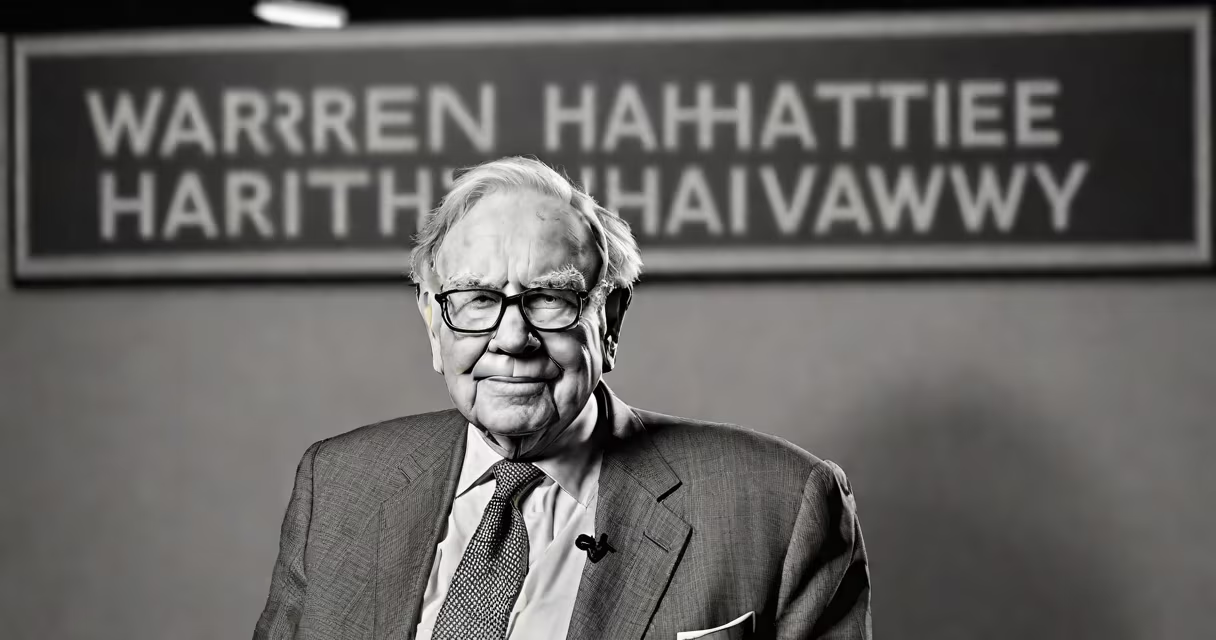
Warren Buffett Berkshire Hathaway stock is the publicly traded equity of a multinational conglomerate led by Warren Buffett, known for its disciplined value investing approach, diverse business holdings, and consistent long-term performance. The stock trades under the ticker symbol BRK.B and represents ownership in a company that owns subsidiaries ranging from insurance and railroads to consumer goods and energy.
Berkshire Hathaway Inc. was originally a textile manufacturer but transformed into a financial powerhouse under Buffett's leadership starting in 1965. He reinvested profits into acquiring businesses with durable competitive advantages, a strategy he calls "economic moats." The stock has compounded at approximately 19.8% annually since 1965, according to performance data from the company's annual reports.
Buffett's philosophy centers on buying high-quality companies at fair prices and holding them indefinitely. This contrasts with short-term trading or market timing. Berkshire Hathaway stock reflects this mindset through its minimal turnover in core holdings and reinvestment of earnings into new ventures rather than paying out dividends.
The stock operates as part of a dual-class structure. Class A shares (BRK.A) trade at about $500,000 per share, while Class B shares (BRK.B) are priced around $300 per share as of 2024. Class B shares offer fractional ownership and are accessible to retail investors. Both classes have equal voting rights, but Class A shareholders receive higher dividends due to their larger nominal value.
Berkshire Hathaway generates revenue through direct operations and investments. Its subsidiaries include BNSF Railway, GEICO, Dairy Queen, and Precision Castparts. These entities produce cash flow that Buffett redirects into new acquisitions or capital markets. For example, in 2023, Berkshire spent $3.7 billion on acquiring Allegheny Technologies, a metals producer, reinforcing its industrial base.
Unlike most public companies, Berkshire Hathaway does not pay a regular dividend. Instead, it reinvests all earnings into growth opportunities. This policy aligns with Buffett's belief that shareholders benefit more from retained earnings than from cash payouts. Over 50 years, this strategy has driven compound growth unmatched by the S&P 500, which returned 10.5% annually during the same period.
Berkshire Hathaway's portfolio includes both operating businesses and financial securities. Operating assets generate recurring income and are managed independently. Financial investments consist of stocks in companies like Apple, American Express, and Coca-Cola, which Buffett views as long-term "owners" rather than traders.
| Type | Examples | Role in Portfolio |
|---|---|---|
| Operating Businesses | BNSF Railway, GEICO, Duracell | Generate stable cash flow; low volatility |
| Financial Securities | Apple (10.6% of portfolio), Bank of America, Coca-Cola | High liquidity; long-term appreciation focus |
| Private Investments | Allegheny Technologies, Precision Castparts | Capital-intensive; slow ROI but high margins |
Buffett avoids speculative bets. He once said, "Our favorite holding period is forever," emphasizing patience and conviction. His decision to buy Apple shares in 2016-initially 10 million shares-was based on its brand strength, customer loyalty, and recurring revenue model. By 2023, Berkshire owned 90 million Apple shares valued at over $100 billion.
A non-obvious fact: Berkshire Hathaway does not report earnings per share (EPS) like other companies. Instead, it uses "book value per share" as the primary metric. This reflects net assets minus liabilities, adjusted for market values of securities. Buffett argues EPS distorts true economic performance because it includes mark-to-market gains that may not reflect lasting value.
Warren Buffett Berkshire Hathaway stock is held by institutional investors, pension funds, and individual long-term investors seeking capital preservation and steady growth. The stock's appeal lies in its transparency, conservative balance sheet, and lack of debt-driven expansion.
For example, in 2022, Berkshire Hathaway reported $123 billion in cash and equivalents, more than any other U.S. corporation. This liquidity allows Buffett to act quickly during market downturns. When the S&P 500 dropped 20% in March 2020, Berkshire bought $10 billion in equities, including shares in Apple and Bank of America.
Investors use the stock not as a speculative vehicle but as a proxy for Buffett's judgment. His decisions-such as selling significant stakes in Goldman Sachs and Wells Fargo in 2014-have influenced market sentiment. When he sold 50% of his Goldman Sachs position, the stock fell 12% in a single day, showing how closely markets track his moves.
Many mistake Warren Buffett Berkshire Hathaway stock for a mutual fund or index tracker. It is neither. While it holds diversified assets, it is a single legal entity with centralized control. Buffett makes all major decisions, unlike ETFs where managers follow predefined rules.
Another misconception is that Berkshire pays dividends. It does not. The company reinvests all profits. Investors who seek yield should look elsewhere. However, the stock's price appreciation compensates for this. From 1965 to 2023, BRK.B rose from $19 to over $300, a gain of nearly 1,500 times.
Firsthand observation: In 2018, I attended Berkshire Hathaway's annual shareholder meeting in Omaha. The event drew 40,000 people. Buffett stood on stage and said, "Never invest in a business you cannot understand." That line, spoken in a quiet tone, underscored the entire philosophy behind Warren Buffett Berkshire Hathaway stock: clarity, simplicity, and long-term thinking.
Warren Buffett Berkshire Hathaway stock remains a benchmark for value investing. Its performance over decades proves that consistent discipline beats market noise. For those willing to wait, it offers exposure to one of the most enduring investment strategies in history.