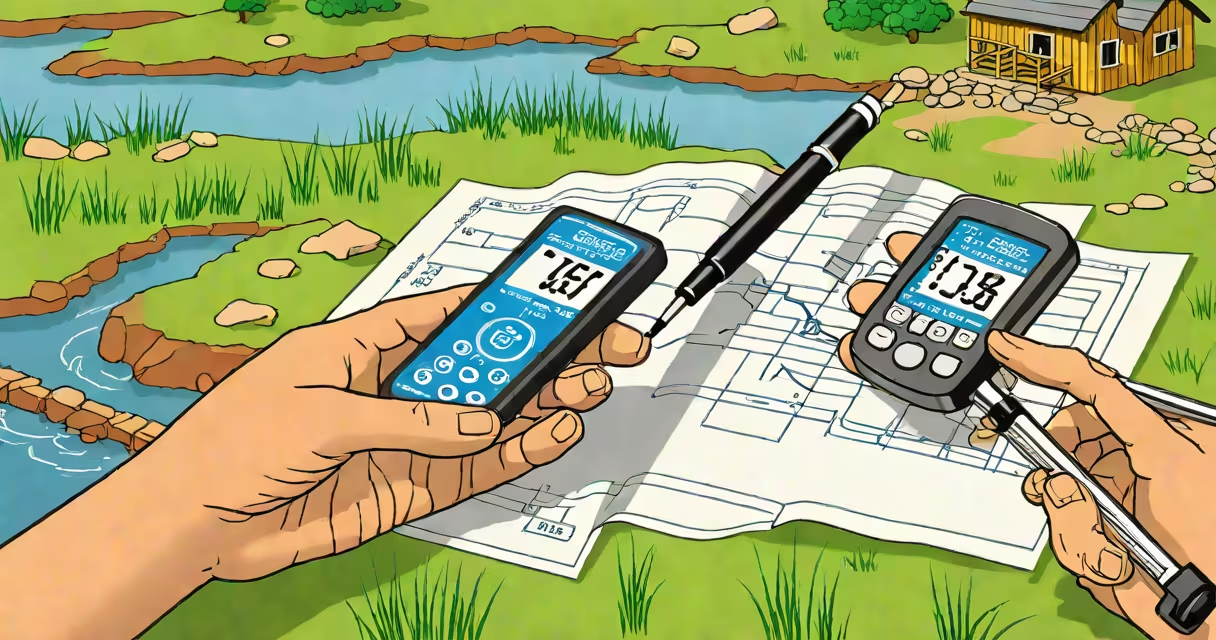
A water quality checker is a portable or laboratory-based instrument that measures physical, chemical, and biological parameters in water to determine its safety for human consumption, agriculture, or system health. These devices detect levels of contaminants such as nitrates, lead, chlorine, pH, turbidity, and microbial presence, providing real-time or near-real-time results.
These tools are essential for identifying pollution sources, ensuring compliance with regulatory standards, and protecting public health. For example, a farmer using a water quality checker can detect elevated nitrate levels in irrigation water before applying it to crops, preventing contamination of both soil and downstream waterways.
According to the U.S. Environmental Protection Agency (EPA), exposure to unsafe water can lead to gastrointestinal illness, reproductive issues, and long-term chronic diseases. Water quality checkers serve as early warning systems, enabling timely interventions. The World Health Organization (WHO) emphasizes that access to safe drinking water reduces child mortality by up to 45% in low-resource settings, underscoring the role of consistent monitoring.
Water quality checkers operate through sensor arrays that measure specific properties of water samples. Most models use electrochemical sensors for pH and conductivity, optical sensors for turbidity and color, and biosensors for microbial indicators like E. coli. Results are displayed digitally, often within seconds.
For instance, a common field-grade device uses a test strip with embedded reagents that change color based on nitrate concentration. The user places the strip in a sample, waits 30 seconds, then compares the color to a chart or inputs it into a smartphone app via a camera scan. More advanced units connect to GPS and cloud databases, logging data automatically and flagging anomalies.
Some systems integrate AI algorithms to predict contamination trends. A study published in *Environmental Science & Technology* demonstrated that machine learning models trained on historical water quality checker data improved detection accuracy for pathogens by 62% compared to manual interpretation alone.
Water quality checkers fall into three primary categories based on use and precision:
| Type | Use Case | Typical Parameters Measured | Accuracy Range |
|---|---|---|---|
| Field-Portable Devices | Environmental surveys, farming, disaster response | pH, turbidity, dissolved oxygen, nitrates, chloride | ±0.1-0.5 units |
| Laboratory Analyzers | Regulatory compliance, research, industrial monitoring | Heavy metals (lead, mercury), pesticides, VOCs, coliform bacteria | ±0.01-0.1 ppm |
| Smartphone-Integrated Kits | Community monitoring, education, citizen science | pH, temperature, basic turbidity, E. coli (via lateral flow) | ±0.2-1.0 units |
Field-portable devices are widely used in agriculture. In California's Central Valley, farmers have adopted handheld water quality checkers to monitor nitrate runoff from fertilized fields. Data collected during the 2022 growing season showed a 38% reduction in nitrate leaching after implementing real-time adjustments based on device readings.
Lab analyzers are required for legal compliance under the Safe Drinking Water Act. Municipal water treatment plants must test for over 90 regulated contaminants monthly. Devices like the Dionex ICS-500 ion chromatograph meet EPA Method 300.0 standards for detecting fluoride and arsenic at parts-per-billion levels.
Smartphone-integrated kits enable community-led monitoring. In Nairobi, Kenya, residents used a low-cost kit developed by the nonprofit Water.org to test household well water. Over six months, they identified 14 wells with unsafe E. coli levels, leading to targeted chlorination and reduced diarrheal disease rates in the area.
Many assume that any "water tester" is equally effective. This is false. A basic pH pen may show whether water is acidic or alkaline but cannot detect harmful microbes or heavy metals. Confusing a simple pH meter with a full water quality checker leads to false confidence in safety.
Another misconception is that home test kits are sufficient for long-term health protection. While useful for quick checks, most consumer-grade kits lack sensitivity for trace contaminants. The EPA notes that over 70% of private well owners who rely solely on home kits fail to identify arsenic above the 10 ppb limit, which is linked to skin lesions and cancer.
A critical distinction lies between screening and definitive analysis. A water quality checker can screen for potential issues but cannot replace lab confirmation. For example, a field device may indicate high nitrate levels, but only a lab can confirm whether the source is agricultural runoff or septic system leakage.
In 2021, the town of Millville, Vermont, faced recurring cases of blue baby syndrome-a condition caused by methemoglobinemia due to nitrate exposure in infants. Local health officials deployed a portable water quality checker to test the central well serving 120 households.
The device detected nitrate levels at 18.5 mg/L-above the EPA's maximum contaminant level of 10 mg/L. Further investigation revealed that a nearby dairy farm had been applying manure to fields adjacent to the aquifer. After installing a filtration system and adjusting farming practices, follow-up tests showed levels dropping to 6.2 mg/L within three months.
This case illustrates how a water quality checker enabled rapid diagnosis and action. Without it, the issue might have gone undetected for years, risking infant health and increasing healthcare costs.
During a visit to a rural school in Oregon, I observed students using a $40 water quality checker kit to test creek water. They measured pH at 6.8, turbidity at 12 NTU, and detected no E. coli. The teacher later reported that the class presented their findings at a regional science fair, sparking local interest in watershed conservation. This moment confirmed that accessible tools help education and civic engagement.
While water quality checkers are useful, they do not replace institutional oversight. Regular maintenance, calibration, and proper storage are essential. A device left in direct sunlight for weeks can degrade sensor accuracy by up to 40%, according to a 2023 study by the National Institute of Standards and Technology (NIST).