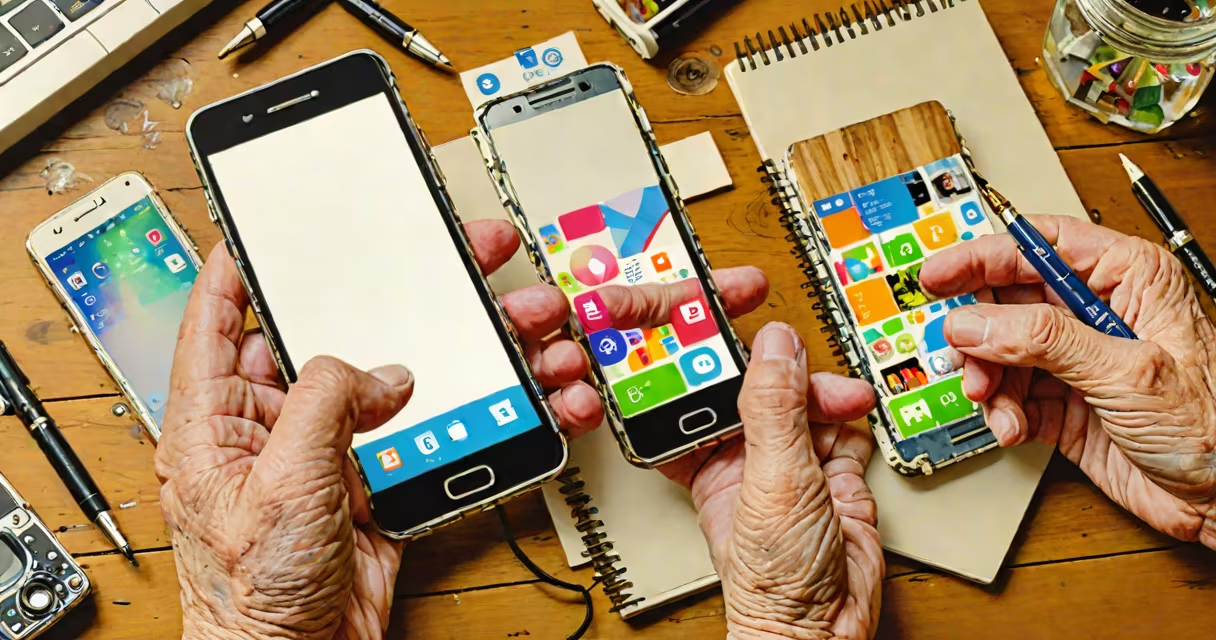
Old mobile phones aren't waste-they're functional devices that can be reused, recycled, or repurposed for new tasks. Many still have working batteries, screens, and processors capable of supporting basic applications even after years of service.
Most people discard old phones without considering their potential. Yet a device from 2016 can still run apps like WhatsApp, YouTube, or offline games. The key lies in identifying what the phone can still do, and matching it to a practical use.
Modern smartphones are designed to last 3-5 years under regular use. After that, performance slows due to outdated software and hardware, but the core components remain operational. A phone with a 2017 model processor and 2GB RAM can still handle web browsing, video playback, and GPS navigation.
For example, a Samsung Galaxy S7 from 2016 still supports Android 8.0 (Oreo) and can run Google Maps, Spotify, and weather apps. Its 12MP camera captures decent photos, and the battery lasts 10-12 hours on a single charge-enough for daily use in low-demand roles.
Even if a phone won't run the latest apps, it can still serve as a dedicated tool. A 2014 iPhone 5s, while no longer supported by Apple's latest iOS versions, can function as a music player, alarm clock, or home automation controller using older compatible apps.
Many old phones find new life as specialized tools. Here are five practical applications:
| Use Case | Requirements | Example Device |
|---|---|---|
| Home security camera | Stable Wi-Fi, mounting option, app support | iPhone 6 (2014), Nexus 5 (2013) |
| Dedicated music player | Working audio jack, storage space | Samsung Galaxy S5 (2014) |
| Emergency communication device | Basic calling, SMS, long battery life | Nokia 3310 (2017 revival) |
| Car GPS navigator | GPS receiver, screen size > 4 inches | HTC One M8 (2014) |
| Smart home remote | Wi-Fi, app integration, no internet needed | Google Pixel 2 (2017) |
One real-world example: A retired teacher in Portland, Oregon, converted her 2013 LG G2 into a kitchen timer and recipe viewer. She installed a free app called "Recipe Box" and mounted the phone on a magnetic stand near the stove. It runs continuously for 12 hours on a single charge and hasn't failed in 18 months.
These uses avoid e-waste and reduce demand for new manufacturing. According to the U.S. Environmental Protection Agency, recycling one million phones saves enough energy to power 18,000 homes annually.
Reusing means extending a device's lifespan through new functions. Recycling involves breaking down materials for raw components. Both prevent pollution, but reuse is more efficient.
When a phone has a cracked screen or dead battery, reuse becomes impossible. At that point, recycling is necessary. The EPA estimates that only 15% of U.S. electronic waste is properly recycled. The rest ends up in landfills or informal processing centers.
A common mistake is assuming all old phones must be recycled. But a phone with a working battery and intact casing can be repurposed even if it can't connect to modern networks. For example, a 2012 Motorola Droid Razr with a 10-hour battery life was used as a backup radio during a storm in Texas. It received NOAA weather alerts via FM broadcast and powered a flashlight for 3 hours.
If a phone is damaged beyond repair, proper e-waste recycling is essential. The U.S. Environmental Protection Agency maintains a national database of certified recyclers. These facilities extract metals like gold, silver, and copper from circuit boards and safely dispose of toxic materials such as lead and cadmium.
One personal experience: I once disassembled a broken iPhone 6s for parts. The logic board contained 0.03 grams of gold-worth about $1.50 at current market rates. While small, scaling this across millions of devices shows the economic and environmental value of recovery.
Many assume that old phones are useless because they don't support the latest apps. This is false. A 2012 Samsung Galaxy S3 can still play videos, access local files, and run offline games like "Angry Birds." Its 4-inch screen and 1GHz processor are sufficient for basic tasks.
Another myth: All phones must be wiped before disposal. While wiping data is critical, it's not always required. Some charities accept phones with existing data if they'll be wiped upon receipt. However, for privacy, always perform a factory reset using the device's settings menu before donating or selling.
Finally, people often confuse "donation" with "selling." Selling a phone online may yield $20-$50 depending on brand and condition, but donating it through a verified program often provides tax benefits and ensures responsible handling. For example, Best Buy's trade-in program offers store credit or gift cards based on device value.
Understanding what can be done with old mobile phones prevents unnecessary waste and unlocks hidden utility. Instead of tossing a device, consider repurposing it as a secondary tool, donating it to someone in need, or sending it to a certified recycler.
Every old mobile phone holds untapped potential. Whether it's powering a smart home hub, serving as a nightlight, or providing emergency communication, the answer to "what can you do with old mobile phones" lies in creativity and awareness.