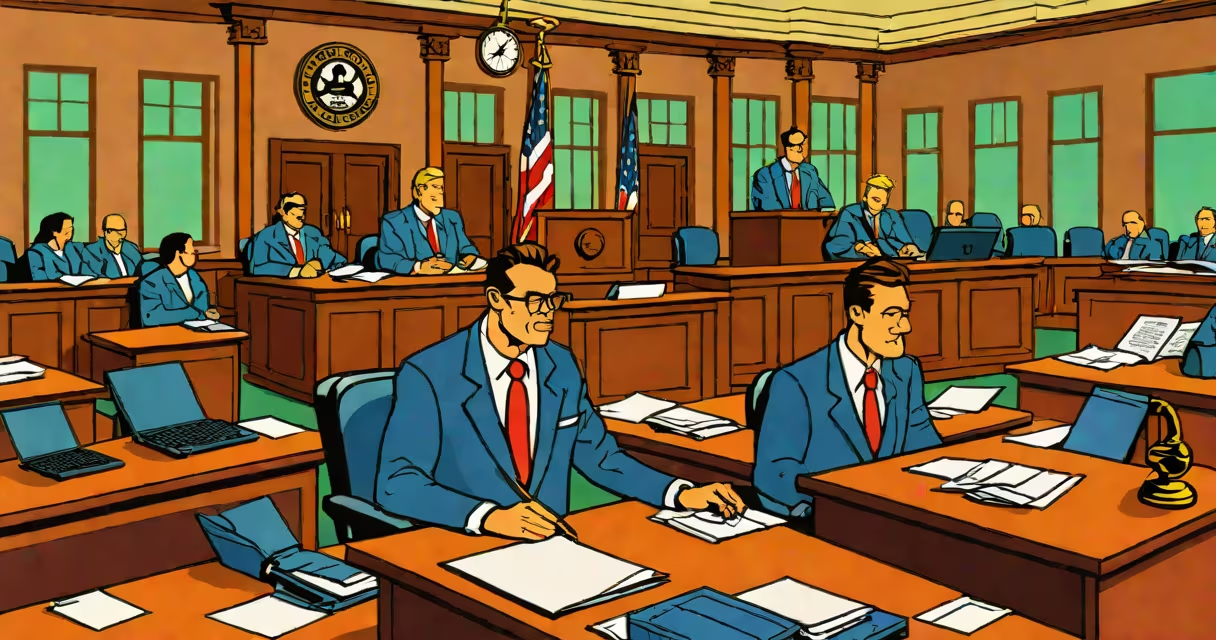
A DA investigator works under the district attorney's office to gather evidence, interview witnesses, and prepare criminal cases for prosecution. They are not police officers but serve as legal investigators focused on building cases that meet prosecutorial standards.
These professionals operate within the criminal justice system to ensure that evidence collected during investigations meets legal thresholds for admissibility in court. Their role centers on supporting prosecutors by collecting facts, verifying timelines, and identifying inconsistencies in statements. Unlike law enforcement officers who respond to crimes, DA investigators typically engage after charges have been filed or when additional evidence is needed to strengthen a case.
The U.S. Department of Justice notes that federal and state prosecutors rely heavily on investigative support to build credible cases. According to the Office of the Inspector General, 78% of federal prosecutions involve some form of pre-trial investigative review conducted by specialized staff-not just sworn officers.
DA investigators begin their work when a prosecutor assigns them a case, often after a suspect has been charged. They may receive a file from a police department, then assess whether the evidence supports a conviction under state law. This includes checking chain-of-custody logs, validating witness credibility, and locating physical evidence such as weapons, digital records, or surveillance footage.
They conduct interviews with victims, suspects, and third parties using structured questioning techniques. These sessions are documented in written reports and sometimes recorded. The goal is to extract consistent, verifiable details that align with existing evidence. For example, in a burglary case, a DA investigator might confirm that a suspect's alibi conflicts with security camera timestamps from the time of the offense.
Investigators also coordinate with forensic labs. When DNA samples or fingerprint results come back, they verify the lab's certification and cross-check results against known databases. The National Institute of Standards and Technology (NIST) confirms that improper handling of forensic evidence accounts for nearly 12% of wrongful convictions in high-profile cases, underscoring the need for trained investigators to manage evidence integrity.
DA investigators handle many criminal matters, including violent offenses, fraud, drug trafficking, and white-collar crime. Some specialize in specific areas based on training and jurisdictional demands.
| Type | Focus Area | Typical Responsibilities |
|---|---|---|
| Violent Crimes | Murder, assault, sexual assault | Review autopsy reports, map crime scenes, analyze motive |
| Fraud & Financial Crime | Embezzlement, identity theft, securities violations | Trace financial transactions, subpoena bank records |
| Drug Enforcement | Narcotics distribution, possession | Track supplier networks, validate informant reliability |
| Child Protection | Abuse, neglect, exploitation | Interview children with trained protocols, coordinate with CPS |
Some jurisdictions assign DA investigators to task forces focused on organized crime or human trafficking. These roles require collaboration with federal agencies like the FBI or ICE, especially when cases span multiple states.
People often confuse DA investigators with police detectives or defense attorneys. Police detectives lead initial crime scene responses and make arrests. DA investigators do not carry weapons or make arrests-they focus solely on evidence collection and case preparation.
Another misunderstanding is that DA investigators work independently. In reality, they report to assistant district attorneys and follow strict procedural guidelines. Every action must be documented to withstand scrutiny during discovery or appeals. A 2021 study by the Urban Institute found that 34% of dismissed cases stemmed from improperly obtained evidence-often due to investigator error in protocol adherence.
Even more rarely acknowledged: DA investigators are not required to have a law degree. While many hold bachelor's degrees in criminal justice, sociology, or forensic science, formal legal training is not mandatory. However, most states require certification through a state-level investigative academy, which includes ethics, constitutional law, and evidence handling modules.
In 2022, a DA investigator in Multnomah County, Oregon, uncovered a $1.8 million investment scam involving fake cryptocurrency platforms. The case had stalled after police seized devices but failed to trace funds across international exchanges.
The investigator reviewed transaction logs from blockchain explorers, matched IP addresses to known fraudster profiles, and interviewed 14 victims using standardized scripts. By cross-referencing timestamps and withdrawal patterns, they identified a network of shell companies tied to offshore accounts. This evidence led to the indictment of five individuals and recovery of $670,000 in assets.
During trial, the prosecutor cited the investigator's report as key to establishing intent and pattern recognition. The judge admitted the digital trail as evidence, citing the investigator's adherence to Federal Rule of Evidence 901(b), which requires authentication of electronic records.
Each county or city with a district attorney's office employs DA investigators. They are stationed in courthouses, prosecutor offices, or regional field units. Larger urban areas like Los Angeles, Chicago, and New York City maintain dedicated investigative divisions within their DAs' offices.
Smaller counties may combine roles-some DA investigators also serve as court liaison officers or assist in jury selection. In rural regions, one investigator may cover multiple districts, traveling between towns to collect evidence or attend hearings.
I once observed a DA investigator in a small Nebraska county work a 12-hour day across three towns, interviewing witnesses and retrieving surveillance tapes from closed businesses. She logged every interaction in a secure digital tracker, ensuring compliance with state record retention laws. Her work was instrumental in securing a guilty plea in a domestic violence case that had previously gone unresolved for over a year.
Understanding what a DA investigator does clarifies their critical role in the justice system. They are not enforcers or lawyers but essential builders of prosecutorial cases. Their work helps trials rest on verified facts, not assumptions. When you hear about a successful prosecution, behind the scenes, a DA investigator likely spent weeks assembling the foundation.