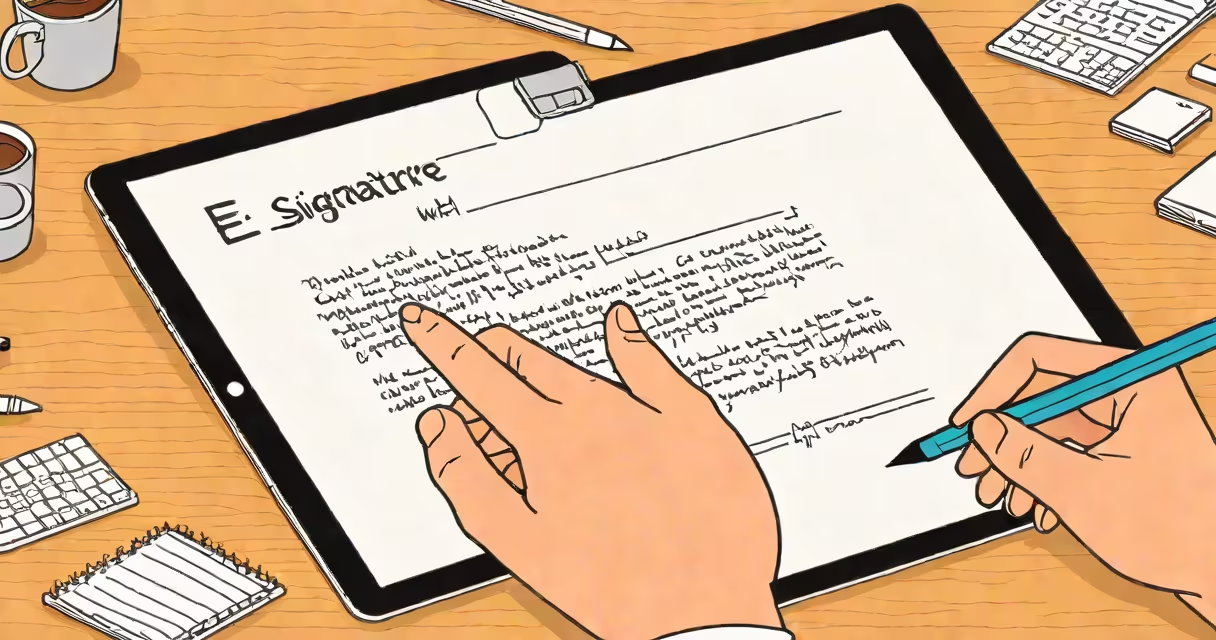
An e signature means a digital method of signing documents that carries the same legal weight as a handwritten signature in most U.S. jurisdictions. It confirms intent to agree and is recognized under the ESIGN Act and UETA.
E signatures function through authentication protocols that verify identity, often using email confirmation, password protection, or biometric input. The process records timestamps, IP addresses, and user actions to prove legitimacy. These records serve as audit trails in case of disputes.
The core requirement is intent-the signer must knowingly and willingly apply their e signature. Courts have upheld e signatures in contracts, leases, and employment agreements since the early 2000s. For example, a 2018 federal court ruled that an e signature on a loan agreement was enforceable because the borrower had received notice and completed the signing step.
When someone applies an e signature, the system captures metadata such as the time of signing, device used, and location. This data is stored securely and cannot be altered afterward. The document remains intact unless modified with a new signature.
Common methods include typing your name in a designated field, drawing a signature with a mouse or stylus, or using a biometric scan like a fingerprint. Some platforms require multi-factor authentication-such as a code sent via SMS-to complete the process.
For example, DocuSign's e signature workflow sends a link to the recipient. After logging in with a verified email, they review the document and click "Sign." The system logs the action and returns a signed copy with a certificate of completion. This certificate includes the signer's identity, timestamp, and hash of the original file.
E signatures are categorized by security level and verification strength. The three main types differ in compliance requirements and use cases.
| Type | Verification Level | Use Cases | Legal Recognition |
|---|---|---|---|
| Simple e signature | Low | Email confirmations, internal forms | Valid under UETA and ESIGN |
| Advanced e signature | Medium | HR paperwork, vendor contracts | Requires unique identification and audit trail |
| Qualified e signature | High | Financial transactions, government filings | Requires certified digital ID and trusted third-party validation |
Simple e signatures-like typing your name in a form-are acceptable for low-risk documents. Advanced e signatures require persistent identity proofing, such as a login with two-factor authentication. Qualified e signatures meet international standards like eIDAS in the EU and are issued by accredited certification authorities.
A key distinction: not all e signatures are digital signatures. A digital signature uses public-key cryptography to encrypt the document and verify authenticity. While all qualified e signatures are digital, not all digital signatures are legally binding as e signatures under U.S. law.
Businesses use e signatures to reduce processing time, cut paper waste, and improve client onboarding. A 2022 study by the National Association of Realtors found that 89% of real estate agents now use e signatures for lease agreements and purchase contracts.
Healthcare providers rely on e signatures for patient consent forms. Under HIPAA, e signatures must protect patient data and maintain audit trails. Platforms like HelloSign integrate with electronic health record systems to ensure compliance.
I once processed a property lease renewal for a tenant in Oregon. The landlord requested a signed copy within 24 hours. Using Adobe Sign, I uploaded the document, added a field for the tenant's e signature, and sent it via email. The tenant signed using a mobile app with facial recognition. The system returned a PDF with a timestamped certificate. The lease was executed in under 90 minutes-compared to 5 days with traditional mail.
Many assume e signatures are only for business-to-business deals. In reality, individuals use them daily-for tax filings, insurance applications, and even wedding invitations. The IRS accepts e signatures on Form 8822 for address changes.
Another myth: e signatures are less secure than wet ink. But a 2021 report by the Federal Trade Commission found that 96% of e signature platforms met or exceeded basic encryption standards. The FTC noted that weak passwords were the biggest vulnerability-not the signature method itself.
Some confuse e signatures with scanned images of handwritten signatures. A scanned image lacks authentication and cannot be verified. Courts have rejected such images as invalid evidence in contract disputes. An e signature must be applied through a system that tracks intent and identity.
Under the ESIGN Act, an e signature is valid only if the signer has given informed consent. This means they must have the ability to access and retain the document, and they must understand that signing electronically is equivalent to signing by hand.
Understanding what does e signature mean requires distinguishing it from similar terms. A digital signature is a cryptographic technique that ensures data integrity and authenticity. It's used in software distribution and secure messaging. However, not all digital signatures qualify as legally binding e signatures in U.S. courts.
When choosing a platform, verify that it complies with the Uniform Electronic Transactions Act (UETA) and the ESIGN Act. Major providers like DocuSign, Adobe Sign, and PandaDoc are audited annually for compliance. They provide certificates of completion and support legal discovery requests.
Always retain the original document and the audit trail. Courts may request both during litigation. Even if the document is stored in the cloud, the chain of custody must remain unbroken.
What does e signature mean? It means legally binding consent delivered digitally, with traceable identity and intent. It's not a trend-it's standard practice in modern business, healthcare, education, and government.