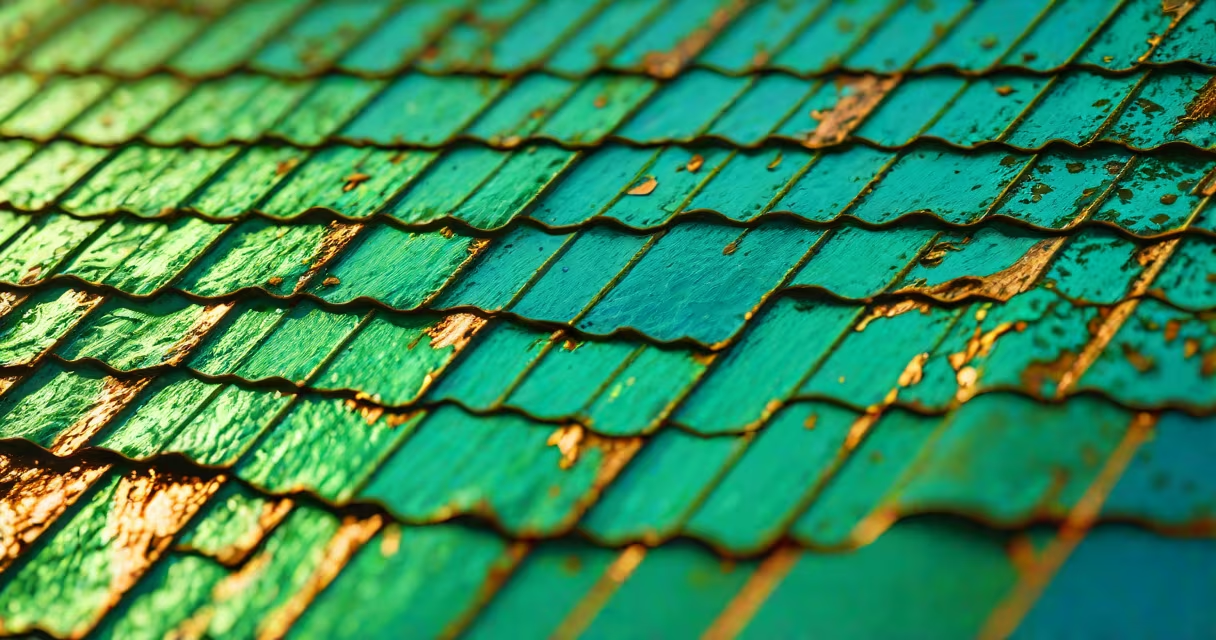
Oxidized copper develops a stable, layered patina that ranges from deep blue-green to olive-gray, forming over months to years when exposed to air and moisture. The surface becomes textured and non-reflective, losing the shiny reddish-brown of fresh copper.
This transformation occurs through chemical reactions between copper, oxygen, water, and carbon dioxide. The initial layer forms as copper oxide (CuO), then progresses to basic copper carbonate (Cu₂(OH)₂CO₃) and basic copper sulfate (Cu₄(OH)₆SO₄), depending on environmental conditions. These compounds create the characteristic green-blue hue seen on historic buildings and outdoor sculptures.
Unlike rust on iron, which flakes and weakens metal, copper's patina acts as a protective barrier. Once fully formed, it resists further degradation. The process is predictable and widely used in architecture and art for its durability and visual appeal.
When freshly cut or polished, copper appears bright reddish-orange. Within days of exposure to air, it darkens to a warm brown. After weeks, a thin layer of copper oxide forms, giving it a duller, matte finish. This stage is sometimes called "tarnishing" and is reversible with polishing.
After several months, especially in humid or coastal environments, the surface begins to develop greenish-blue patches. These grow and merge into a continuous, slightly uneven coating. The texture becomes tactile-slightly rough, with subtle crystalline patterns visible under close inspection.
Full patination typically takes 2-5 years. In urban areas with higher sulfur levels, the green may appear faster and darker. In rural or dry climates, the process slows, and the patina tends toward blue-gray tones. The final appearance depends on local air quality, rainfall, and pollution levels.
Different environments and treatments produce distinct patina appearances. The most common types are:
| Type | Color Range | Formation Conditions | Common Examples |
|---|---|---|---|
| Natural Patina | Blue-green to olive-gray | Exposure to air, rain, humidity | Statue of Liberty, historic roofs |
| Acid-Enhanced | Dark green to blackish-green | Applied vinegar or citric acid solution | Art installations, decorative panels |
| Heat-Treated | Rich purple, bronze, or deep blue | Controlled heating with torch or oven | Jewelry, architectural details |
A key distinction often missed: natural oxidation produces a uniform, weathered look. Artificial methods like acid baths or heat treatment create bolder, more dramatic color shifts. Heat-treated copper, for example, shows iridescent flashes under direct light due to thin-film interference.
One non-obvious fact: the green color in patina is not from copper chloride, as many assume. It results primarily from basic copper carbonate, formed when CO₂ in air reacts with moisture on the copper surface. Sulfur-containing pollutants accelerate formation of copper sulfate, which contributes to deeper green tones.
Architectural applications dominate. The Statue of Liberty's green exterior is the most famous example. Originally copper-colored, it developed its current hue over 30 years of exposure. The U.S. National Park Service confirms the patina is stable and self-repairing-any damage heals slowly over time.
Modern buildings use oxidized copper for roofing, cladding, and interior accents. The Toronto City Hall's rooftop features custom-fabricated copper panels that began turning green within five years. The material's longevity reduces maintenance costs compared to painted metals.
Artists favor it for sculpture and installations. Sculptor Richard Serra used large-scale oxidized copper sheets in his 2011 installation at the Guggenheim Museum Bilbao. The changing light across the surface creates shifting hues throughout the day.
For home use, oxidized copper is popular in kitchen backsplashes, sinks, and lighting fixtures. A 2022 study by the American Society of Interior Designers found that 68% of designers included oxidized metal finishes in high-end residential projects, citing durability and timeless aesthetic appeal.
Many confuse oxidized copper with rusted iron or tarnished silver. Rust on iron is red-brown and flaky. Tarnished silver turns gray-black and lacks the green-blue sheen. Oxidized copper maintains a consistent, smooth-to-textured surface with a distinct metallic luster beneath the patina.
Another error: assuming all green metal is copper. Bronze, an alloy of copper and tin, can also develop a green patina-but it appears more yellowish-green and forms slower. True copper patina is denser and more evenly distributed.
I once installed a copper gutter system on a client's house in Seattle. After 18 months, the gutters had developed a deep blue-green layer. Neighbors mistook them for painted metal until they noticed the subtle color shifts under different light angles. The patina wasn't uniform-it had small variations in tone, indicating natural aging, not artificial coloring.
Real oxidized copper never peels or chips. If a green coating flakes off, it's likely paint or a low-quality coating. Authentic patina grows inward and bonds to the base metal.
Oxidized copper displays a rich, stable blue-green patina formed through natural chemical reactions with air and moisture. The surface becomes textured and non-reflective, with colors ranging from emerald to deep slate. This transformation takes months to years and results in a durable, self-protecting layer. The process is well-documented in structures like the Statue of Liberty and widely used in architecture and art for both function and beauty. Understanding what oxidized copper looks like helps distinguish it from other materials and appreciate its long-term value.