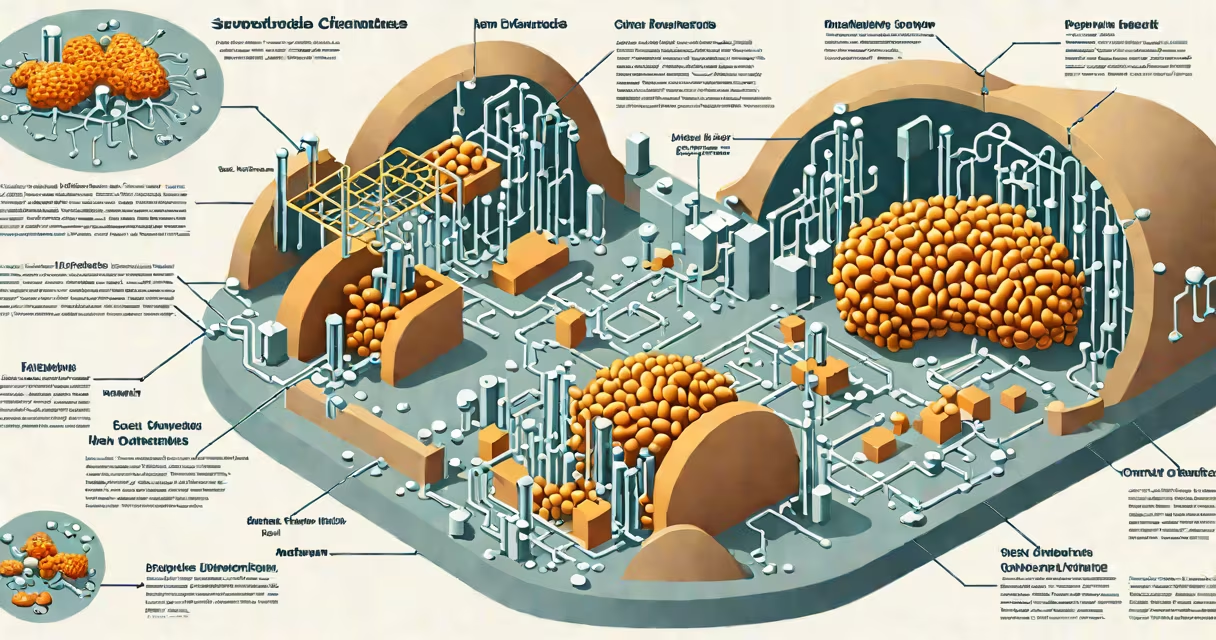
Superoxide dismutase (SOD) is a critical antioxidant enzyme that converts toxic superoxide radicals into hydrogen peroxide and oxygen, reducing cellular damage from oxidative stress. It operates continuously in cells, especially within mitochondria, where most reactive oxygen species are generated.
SOD functions by catalyzing the dismutation of superoxide (O₂•⁻), a highly reactive byproduct of aerobic metabolism. Without SOD, superoxide accumulates and damages DNA, proteins, and lipids. The reaction is spontaneous but extremely slow without the enzyme; SOD accelerates it by a factor of 10⁹.
There are three primary forms of SOD in humans: Cu/Zn-SOD (found in the cytoplasm), Mn-SOD (located in mitochondria), and EC-SOD (secreted into extracellular spaces). Each form is tailored to its environment, with distinct metal cofactors enabling efficient electron transfer during the redox reaction.
SOD uses a metal ion-copper and zinc in Cu/Zn-SOD, manganese in Mn-SOD-to cycle between oxidation states. This allows it to accept an electron from one superoxide molecule and donate it to another, producing hydrogen peroxide (H₂O₂) and oxygen (O₂).
The chemical reaction is: 2 O₂•⁻ + 2 H⁺ → H₂O₂ + O₂ This occurs in milliseconds under physiological conditions, thanks to SOD's precise active site geometry and high catalytic efficiency.
For example, in a typical human liver cell, mitochondria generate ~1-2% of consumed oxygen as superoxide. Without Mn-SOD, this would cause immediate damage. Studies show that mice lacking Mn-SOD die within days due to severe oxidative injury in heart and brain tissue.
Different SOD isoforms exist based on their metal cofactor and subcellular location. The three main types are:
| Type | Location | Cofactor | Genes | Function |
|---|---|---|---|---|
| Cu/Zn-SOD | Cytoplasm, nucleus, extracellular space | Cu²⁺/Zn²⁺ | SOD1 | Neutralizes superoxide in cell fluid and near membranes |
| Mn-SOD | Mitochondrial matrix | Mn³⁺/Mn²⁺ | SOD2 | Protects mitochondrial DNA and respiratory chain proteins |
| EC-SOD | Extracellular space, blood vessels, lungs | Cu²⁺/Zn²⁺ | SOD3 | Defends tissues exposed to air and blood flow |
Each isoform evolved to handle superoxide in its specific environment. Mn-SOD, for instance, operates in a low-pH, high-oxygen environment inside mitochondria-conditions that would denature other enzymes.
SOD is essential for maintaining redox balance in nearly all aerobic organisms. It is particularly important in high-energy tissues like the brain, heart, and skeletal muscle, where oxygen consumption is intense.
Research shows that reduced SOD activity correlates with aging and neurodegenerative diseases. For example, individuals with familial ALS often have mutations in the SOD1 gene, leading to misfolded protein aggregates that damage motor neurons. This is not due to loss of SOD function but rather toxic gain-of-function from abnormal protein behavior.
A 2021 study published in Nature Aging found that boosting Mn-SOD expression in mice extended median lifespan by 15% and improved cognitive performance in old age. The effect was linked to reduced oxidative damage in hippocampal neurons.
Many assume SOD directly prevents aging or cures disease. That's incorrect. SOD doesn't stop aging-it slows one of its underlying mechanisms: cumulative oxidative damage. It is a protective system, not a repair tool.
Another misconception is that supplementing SOD orally improves health. Oral SOD is broken down in the gut into amino acids and never reaches systemic circulation intact. A 2019 clinical trial in Free Radical Biology and Medicine showed no measurable increase in plasma SOD levels after oral intake of SOD-rich extracts.
SOD does not eliminate all reactive oxygen species. It only targets superoxide. Other radicals like hydroxyl (•OH) or peroxynitrite (ONOO⁻) require different enzymes such as catalase or glutathione peroxidase.
During intense exercise, muscle cells produce excess superoxide due to increased mitochondrial respiration. SOD activity rises in trained athletes compared to sedentary individuals, contributing to faster recovery and reduced soreness.
In a controlled study, researchers measured SOD levels in elite endurance cyclists before and after a 3-hour time trial. SOD activity in blood samples increased by 40% post-exercise. This rise correlated with lower markers of muscle damage (creatine kinase) and faster return to baseline strength.
This demonstrates that SOD is part of the body's natural adaptation to physical stress-not a supplement to be added, but a system that responds to demand.
I once observed SOD purification in a biochemistry lab. After lysing yeast cells, we ran a gel filtration column to isolate the enzyme. When we added a colorimetric assay detecting superoxide, the sample turned clear-indicating that SOD had neutralized the radical. The reaction took less than 30 seconds. Seeing the visual proof of enzymatic action reinforced how fast and precise SOD is.
Superoxide dismutase removes dangerous superoxide radicals from cells, protecting DNA, proteins, and membranes from oxidative damage. It is a fundamental component of cellular defense, especially in energy-producing organelles like mitochondria. While not a miracle cure, its role in longevity and disease prevention is well-documented. Understanding what does superoxide dismutase do reveals its central place in human biology and health.