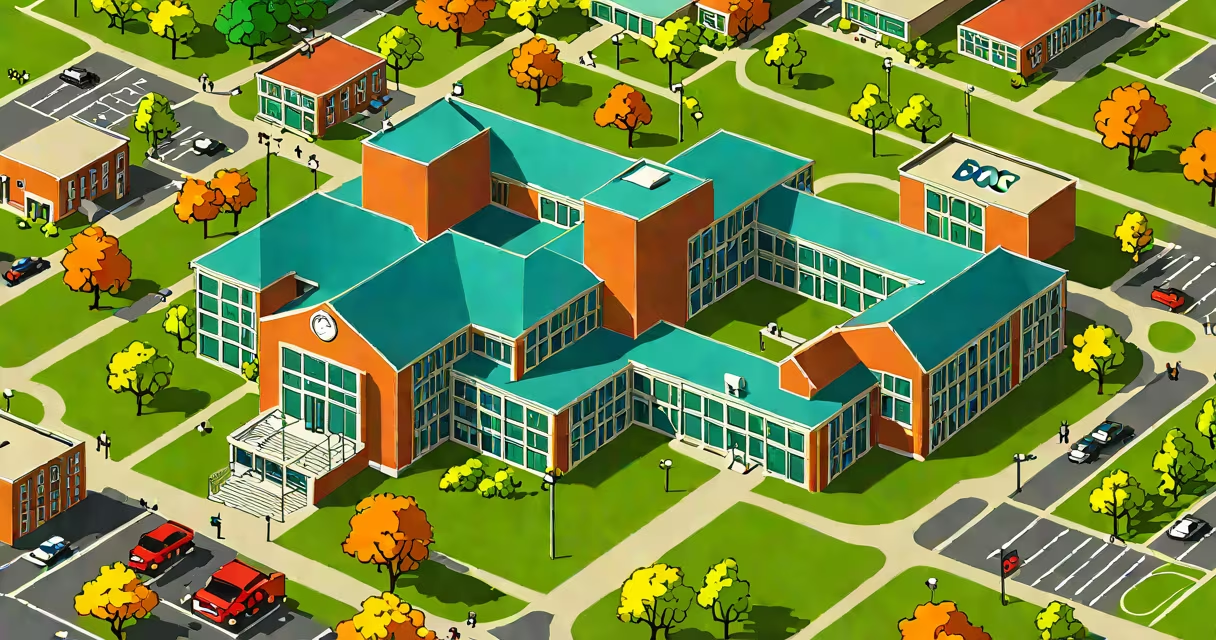
BOCES in New York stands for Board of Cooperative Educational Services, a regional entity formed by multiple school districts to jointly provide specialized education programs and shared services. These boards operate under state law and are designed to improve efficiency, reduce costs, and ensure equitable access to high-quality instruction and support services across rural and urban communities.
BOCES was established in 1948 under New York State Education Law §2501, enabling school districts to pool resources and avoid duplicating expensive programs. Instead of each district independently operating career and technical education centers, special education teams, or professional development workshops, BOCES delivers them regionally. This model allows smaller districts with limited budgets to offer advanced coursework and services they couldn't afford alone.
For example, the Capital Region BOCES serves 26 school districts across Albany, Saratoga, and Schenectady counties. It operates nine career and technical education centers offering training in fields such as healthcare, engineering, and cybersecurity. A student from a small district in Saratoga County can attend a welding program at a Capital Region BOCES facility and earn industry certifications while still being enrolled in their home district's high school.
Each BOCES is governed by a board of directors elected by the member school districts. The board sets policy, approves budgets, and oversees program delivery. Funding comes primarily from local property taxes within member districts, supplemented by state aid. Districts contribute based on enrollment and participation levels.
BOCES programs fall into four main categories: career and technical education (CTE), special education services, professional development for educators, and administrative support. CTE programs often include hands-on labs, industry partnerships, and certification exams. Special education services may involve specialized classrooms, speech therapy, or behavioral intervention teams delivered on-site or via telehealth.
A district doesn't have to join a BOCES to access services, but most do. According to the New York State Education Department (NYSED), 84% of school districts in New York participate in at least one BOCES program. The remaining districts either operate their own programs or contract directly with private providers.
The following table outlines common BOCES program types, their functions, and real-world examples:
| Program Type | Function | Example Location and Service |
|---|---|---|
| Career and Technical Education (CTE) | Provides vocational training and industry certifications | Western Suffolk BOCES offers robotics and biomedical technology programs |
| Special Education Support | Delivers specialized instruction and therapy services | Genesee Valley BOCES provides autism spectrum disorder intervention teams |
| Professional Development | Offers training for teachers and administrators | Central New York BOCES hosts annual STEM teaching workshops |
| Administrative & IT Services | Manages shared systems like payroll, data reporting, and cybersecurity | Long Island BOCES runs a centralized student information system |
These services are not optional-they're mandated by federal and state laws. For example, the Individuals with Disabilities Education Act (IDEA) requires that students with disabilities receive a free appropriate public education (FAPE). BOCES ensures compliance by providing consistent, qualified staff and documented progress tracking.
Many people assume BOCES is a single statewide agency. It is not. There are 37 distinct BOCES regions across New York State, each serving a defined geographic area. They are legally independent entities with separate budgets, leadership, and service offerings.
Another misconception is that BOCES replaces local school districts. It does not. Member districts retain authority over curriculum, staffing, and student records. BOCES acts as a service provider, much like a utility company supplies electricity. The district chooses which services to use and pays a share of the cost based on usage.
A lesser-known fact: BOCES is not limited to K-12 education. Some BOCES programs serve adult learners. For instance, the Finger Lakes BOCES offers adult basic education and GED preparation through community partnerships. This reflects a broader mission to support lifelong learning beyond traditional school years.
In 2022, the town of Franklinville, located in Chautauqua County, had a high school with fewer than 200 students. The district lacked funding to maintain a full-time computer science teacher or advanced math courses. By partnering with the Southern Tier BOCES, the school gained access to online AP Computer Science A classes taught by certified instructors and supported by BOCES tutors.
Over two academic years, 42 students from Franklinville took the AP exam. Of those, 31 scored a 3 or higher-above the national average. The district reported a 27% increase in college applications from seniors, many citing the BOCES program as a key factor in their confidence.
This outcome aligns with findings from the New York State Education Department's 2023 report on BOCES effectiveness, which found that participating districts saw a 15% improvement in graduation rates and a 22% reduction in per-student instructional costs over five years.
I visited the Hudson Valley BOCES center in Poughkeepsie during a career fair for high school juniors and seniors. Over 20 local employers were present, including medical labs, construction firms, and tech startups. Students rotated through booths, practiced interview skills, and applied for apprenticeships. One student, a junior from a district with no formal CTE program, secured a paid internship in HVAC maintenance after a 15-minute conversation with a recruiter.
That moment underscored a core truth: BOCES isn't about bureaucracy-it's about opportunity. It bridges gaps between classroom learning and real-world careers, especially for students who might otherwise be overlooked.
What is BOCES in NY? It is a regional collaborative structure that enables school districts to share resources, reduce costs, and expand educational opportunities. These boards are essential to maintaining equity in education across New York's diverse communities-from urban centers to remote towns.
Understanding BOCES is critical for parents, educators, and policymakers. It explains how a student in a small district can access the same quality of instruction as one in a large city. As New York continues to invest in workforce development and educational equity, BOCES remains a proven model for efficient, effective service delivery.