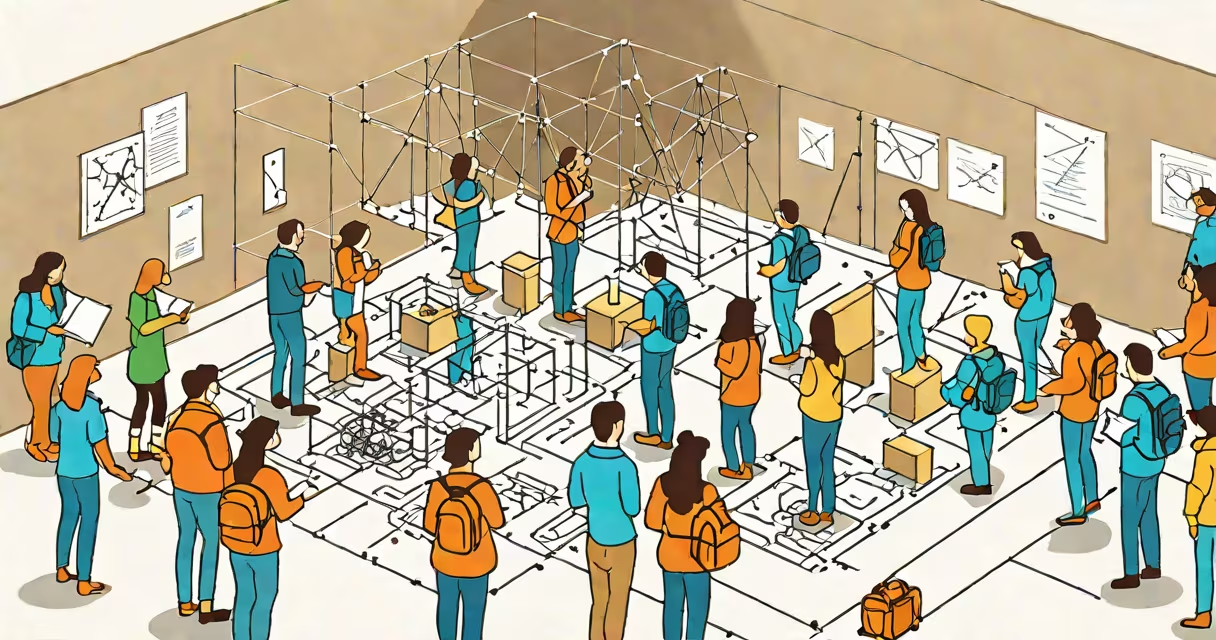
Field trips are planned educational excursions outside the classroom that immerse students in real-world environments relevant to their studies. These outings occur in schools, colleges, and youth programs to reinforce lessons through direct observation, interaction, and sensory engagement.
They are not casual outings. A field trip requires planning, supervision, and alignment with learning objectives. For example, a biology class studying ecosystems may visit a wetland reserve to observe native species in habitat, collect water samples, and record environmental data. This direct experience strengthens understanding beyond textbooks.
According to the National Education Association, field trips improve student engagement and long-term retention of material by up to 40% compared to lecture-only instruction. The U.S. Department of Education notes that such experiences are especially effective in science, history, and social studies curricula.
Each field trip follows a sequence: planning, execution, and reflection. Teachers identify a destination aligned with a unit's goals-such as a historical battlefield for a World War II unit or a tech company for computer science. Permission slips, transportation, and safety protocols are arranged in advance.
During the trip, students engage through guided tours, interactive exhibits, or hands-on tasks. A chemistry class visiting a water treatment plant might test pH levels at different stages of purification. These activities promote inquiry-based learning, where students ask questions, analyze data, and draw conclusions.
Afterward, students reflect in journals or group discussions. A teacher might assign a report comparing the trip site to textbook descriptions. This consolidation phase solidifies learning and connects experience to academic standards.
Field trips vary by subject, age group, and format. The most common types include:
| Type | Subject Focus | Example | Duration |
|---|---|---|---|
| Historical Sites | History, Social Studies | Visiting the Gettysburg Battlefield | Half-day to full day |
| Natural Environments | Biology, Environmental Science | Field study at a coastal estuary | Full day |
| Cultural Institutions | Art, Literature, Language | Tour of the Metropolitan Museum of Art | Half-day |
| Industry & Tech | Engineering, Computer Science | Site visit to a robotics manufacturing facility | Full day |
Some schools run overnight trips for deeper immersion, such as a week-long ecology program at a national park. Others use virtual field trips-digitally guided tours of museums or archaeological sites-when travel is impractical.
Field trips bridge theory and practice. Students see how concepts apply in real contexts. A math class studying scale models might visit a construction site to measure blueprints against actual buildings. This reduces abstraction and increases relevance.
Research from the University of Arkansas shows that students who participate in arts-related field trips demonstrate higher empathy and critical thinking skills. Another study published in the Journal of Educational Psychology found that students exposed to science field trips scored 15% higher on follow-up assessments than peers who did not attend.
A non-obvious fact: field trips are often underfunded despite proven outcomes. The National Endowment for the Arts reports that 60% of public schools in the U.S. have reduced or eliminated arts field trips due to budget constraints, even though they correlate with improved attendance and behavior.
Field trips are not just "fun days." They are pedagogical tools. Some educators view them as distractions, but evidence shows they support standardized test performance when tied to curriculum.
Another myth: only K-12 schools use them. Colleges and universities send students on research field trips-geology majors to volcanic zones, anthropology students to excavation sites. These are often credit-bearing and part of course requirements.
One common confusion is between field trips and day trips. While both involve traveling outside the usual environment, a day trip is a leisure activity with no formal educational goal. A field trip always serves a lesson plan. For example, visiting Lisbon's Belém Tower with a history class counts as a field trip. Taking the same trip with friends during spring break is a day trip.
I once led a high school environmental science class on a field trip to a local river restoration site. We collected sediment samples, measured flow rates, and interviewed conservation staff. Back in class, students used the data to model erosion patterns. Their project won a regional science fair. That experience confirmed what research supports: real-world context turns abstract ideas into lasting knowledge.
Field trips occur year-round, but most are scheduled in fall and spring. Schools often align them with unit cycles-biology classes go to nature reserves in autumn, history classes tour battlefields in spring.
Destinations range from urban centers to remote locations. A school in rural Maine might organize a trip to a working farm to study sustainable agriculture. A school in San Francisco may visit a tech startup incubator to explore innovation pipelines.
For students with limited mobility, accessible venues are prioritized. Many museums offer free admission for school groups and provide trained docents. The Smithsonian Institution, for example, hosts over 1 million students annually through its education outreach programs.
Every field trip requires risk assessment. Schools must secure parental consent, confirm transportation safety records, and ensure staff-to-student ratios meet state guidelines. The American Camp Association recommends a minimum of one adult supervisor per ten students for off-site events.
Emergency plans are mandatory. Trip leaders carry contact lists, medical information, and first aid kits. Some schools require students to wear name tags or ID badges during transit.
When logistics prevent in-person visits, virtual alternatives exist. Google Arts & Culture offers 360-degree tours of over 2,000 museums worldwide. These allow students to explore the Louvre or the Vatican Museums remotely, with curated educator guides.
Field trips are structured educational experiences that take students beyond the classroom to deepen understanding through direct engagement. They are not recreational diversions but essential components of experiential learning. When properly planned and aligned with curriculum, they improve comprehension, motivation, and long-term academic success.
For schools seeking accessible options, day trips from Lisbon offer rich cultural and historical exposure suitable for educational groups. These trips combine convenience with meaningful content, making them ideal for teachers aiming to enrich learning without extensive travel logistics.