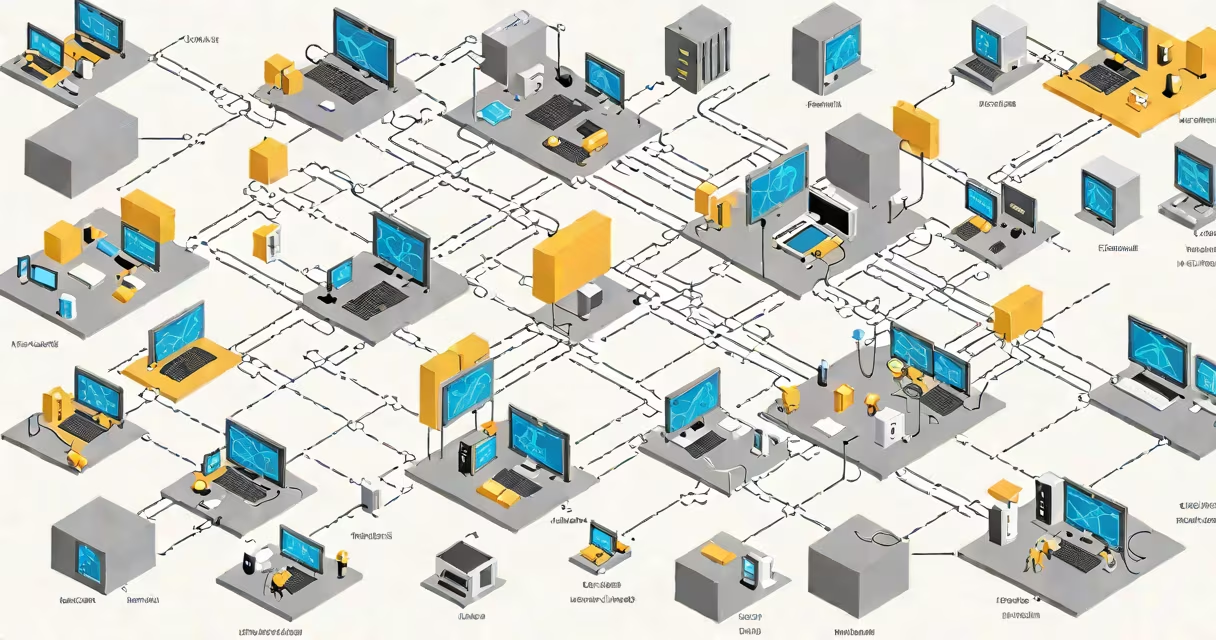
An IP spoofing attack occurs when an attacker falsifies the source IP address in network packets to impersonate another device or evade detection. This technique exploits trust relationships in network protocols, allowing unauthorized access or denial-of-service actions.
Attackers forge the header of Internet Protocol (IP) packets to make them appear as if they originate from a trusted source. The goal is often to bypass authentication systems that rely solely on IP address verification. For example, a system may allow traffic from a known internal IP range, but an attacker using spoofed external IPs can still gain entry if filters aren't properly enforced.
These attacks are common in distributed denial-of-service (DDoS) campaigns, where spoofed packets overwhelm targets with traffic. They're also used in man-in-the-middle scenarios to intercept communications or disrupt services. According to the National Institute of Standards and Technology (NIST), spoofing remains a persistent threat due to the inherent design of early internet protocols.
Every device on a network uses an IP address to identify itself. When data travels across networks, it's broken into packets, each carrying a header with source and destination IP addresses. In a spoofing attack, the attacker modifies the source IP field in the packet header to match a different device's address.
For the attack to succeed, the attacker must predict or control certain aspects of the communication flow. In connection-based attacks, such as TCP session hijacking, the attacker sends packets with a forged source IP and guesses the correct sequence numbers to maintain the illusion of legitimacy. Without proper sequence validation, the receiving host accepts the packets as valid.
A real-world example occurred during a 2016 DDoS incident targeting Dyn, a major DNS provider. Attackers used botnets to flood servers with spoofed packets from thousands of compromised devices. The volume overwhelmed infrastructure, disrupting access to sites like Twitter, Netflix, and Reddit. The attack demonstrated how spoofing amplifies impact by hiding the true origin of traffic.
Not all spoofing attempts serve the same purpose. The most common variants differ in intent and execution:
| Type | Purpose | Common Use Case | Difficulty Level |
|---|---|---|---|
| Simple Spoofing | Hide identity or bypass basic filters | Launching low-volume DDoS attacks | Low |
| Session Hijacking | Take over active connections | Intercepting login sessions or data transfers | High (requires sequence prediction) |
| Amplification Attacks | Maximize traffic volume | Using open UDP services to reflect traffic | Medium (depends on vulnerable services) |
Simple spoofing is the easiest to execute. Tools like hping3 or Scapy allow attackers to craft custom packets with arbitrary source IPs. These are often used in reconnaissance or to test firewall rules.
Session hijacking is more complex. It requires understanding the TCP handshake process and predicting sequence numbers. A successful attack allows the attacker to inject data into an ongoing session without authentication. This was exploited in early web application breaches where session tokens were transmitted over unencrypted channels.
Amplification attacks use misconfigured servers-such as those running DNS or NTP-to reflect traffic. An attacker sends a small request with a spoofed source IP to a vulnerable server. The server responds with much larger data, overwhelming the target. The 2018 Mirai botnet variant used this method to generate over 1.7 terabits per second of traffic.
Many assume spoofing requires deep technical access or advanced tools. But anyone with basic networking knowledge and a few lines of Python code can generate spoofed packets. The misconception arises because spoofing doesn't always cause visible disruption-it's often invisible until damage occurs.
A key distinction: spoofing does not require access to the victim's network. It operates at the packet level, meaning attackers can launch attacks from anywhere with internet connectivity. This makes attribution difficult. The actual source of traffic may be hundreds of miles away, while the spoofed IP belongs to a legitimate device under no direct control.
Detection relies on analyzing packet behavior rather than trusting IP addresses alone. Network administrators use ingress filtering-checking incoming traffic against expected source ranges-and egress filtering to prevent outbound spoofing. The Internet Engineering Task Force (IETF) recommends implementing BCP 38 (Best Current Practice 38), which mandates ISPs filter spoofed traffic at the edge of their networks.
I once observed a spoofing attempt during a penetration test. A tool generated ICMP echo requests with a spoofed source IP set to 192.168.1.1-the router's address. The target system replied to the router, not the attacker. The response was logged, revealing the spoofed origin. This confirmed that even internal networks aren't immune when filtering is disabled.
Defenses start with configuration. Enabling Unicast Reverse Path Forwarding (uRPF) on routers ensures packets come from a routeable path. If a packet arrives from a direction that doesn't match the routing table, it gets dropped. This blocks many spoofed packets at the edge.
Firewalls should enforce stateful inspection, tracking active connections and rejecting unsolicited inbound packets. Modern firewalls also support rate limiting and anomaly detection, flagging sudden spikes in traffic from unusual sources.
Applications must validate input independently of IP addresses. Authentication should never rely solely on IP whitelisting. Instead, use multi-factor methods, encrypted tokens, or behavioral analysis. The Open Web Application Security Project (OWASP) warns that relying on IP-based access controls creates false confidence in security.
When spoofing is detected, logging and correlation tools help trace patterns. Tools like Wireshark or Zeek (formerly Bro) can analyze packet flows and show anomalies such as mismatched source IPs or unexpected packet sizes. Real-time alerts reduce response time.
Understanding what is ip spoofing attack isn't about fear-it's about awareness. Knowing how it works enables better defenses. The core principle: trust no IP address by itself. Verify context, validate routes, and monitor behavior.