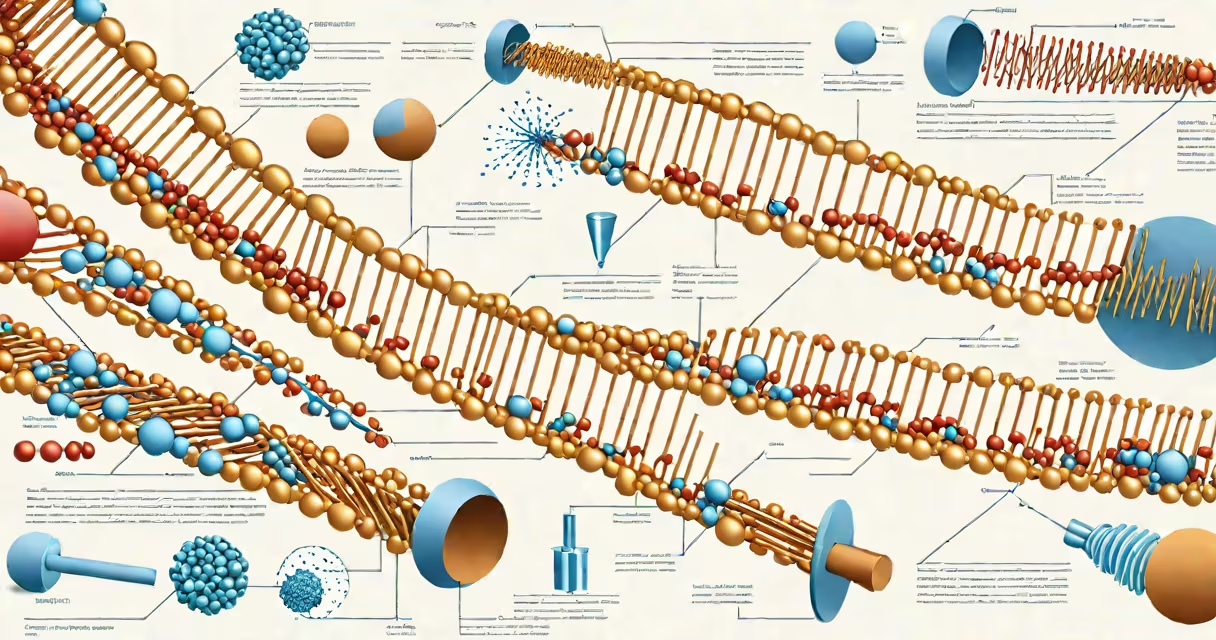
Recombinant DNA is engineered DNA formed by joining genetic material from different sources, typically using restriction enzymes and DNA ligase. This technique enables the production of proteins like human insulin, vaccines, and gene therapy vectors in host organisms such as bacteria or yeast.
Recombinant DNA technology allows scientists to insert specific genes into plasmids-small circular DNA molecules-and transfer them into host cells. Once inside, the host cell's machinery replicates the foreign DNA and expresses the encoded protein. This process underpins much of modern biotechnology and genetic medicine.
The method relies on precise molecular tools: restriction enzymes cut DNA at specific sequences, and DNA ligase seals the fragments together. The resulting hybrid molecule contains genetic information from multiple species, enabling the creation of novel biological functions not found in nature.
Scientists begin by isolating a gene of interest-such as the human insulin gene-from a donor organism. They then use restriction enzymes to cut both the gene and a plasmid vector at compatible ends. When mixed, the gene and plasmid join via covalent bonds formed by DNA ligase.
This recombinant plasmid is introduced into bacterial cells through transformation, where the bacteria take up the plasmid and replicate it during cell division. Each daughter cell inherits the plasmid, creating a clone of genetically identical cells-all producing the desired protein.
To confirm successful insertion, researchers screen colonies using antibiotic resistance markers or blue-white screening. Only cells containing the recombinant plasmid survive selection, ensuring purity of the final product.
Recombinant DNA is used across medicine, agriculture, and industrial processes. The most common applications fall into four categories: therapeutic protein production, vaccine development, agricultural modification, and research tools.
| Application | Example | Host Organism | Outcome |
|---|---|---|---|
| Therapeutic protein | Human insulin (Humulin) | E. coli | Diabetes treatment since 1982 |
| Vaccine production | Hepatitis B surface antigen | Saccharomyces cerevisiae (yeast) | Recombinant vaccine approved 1986 |
| Agricultural improvement | Bt corn (insect-resistant) | Maize (corn) | Reduced pesticide use by 30% |
| Research tool | Reporter genes (GFP) | Various model organisms | Visualizing gene expression in live cells |
Each application leverages the ability to express foreign genes in large quantities. For example, insulin produced via recombinant DNA is chemically identical to human insulin, reducing allergic reactions seen in earlier animal-derived versions.
One non-obvious fact: recombinant DNA does not always require living hosts. Synthetic biology now uses cell-free systems-enzymes and purified components-to translate DNA into proteins without cells. This method speeds up prototyping and avoids contamination risks.
Recombinant DNA is often confused with gene editing techniques like CRISPR-Cas9. While both manipulate DNA, they differ fundamentally. Recombinant DNA creates new combinations of existing genes, whereas CRISPR edits specific sequences within native genomes.
Another misconception is that recombinant DNA produces "designer organisms" overnight. In reality, constructing a functional recombinant system takes months of optimization. Researchers must test multiple promoter sequences, codon usage patterns, and expression conditions to achieve high yields.
Some assume all recombinant products are genetically modified organisms (GMOs). But the term GMO refers to the final organism, not the process. A bacterium producing insulin is a GMO, but the recombinant DNA itself is just a sequence of nucleotides.
In 1978, Genentech scientists inserted the human insulin gene into E. coli. They used EcoRI restriction enzyme to cut both the gene and a plasmid vector. After ligation, the recombinant plasmid was transformed into E. coli cells.
When induced with IPTG, the bacteria began expressing proinsulin-a precursor form. The protein was extracted, purified, and converted into active insulin. By 1982, this method replaced animal-sourced insulin, which caused immune responses in 10-15% of patients.
Today, over 10 million people worldwide use recombinant human insulin. Annual production exceeds 100 billion units, with factories in India, Germany, and the U.S. using optimized E. coli strains that yield 1 gram of insulin per liter of culture.
I once observed a lab experiment where students cloned a green fluorescent protein (GFP) gene into a plasmid and transformed it into E. coli. After 12 hours of growth, colonies glowed under UV light. The success rate was 72%-not perfect, but enough to demonstrate how reliably recombinant DNA works when protocols are followed.
What stood out was the precision required. Even a single mismatch in the restriction site sequence prevented ligation. This highlighted that recombinant DNA isn't magic-it's chemistry guided by exact rules.
The National Institutes of Health (NIH) defines recombinant DNA as "DNA molecules formed by laboratory methods of genetic recombination." Their guidelines, published in 1975, established safety standards still used today [NIH Recombinant DNA Guidelines].
According to the World Health Organization (WHO), recombinant DNA technology accounts for 80% of current biopharmaceutical production. They emphasize its role in scaling safe, consistent manufacturing of complex therapeutics [WHO Biotechnology Report, 2023].
Recombinant DNA is not limited to medical use. Industrial enzymes like cellulases and proteases are now produced in yeast and filamentous fungi using recombinant methods, improving efficiency in biofuel and detergent manufacturing.
Understanding what is recombinant DNA used for reveals its central role in modern science. From treating chronic diseases to enhancing crop resilience, the technique enables targeted biological solutions that were impossible before.