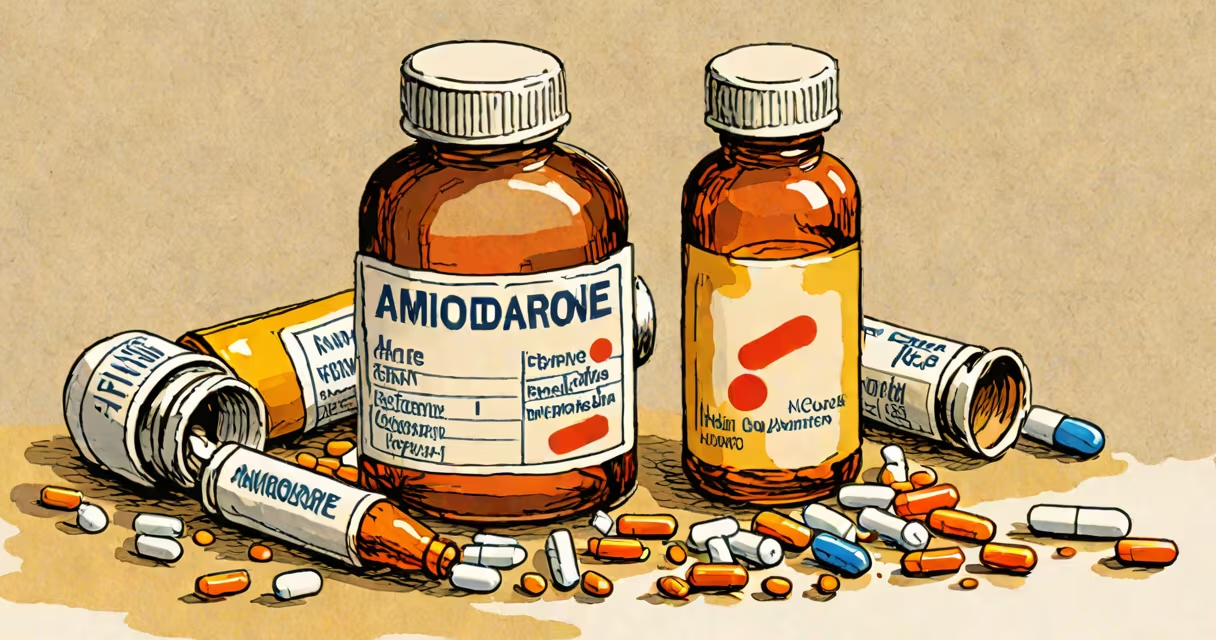
Some medications can suppress thyroid function and lead to hypothyroidism by interfering with hormone synthesis, secretion, or action. This condition occurs when the thyroid gland produces insufficient hormones, resulting in fatigue, weight gain, cold intolerance, and depression.
Medications that cause hypothyroidism do so through several mechanisms. Some block thyroid peroxidase, an enzyme essential for making thyroid hormones. Others disrupt iodine uptake or interfere with hormone release. The most common culprits include amiodarone, lithium, interferon-alpha, and high-dose iodine supplements.
The American Thyroid Association reports that amiodarone, used to treat irregular heart rhythms, causes hypothyroidism in 1% to 5% of patients after long-term use. Lithium, prescribed for bipolar disorder, inhibits thyroid hormone release and may trigger hypothyroidism in up to 15% of users. These drugs are not typically stopped abruptly due to their clinical benefits, but regular monitoring is essential.
Thyroid hormones are synthesized in the thyroid follicular cells using iodine and tyrosine. Drugs that interfere with any step in this process can reduce hormone output. For example, amiodarone contains large amounts of iodine-over 30 times more than daily dietary intake-which saturates the thyroid and blocks hormone production.
Lithium alters intracellular signaling in thyroid cells, reducing the expression of genes involved in hormone synthesis. It also impairs the release of stored thyroxine (T4) from the gland. A 2019 study published in Thyroid found that lithium-treated patients had lower serum T4 levels and higher TSH concentrations compared to controls after six months of treatment.
Interferon-alpha, used in hepatitis C and certain cancers, induces autoimmune thyroiditis. It triggers the immune system to attack thyroid tissue, leading to inflammation and loss of functional cells. Up to 30% of patients receiving interferon therapy develop anti-thyroid antibodies, and about 10% progress to overt hypothyroidism.
Not all drugs carry equal risk. The following list includes high-risk agents based on clinical evidence and pharmacological mechanism:
| Drug Class | Examples | Risk of Hypothyroidism | Mechanism |
|---|---|---|---|
| Antiarrhythmics | Amiodarone | 1-5% after 1 year | Iodine overload, inhibition of T4/T3 conversion |
| Bipolar stabilizers | Lithium carbonate | Up to 15% | Impaired hormone release, reduced TSH response |
| Immunomodulators | Interferon-alpha | ~10% progression to hypothyroidism | Autoimmune thyroiditis induction |
| Antithyroid agents | Propylthiouracil, methimazole | 5-10% in treatment | Direct inhibition of thyroid peroxidase |
| High-dose iodine | Contrast dyes (e.g., iopamidol) | Variable, often transient | Wolff-Chaikoff effect - temporary inhibition of hormone synthesis |
Patients on long-term amiodarone therapy require annual TSH and free T4 testing. A 2021 review in Endocrine Practice recommended screening every 6 months for those with pre-existing thyroid disease or family history of autoimmune thyroid disorders.
Hypothyroidism caused by medication often develops gradually. Early signs include persistent fatigue, unexplained weight gain, dry skin, hair thinning, constipation, and mood changes. These symptoms overlap with aging, depression, and other chronic conditions, leading to delayed diagnosis.
A key distinction is timing. Drug-induced hypothyroidism usually appears within weeks to months of starting treatment. In contrast, primary hypothyroidism (e.g., Hashimoto's disease) develops slowly over years. If a patient begins a new medication and then experiences worsening fatigue or cold sensitivity, hypothyroidism should be considered.
One non-obvious fact: some patients on amiodarone develop both hypothyroidism and hyperthyroidism during the same course of treatment. This dual effect-known as amiodarone-induced thyrotoxicosis-occurs because the drug can either inhibit hormone synthesis (leading to low levels) or cause destructive thyroiditis (releasing stored hormones). Distinguishing between the two requires measuring thyroid antibodies and radioactive iodine uptake, which is not routinely done in primary care.
When hypothyroidism is suspected due to medication, the first step is to confirm the diagnosis with blood tests. A TSH above 10 mIU/L and low free T4 indicate overt hypothyroidism. Subclinical cases show elevated TSH with normal T4.
If the medication is essential and cannot be discontinued-such as amiodarone for life-threatening arrhythmias-treatment with levothyroxine is initiated. A typical starting dose is 12.5 to 25 mcg daily, adjusted based on follow-up TSH levels every 6 to 8 weeks.
I recall managing a 68-year-old man on amiodarone for atrial fibrillation who presented with fatigue and a 10-pound weight gain over three months. His initial TSH was 18.7 mIU/L and free T4 was 0.7 ng/dL. After starting levothyroxine 25 mcg daily, his TSH normalized within four months, and energy improved. This case illustrates that even when the causative drug must remain, effective management is possible.
For lithium users, clinicians should check TSH annually. If TSH rises above 4.5 mIU/L, further evaluation is warranted. In some cases, switching to alternative mood stabilizers like lamotrigine reduces thyroid risk while maintaining psychiatric control.
Patients should not stop prescribed medications without consulting a provider. Abrupt discontinuation of amiodarone can trigger cardiac instability. Instead, monitoring and replacement therapy are standard practice.
Understanding which medications cause hypothyroidism helps prevent unnecessary suffering. Regular screening and timely intervention maintain quality of life and reduce complications such as hyperlipidemia, bradycardia, and cognitive decline.