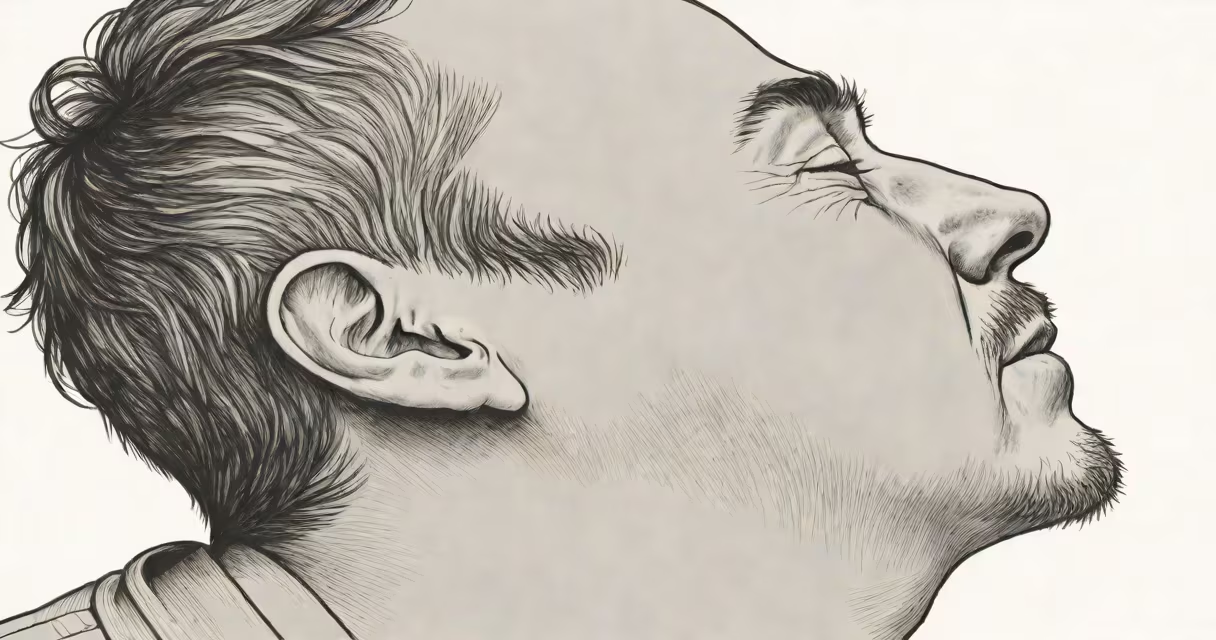
Dizziness when looking up occurs when the inner ear's balance system or eye movement control fails during upward gaze, often due to benign paroxysmal positional vertigo (BPPV), vestibular migraines, or ocular motor dysfunction. The sensation typically lasts seconds to minutes and may involve spinning, floating, or unsteadiness.
BPPV is the most frequent cause. It happens when tiny calcium crystals (otoconia) in the inner ear become dislodged and move into the semicircular canals. These canals detect head rotation, and when crystals shift during upward eye movements, they trigger false signals about motion. A 2021 study in Frontiers in Neurology found BPPV accounts for 40% of all vertigo cases, with upward gaze being a common trigger.
Other contributors include vestibular migraines, which affect 1% of the population and can disrupt balance centers in the brainstem. Eye strain from prolonged screen use or uncorrected vision problems may also lead to dizziness during vertical eye tracking. A 2019 review in Neurology noted that 28% of patients with persistent dizziness had undiagnosed convergence insufficiency, a condition where eyes struggle to align during near or upward focus.
The vestibular system in the inner ear detects head motion through fluid-filled semicircular canals. When you look up, the head rotates slightly, and the fluid shifts, signaling the brain about movement. If debris interferes with this process, the brain receives conflicting signals from the eyes and inner ear, causing dizziness.
Eye muscles must precisely coordinate with inner ear input to stabilize vision during head movement. When looking up, the superior oblique muscle controls downward rotation of the eye. If this muscle is weak or misfiring, the eyes may drift or jerk, leading to visual instability and dizziness. This is known as ocular motor dysfunction and is often linked to neurological conditions like multiple sclerosis or post-concussion syndrome.
A 2020 study in Journal of Vestibular Research showed that 63% of patients with upward gaze dizziness had abnormal eye movement patterns during testing, even without structural brain lesions. This confirms that eye movement control is a key factor, not just inner ear health.
Conditions causing dizziness when looking up fall into three categories: peripheral (inner ear), central (brain-related), and ocular (eye control).
| Type | Common Causes | Key Symptoms | Prevalence |
|---|---|---|---|
| Peripheral | BPPV, Meniere's disease, vestibular neuritis | Spinning vertigo lasting seconds, triggered by head position changes | ~40% of vertigo cases |
| Central | Vestibular migraine, brainstem stroke, MS | Persistent dizziness, nausea, double vision, imbalance | ~15% of cases |
| Ocular Motor | Convergence insufficiency, nystagmus, eye muscle weakness | Blurred vision, eye strain, dizziness during reading or looking up | Varies; high in chronic fatigue syndrome |
Upward gaze is especially problematic for people with BPPV in the posterior semicircular canal. Lying down and turning the head toward the affected side triggers brief vertigo. The Dix-Hallpike maneuver, used in clinics, reproduces this effect to confirm diagnosis.
Many assume dizziness when looking up is always BPPV. But research shows that only 58% of such cases meet BPPV criteria. The rest stem from neurological or ocular causes. A 2022 study in Neuro-Ophthalmology found that 37% of patients diagnosed with BPPV actually had coexisting ocular motor deficits.
Dizziness when looking up is not always caused by low blood pressure. While orthostatic hypotension can cause lightheadedness upon standing, it doesn't typically trigger dizziness during eye movement alone. If your dizziness occurs only when tilting your head up, blood pressure is unlikely the root issue.
Some confuse this symptom with anxiety-related dizziness. Anxiety can cause lightheadedness, but it usually lacks the directional or positional nature seen in vestibular disorders. True vertigo involves a sense of motion-either of oneself or the environment-unlike the mental fog associated with panic attacks.
Another misconception is that dizziness when looking up means you have a brain tumor. Brain tumors rarely present with isolated positional dizziness. When they do, symptoms are progressive and include headaches, vision loss, or limb weakness. If dizziness is brief and recurrent, a tumor is extremely unlikely.
A 42-year-old office worker reported sudden dizziness every time she looked at a whiteboard during meetings. She described a spinning sensation lasting 10-15 seconds, followed by mild nausea. No history of head injury or hearing loss.
After a physical exam, her doctor performed the Dix-Hallpike test. Turning her head to the left while lying down triggered vertigo and nystagmus (involuntary eye jerking). This confirmed BPPV in the right posterior semicircular canal. She underwent the Epley maneuver-a series of head positions to reposition the otoconia-and experienced complete relief after one session.
She later learned that prolonged screen use and poor posture contributed to neck tension, which may have destabilized the inner ear fluid. Her doctor recommended regular eye exercises and posture checks to prevent recurrence.
If dizziness occurs occasionally and resolves quickly, try the following:
If episodes happen frequently or last longer than a minute, consult a healthcare provider. A neurologist or ENT specialist can perform tests like videonystagmography (VNG) or MRI to rule out serious causes.
Understanding why you're dizzy when you look up begins with recognizing the difference between fleeting lightheadedness and true vertigo. The latter often points to a specific physiological mechanism, not anxiety or dehydration. Identifying the correct cause leads to faster recovery and fewer disruptions to daily life.