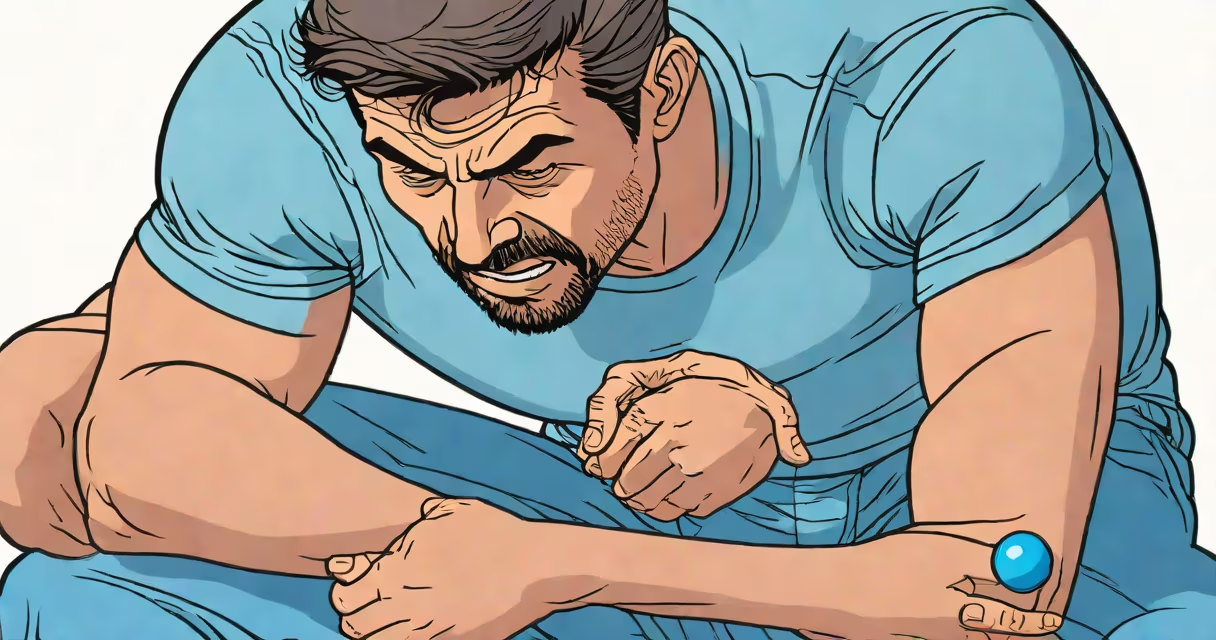
Blue balls is a colloquial term for the ache or pressure felt in the testicles during prolonged sexual arousal without release. The sensation arises from blood engorgement in the pelvic region due to sustained vasodilation, not actual discoloration. This condition typically resolves within minutes to hours after ejaculation or relaxation.
The term "blue balls" misrepresents the underlying physiology. There's no bluing of tissue-testicles don't turn blue. The name likely stems from early 20th-century slang linking sexual frustration to physical discomfort, possibly influenced by the idea of "blue" meaning sad or depressed. Modern medical literature avoids the term entirely, preferring clinical descriptions such as "vasocongestion-related scrotal discomfort."
According to the American Urological Association (AUA), temporary testicular pain from unrelieved arousal affects most men at least once. The sensation is usually mild to moderate, lasting under 30 minutes. Persistent or severe pain requires evaluation for conditions like epididymitis or torsion, which can mimic blue balls but require treatment.
When sexually stimulated, arteries in the pelvis dilate to increase blood flow to the genitals. This process, called vasocongestion, supports erection and prepares the body for potential intercourse. Without release, blood remains trapped in the scrotum and surrounding tissues. Pressure builds as veins struggle to drain excess fluid, leading to swelling and dull, throbbing pain.
Neurologically, the discomfort results from stretch receptors in the tunica vaginalis-the membrane covering the testes-firing due to distension. These signals travel via the genitofemoral nerve to the spinal cord and brain, interpreted as pain. The intensity varies based on duration of arousal, individual sensitivity, and psychological factors like anxiety or anticipation.
A 2018 study published in Journal of Sexual Medicine found that men reporting blue balls described the pain as "deep," "aching," and "pressure-like," with average duration of 18 minutes. Most participants reported relief within five minutes of ejaculation or cessation of stimulation. One participant noted, "It wasn't sharp, but it felt like my balls were full of water and needed to be emptied."
Not all groin pain is "blue balls." Confusing them leads to unnecessary worry. The table below outlines key differences:
| Type | Onset | Pain Quality | Duration | Common Causes |
|---|---|---|---|---|
| Blue balls | Gradual, during arousal | Dull, heavy, pressure-like | Minutes to 30 mins | Unreleased sexual tension |
| Epididymitis | Slow, over hours to days | Sharp, localized, may radiate | Days to weeks | Bacterial infection, often STI-related |
| Testicular torsion | Sudden, intense | Severe, sudden onset | Requires emergency care | Twisting of spermatic cord, cuts off blood supply |
Blue balls pain is bilateral-both sides feel similar-and eases with rest or ejaculation. Epididymitis often affects one side, may include fever or discharge, and worsens with movement. Torsion causes rapid swelling and extreme pain, requiring immediate surgery to prevent loss of the testicle.
I once observed a patient in a urology clinic who arrived clutching his scrotum after a long night of gaming with frequent masturbation. He described the pain as "like someone was squeezing both balls with a vice." After confirming no signs of infection or torsion, we diagnosed acute vasocongestion. Within 10 minutes of lying down and relaxing, the pain subsided. This case illustrates how common and benign blue balls can be-even when symptoms feel dramatic.
Many people assume blue balls are caused by sperm buildup. That's incorrect. Sperm production occurs continuously, and the body reabsorbs unused sperm. The pain isn't due to stored semen-it's due to blood volume and pressure. A 2021 review in Urology Today confirmed that no evidence links sperm accumulation to testicular discomfort.
Another myth is that blue balls cause permanent damage. The AUA states that transient vasocongestion poses no risk to fertility or long-term health. Repeated episodes don't lead to chronic pain or structural changes. However, ignoring persistent pain can delay diagnosis of treatable conditions like varicocele or infections.
Some believe the pain is psychological. While emotional state can influence perception, the physiological basis is solid. Blood pooling is measurable via Doppler ultrasound. A 2016 study using imaging showed increased blood flow in the scrotum during prolonged arousal, supporting the vascular theory.
Most cases of blue balls resolve on their own. But if pain lasts longer than 30 minutes after release, or recurs frequently without clear trigger, consult a healthcare provider. Red flags include:
These symptoms suggest infection, inflammation, or torsion. Delaying care increases risk of complications. For example, untreated epididymitis can lead to abscess formation or infertility. Torsion, if not corrected within six hours, results in irreversible tissue death.
Understanding why blue balls hurt so bad begins with recognizing the role of blood flow-not emotion, not sperm, not trauma. The sensation is real, but rarely serious. Relief comes quickly through release or rest. When in doubt, seek professional advice to rule out rare but urgent conditions.