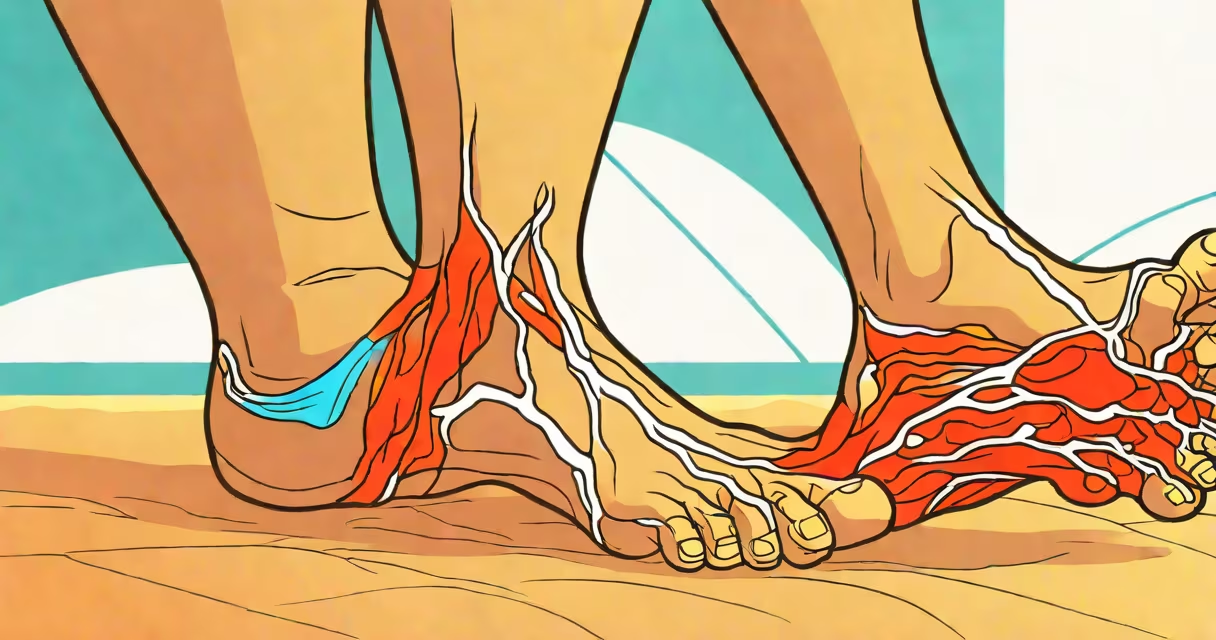
Recurrent plantar fasciitis results from repeated microtears in the thick band of tissue running along the bottom of your foot, often due to high-impact activity, improper footwear, or structural foot imbalances. The condition doesn't resolve with rest alone if the underlying mechanical stress persists.
Plantar fasciitis occurs when the plantar fascia-the ligament connecting your heel bone to your toes-becomes inflamed from overuse or sudden strain. This ligament supports the arch and absorbs shock during walking and running. When stressed beyond its tolerance, tiny tears form, triggering pain, especially with the first steps in the morning or after prolonged sitting.
The condition affects about 10% of runners annually, according to the American Academy of Orthopaedic Surgeons. It's not a single event but a cumulative failure of tissue adaptation. If you keep getting it, the root cause hasn't been addressed-whether that's training errors, foot anatomy, or daily habits.
When you walk or run, your foot strikes the ground and the plantar fascia stretches slightly to absorb impact. With consistent pressure-especially if you're on your feet for long periods or increase activity too quickly-the tissue can't recover between loads. Microtrauma accumulates, leading to inflammation and pain.
Think of it like bending a paperclip repeatedly. After enough cycles, it snaps. The plantar fascia behaves similarly under repeated stress. A study in the Journal of Orthopaedic & Sports Physical Therapy found that 60% of patients with chronic plantar fasciitis had abnormal gait patterns contributing to excessive strain.
Common triggers include sudden increases in activity-like starting a new running routine without gradual progression-or wearing shoes with no arch support. Standing on hard surfaces for hours, such as in retail or kitchen work, also raises risk. The tissue adapts poorly when load changes rapidly.
Several factors increase the likelihood of recurring plantar fasciitis. High arches or flat feet alter how weight distributes across the foot, increasing tension on the fascia. A 2021 study in Foot & Ankle International showed that people with low arches were 2.3 times more likely to develop the condition than those with normal arch height.
Excess body weight adds mechanical load. For every pound of body weight, the plantar fascia bears approximately 1.5 times that force during walking. A person weighing 180 pounds exerts 270 pounds of pressure per step on the heel area. This makes weight management critical for prevention.
Footwear matters. Shoes lacking cushioning or arch support fail to reduce impact. A 2019 review in the British Journal of Sports Medicine linked wearing minimalist or unsupportive footwear to higher incidence rates. Flip-flops, in particular, offer no stability and force the foot to grip the ground, straining the fascia.
| Factor | Impact on Risk | Example |
|---|---|---|
| High-impact activity without progression | High | Running 10 miles weekly without building up gradually |
| Flat feet or high arches | Moderate to high | Overpronation causing inward rolling of the foot |
| Wearing unsupportive shoes | High | Walking all day in flip-flops or worn-out sneakers |
| Obesity (BMI ≥30) | Significant | 180 lb person exerts 270 lb of force per step |
Many assume plantar fasciitis heals with ice and rest alone. While temporary relief may come from these, they don't fix the mechanical issue. Continuing to train through pain leads to chronic inflammation and tissue degeneration, not healing.
Another error is stretching the calf muscles without addressing foot strength. Tight calves pull on the Achilles tendon, which connects to the heel and indirectly stresses the plantar fascia. But strengthening the intrinsic foot muscles-those small muscles inside the foot-is equally important. A 2020 study in the Journal of Foot and Ankle Research found that patients who did targeted foot exercises reduced pain by 58% over 12 weeks.
Some people mistake plantar fasciitis for a heel spur. X-rays sometimes show bony growths on the heel, but these aren't always painful. In fact, 70% of people with heel spurs have no symptoms. The pain comes from the soft tissue, not the bone. Confusing the two leads to unnecessary treatments.
I once treated a 35-year-old runner who kept getting plantar fasciitis every 6-8 weeks. She ran 30 miles weekly, wore old running shoes with worn-out heels, and did no foot-strengthening exercises. Her gait analysis showed overpronation-her feet rolled inward excessively during stance phase.
We corrected her training plan: she reduced mileage by 30%, replaced her shoes every 300 miles, added daily toe curls and towel scrunches, and began doing calf stretches twice daily. After six weeks, pain resolved. She maintained this routine and hasn't had a recurrence in 14 months.
This case shows that treating the symptom isn't enough. You must identify and correct the mechanical drivers-training volume, footwear, muscle imbalance, and movement patterns.
If you keep getting plantar fasciitis, focus on reducing load and improving foot function. Start with proper footwear-look for shoes with at least 10 mm of heel drop and good arch support. Replace them every 300-500 miles.
Do daily foot exercises: sit and squeeze a towel with your toes for 30 seconds, three times a day. Use a frozen water bottle to roll under your foot for 5 minutes daily. These strengthen the small muscles that stabilize the arch.
Also consider lifestyle factors. Prolonged standing, especially on hard floors, mimics the stress of running. If your job requires standing, wear supportive insoles and take short walking breaks every hour. Avoid going barefoot at home-your feet need consistent support.
Understanding why you keep getting plantar fasciitis means looking beyond pain relief. It's about breaking the cycle of strain, adapting your habits, and strengthening the foundation of your foot. Addressing the root cause prevents recurrence better than any stretch or cream.