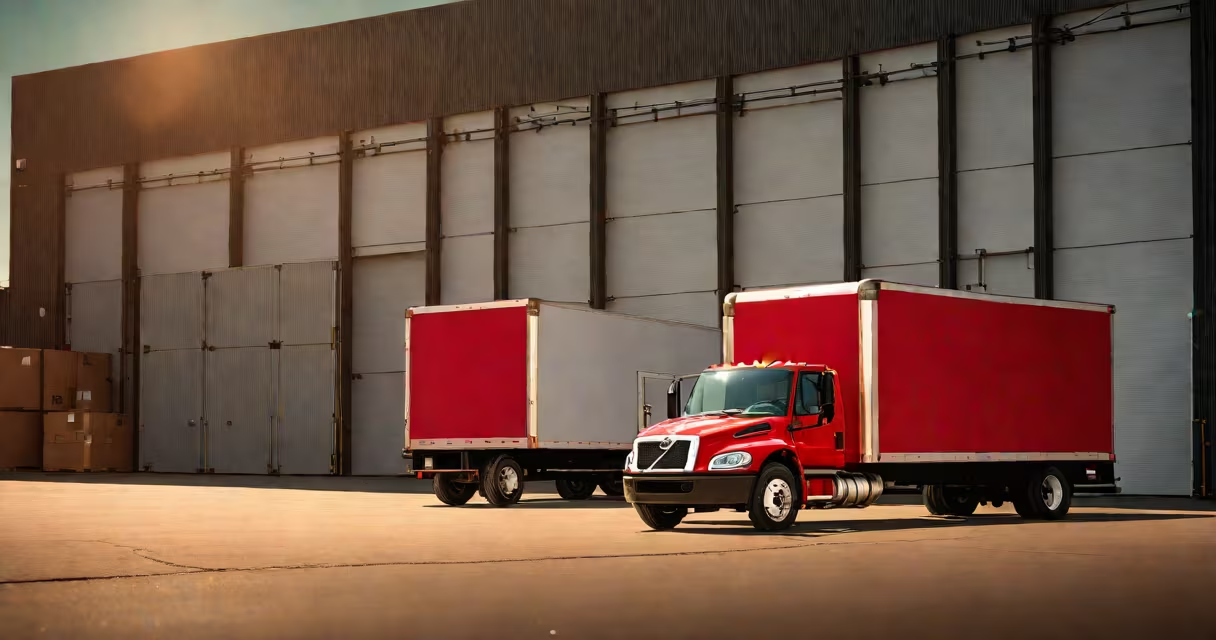
A truck is a motor vehicle designed to transport goods, equipment, or materials over land, typically with a rigid frame, multiple axles, and a cargo-carrying compartment. Trucks range from small delivery vans to massive semi-trailers used in long-haul freight. The term applies to both commercial and military vehicles built for hauling capacity beyond standard passenger cars.
Trucks serve as the core of global supply chains. They move everything from fresh produce to industrial machinery across cities, states, and international borders. According to the U.S. Bureau of Transportation Statistics, trucks accounted for 70% of all freight ton-miles in the United States in 2022, highlighting their dominance in domestic logistics.
Trucks operate using internal combustion engines or increasingly, electric drivetrains. Power is transferred through a transmission to drive axles, which rotate wheels connected to the chassis. The cargo area-called a bed, trailer, or cab-over-varies based on function. Suspension systems absorb road shock, while braking mechanisms use air pressure in larger models due to weight and stopping distance requirements.
Modern trucks integrate electronic control modules that monitor engine performance, fuel efficiency, and safety systems like automatic emergency braking. The Federal Motor Carrier Safety Administration (FMCSA) mandates electronic logging devices (ELDs) for most commercial trucks to track hours of service and reduce fatigue-related accidents.
Trucks are categorized by size, configuration, and intended load. The following table outlines common types:
| Type | Size Range | Common Use | Example Application |
|---|---|---|---|
| Box truck | 16-26 ft long | Local deliveries, moving services | Amazon delivery van transporting 200 packages |
| Reefer truck | 40-53 ft trailer | Temperature-controlled freight | Transporting frozen meat from slaughterhouse to grocery distribution center |
| Semi-truck | 70-85 ft including trailer | Long-haul freight, inter-state shipping | Shipping containers between ports and inland terminals |
| Flatbed truck | 20-40 ft cargo bed | Heavy equipment, construction materials | Hauling steel beams to a building site |
Each type is engineered for specific payloads and road conditions. For example, flatbeds lack sides and roofs, allowing oversized cargo like cranes or wind turbine blades to be loaded safely. Reefer trucks maintain temperatures between -20°F and 40°F using refrigerated units mounted on the trailer's rear.
People often confuse "truck" with "trailer." A trailer is a separate unit towed behind a truck, not powered independently. A semi-truck pulls a trailer, but the trailer itself cannot move without being attached to a tractor unit. This distinction matters for insurance, licensing, and legal liability.
Another misconception is that all trucks are diesel-powered. While diesel dominates long-haul operations due to fuel economy and torque, many urban delivery trucks now use gasoline or battery-electric powertrains. The Environmental Protection Agency reports that electric medium-duty trucks reduced greenhouse gas emissions by 60% compared to diesel equivalents during city-based operations.
In 2023, a small bakery in Portland, Oregon, relocated from a 1,200 sq ft storefront to a new space 18 miles away. The owner needed to move ovens, display cases, and 3,000 lbs of inventory. A 20-foot box truck was selected for its maneuverability and 2,500-lb payload capacity. The rental included insurance and a GPS navigation system.
The driver, a certified commercial vehicle operator, completed the move in under four hours. The truck's hydraulic lift gate enabled easy loading and unloading. After delivery, the business resumed operations within 24 hours. This scenario illustrates how trucks support local economies through flexible, scalable transport solutions.
Trucks are physical vehicles. A truck broker is a person or company that arranges transportation services between shippers and carriers. Brokers don't own trucks-they match loads with available drivers and vehicles. They earn commissions based on successful deliveries.
For example, a manufacturer in Detroit needing to ship 10 pallets to Atlanta might contact a broker. The broker finds a qualified driver with a suitable truck, negotiates rates, and coordinates pickup and drop-off times. The actual movement is done by a carrier, not the broker.
I once watched a team load a 26-foot box truck at a warehouse in Dallas. Workers used a forklift to stack 40-pound boxes onto pallets, then secured them with straps. The driver double-checked the load's balance before closing the rear doors. He drove out with a steady speed, avoiding sudden stops. That moment confirmed how precision and planning prevent damage and delays in real-world logistics.
Trucks are not just machines-they are tools shaped by engineering, regulations, and daily operational demands. Their design reflects trade-offs between payload, fuel efficiency, and ease of handling. Knowing what are trucks-and how they're used-helps anyone involved in shipping, moving, or supply chain work make informed decisions.
Understanding what are trucks involves recognizing their diversity in form and function. From the compact delivery van to the 18-wheeler crossing state lines, each serves a critical role in moving goods efficiently and reliably. managing a national freight network, knowing the basics ensures better outcomes.