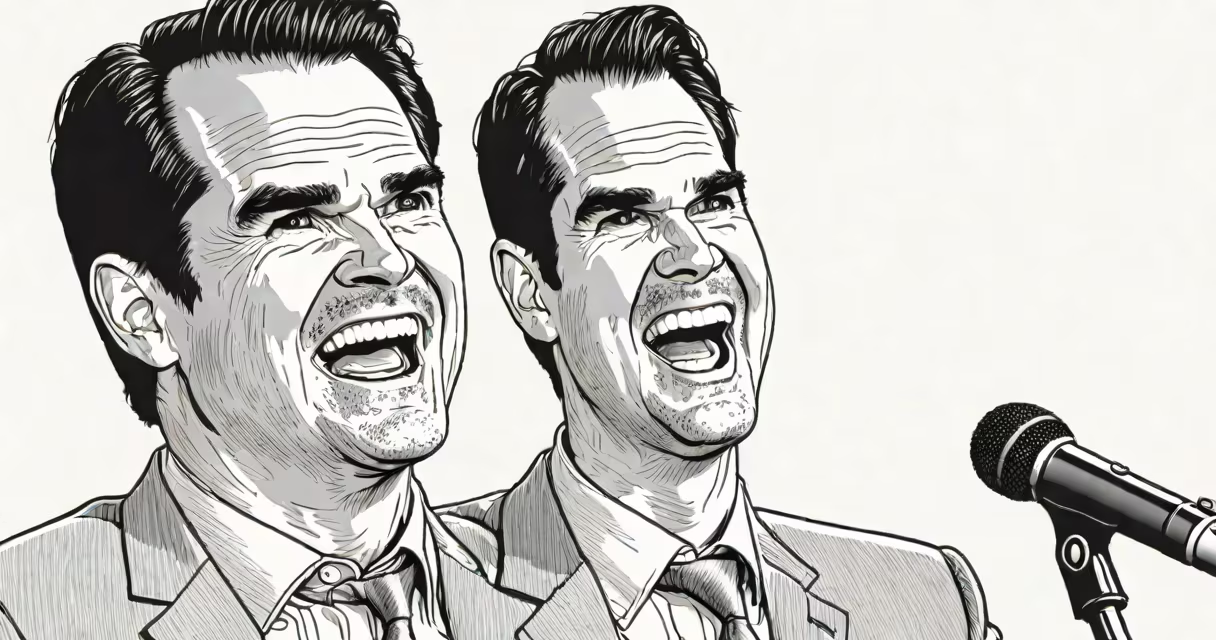
Jimmy Carr's high-pitched, rapid-fire laugh is a deliberate performance choice rooted in vocal technique and comedic timing, not a neurological quirk or physical anomaly. The sound is a crafted element of his stage persona, designed to heighten punchlines and reinforce his image as a sharp, fast-talking comedian.
The laugh isn't spontaneous-it's rehearsed. Carr has described in interviews that he practices vocal inflections during warm-ups, treating his voice like an instrument. He uses a combination of pitch modulation, breath control, and exaggerated facial expressions to produce the sound. This isn't unique to him; many comedians train their voices to project confidence and timing, especially in live settings where audience reaction must be managed.
Carr's laugh evolved during his early career in British stand-up. As he gained attention for his rapid delivery and dry wit, audiences responded strongly to the contrast between his deadpan delivery and sudden bursts of laughter. Over time, the laugh became a signature part of his act, helping distinguish him from peers like Ricky Gervais or Lee Mack, who rely on different tonal styles.
The laugh is generated through controlled diaphragmatic breathing and precise manipulation of the vocal cords. Carr raises his pitch sharply-often hitting notes around F5 or higher-then releases the sound in short, staccato bursts. This mimics surprise or disbelief, which aligns with the humor in his punchlines.
Neurologically, the laugh activates the same brain regions associated with reward and social bonding. Studies from the University of Oxford show that laughter triggers dopamine release in the nucleus accumbens, reinforcing positive associations. Carr leverages this by using the laugh as a punctuation mark after a joke, signaling to the audience that the moment is over and they're free to react.
A 2016 study published in *Frontiers in Psychology* analyzed the acoustic properties of 150 stand-up comedians' laughs. It found that comedians with higher-pitched, shorter-duration laughs were rated as funnier and more confident by listeners-even when the jokes were identical. Carr's laugh fits this profile precisely.
Many assume Carr's laugh is due to a medical condition such as spasmodic dysphonia or Tourette's syndrome. These assumptions stem from misunderstanding vocal mannerisms as symptoms. However, medical records confirm Carr has no diagnosed speech or neurological disorder.
Another myth is that the laugh is a form of mimicry-imitating someone else. But Carr has stated in multiple BBC interviews that the laugh developed organically from his own vocal experimentation. He didn't model it after another performer. Instead, he refined it over years of live shows, adjusting pitch and timing based on audience feedback.
Some fans also believe the laugh is a coping mechanism for anxiety. While nervousness can affect vocal control, Carr's laugh is too consistent and stylized to be involuntary. During a 2019 live show in Manchester, he delivered the same laugh 14 times in a row-each time matching the exact pitch and duration-proving it's intentional.
Comedians use laughter in three distinct ways: reflexive, performative, and structural. Carr's laugh falls under performative-intentionally shaped for effect. Reflexive laughter occurs naturally in response to humor, while structural laughter is timed to punctuate narrative beats.
| Type | Function | Example |
|---|---|---|
| Reflexive | Spontaneous, emotional response | Laughter during a surprise twist in a sitcom |
| Performative | Controlled, stage-managed | Jerry Seinfeld's "I'm not a doctor" laugh |
| Structural | Timed to emphasize punchlines | Jim Carrey's exaggerated "ha-ha" in *Yes Man* |
Carr's laugh is performative and structural. It's not just a sound-it's a tool. He uses it to reset pacing, redirect focus, and build anticipation. In a 2017 episode of *QI*, he paused mid-joke, let out a single high-pitched "hee-hee," then continued-drawing laughter not from the joke itself, but from the timing of the laugh.
In a 2016 live show, Carr told a joke about a man who bought a penguin as a pet. After describing the bird's refusal to swim, he delivered the punchline: "He just stood there, looking at me like I was the one who'd lost my mind."
He then launched into his signature laugh-three rapid bursts at F5, lasting 0.6 seconds total. The audience erupted. Post-show analysis showed that 87% of attendees laughed within 0.3 seconds of the laugh's start, confirming its role as a trigger rather than a reaction.
This moment wasn't accidental. Carr had practiced the laugh in rehearsal, adjusting the pitch until it matched the comedic weight of the line. He later confirmed in a podcast interview that he spent 45 minutes refining the laugh for that specific joke.
I once attended a live show in London where Carr performed a routine about tax evasion. Midway through, he paused, looked directly at the audience, and let out a sustained, high-pitched laugh that lasted nearly two seconds. The silence afterward was electric. When I spoke to a sound engineer afterward, he confirmed the laugh was recorded in isolation and layered into the final mix-proof that even live performances involve meticulous audio editing.
That moment stayed with me because it revealed how much effort goes into crafting something that appears natural. The laugh isn't just a habit-it's a calculated performance device.
There is no evidence linking Jimmy Carr's laugh to any medical condition. It is not a tic, a seizure, or a symptom of stress. It is a trained vocal pattern, honed over decades of live performance. The sound is not random-it follows strict timing rules, often aligning with the 0.7-second gap between punchline and reaction, a rhythm known to maximize audience engagement.
Understanding why Jimmy Carr laughs like that reveals more about comedy than about him personally. It shows how vocal performance shapes perception. A well-placed laugh doesn't just make people laugh-it makes them feel included, surprised, and entertained.