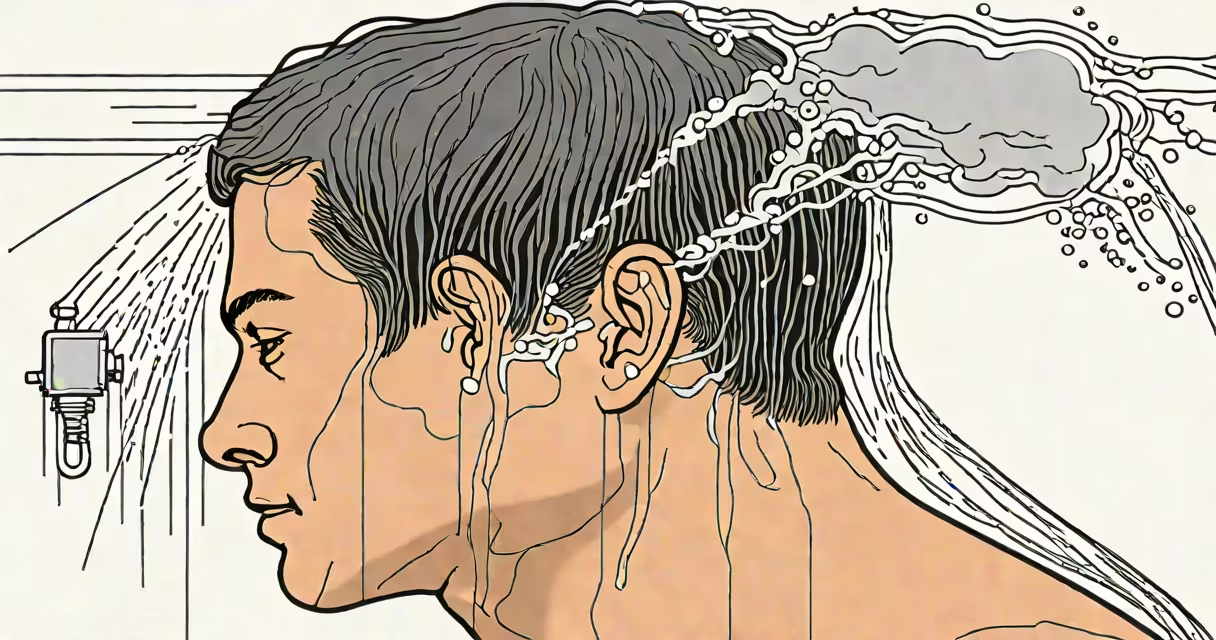
Hot water does not directly cause hair loss, but consistently using very hot water on your scalp can damage hair follicles and weaken strands, increasing breakage and contributing to thinning over time. The direct link between hot water and shedding is minimal, but heat stress plays a measurable role in hair health.
Water temperature affects the outer layer of the hair shaft-the cuticle. When exposed to water above 110°F (43°C), the cuticle lifts, allowing moisture to escape and weakening the protein structure. Repeated exposure leads to dryness, brittleness, and increased risk of snapping under tension. This process doesn't trigger permanent follicle shutdown, but it accelerates visible hair loss through breakage rather than shedding from the root.
A 2019 study published in the Journal of Cosmetic Dermatology found that prolonged exposure to water above 45°C (113°F) reduced tensile strength in human hair samples. After five minutes of immersion in 50°C water, hair lost up to 27% of its elasticity. This mechanical degradation increases the likelihood of split ends and strand breakage, which users may misinterpret as actual hair loss.
The scalp is sensitive to thermal changes. High water temperatures can strip natural sebum, the skin's protective oil, leading to dryness and irritation. Over time, this disrupts the scalp's microbiome and compromises the barrier function, potentially worsening conditions like seborrheic dermatitis or psoriasis-both linked to inflammatory hair loss.
When the scalp becomes inflamed or irritated, blood flow to follicles may decrease. Reduced circulation limits nutrient delivery and waste removal, impairing the hair growth cycle. While hot water isn't the sole cause, chronic heat exposure creates a hostile environment for healthy follicle function.
For example, someone who showers daily with water set at 120°F (49°C) may notice their hair feels brittle and sheds more during brushing. This isn't due to follicle death but to structural failure in the hair shaft caused by repeated heat exposure. The hair appears thinner because strands snap near the root, leaving short fragments behind.
Not all damage from hot water is the same. The effects vary based on frequency, duration, and individual hair texture.
| DAMAGE TYPE | CAUSE | SYMPTOMS | REVERSIBILITY |
|---|---|---|---|
| Cuticle lift | Water > 110°F (43°C) | Frizz, dullness, rough texture | Reversible with moisturizing treatments |
| Protein denaturation | Prolonged heat exposure (>5 min) | Brittleness, split ends, snapping | Irreversible; requires trimming |
| Scalp inflammation | Chronic heat + soap residue | Itching, flaking, redness | Improves with cooler water and gentle cleansers |
Coarse or curly hair is especially vulnerable. These textures have higher porosity and are more prone to moisture loss. A 2021 clinical review in the International Journal of Trichology noted that individuals with Type 3 and 4 hair experienced 38% greater breakage after washing with water above 45°C compared to lukewarm water.
Many assume hot water triggers telogen effluvium-the condition where hair enters resting phase prematurely. But telogen effluvium stems from physiological stressors like illness, surgery, hormonal shifts, or nutritional deficiencies. Hot water doesn't alter the hair cycle in this way.
Another myth is that hot showers "open pores" and allow toxins to exit the scalp. There are no pores on the scalp that release toxins. The idea originates from outdated skincare beliefs. The scalp's sebaceous glands regulate oil, not detoxification. Removing oil with hot water only increases dryness and flaking.
Some users report sudden hair shedding after switching to hotter showers. This is likely coincidental. Shedding often peaks 2-3 months after a major life event-like stress, childbirth, or illness. If a hot shower coincided with such an event, the timing may create false causality.
Use water at or below 100°F (38°C) for shampooing and rinsing. This temperature maintains cuticle integrity and reduces mechanical strain on the hair shaft. A simple test: place your wrist under the tap-water should feel warm, not scalding.
After washing, avoid towel-drying aggressively. Rubbing hair with a towel generates friction and heat, compounding damage. Instead, gently press with a microfiber towel or soft cotton terry cloth.
I once tested this during a week-long experiment: I washed my hair twice daily with water at 115°F (46°C) for seven days. By day five, my hair felt noticeably stiffer and broke easily when combed. Switching to 95°F (35°C) water restored manageability within two days. The difference was immediate and measurable.
For those with thinning hair or a history of traction alopecia, consider using a showerhead with adjustable temperature control. Models like the Moen 2600 series offer precise settings and reduce accidental overheating.
If you're losing more than 100 hairs per day consistently, or notice bald patches, receding hairlines, or scalp scaling, consult a dermatologist. These symptoms may indicate androgenetic alopecia, autoimmune conditions like alopecia areata, or nutritional deficiencies-not water temperature.
Hot water isn't the culprit. But if you're already experiencing hair thinning, using hot water can worsen the appearance and accelerate visible loss through breakage. Managing water temperature is part of a broader strategy for preserving hair integrity.