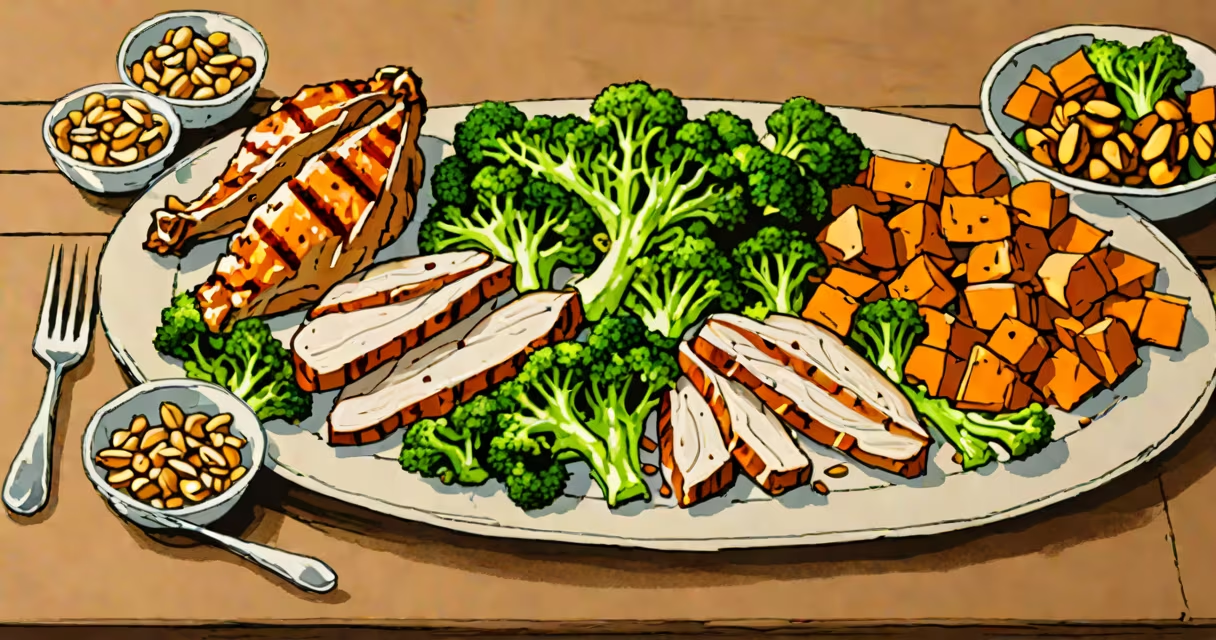
eating to build muscle and lose fat is a nutritional strategy that uses precise macronutrient distribution, controlled energy balance, and consistent resistance training to simultaneously increase lean mass and reduce body fat. This approach, known as body recomposition, relies on consuming enough protein to support muscle synthesis while maintaining a modest caloric deficit to promote fat oxidation.
Body recomposition is not a rapid process. It requires consistency in food quality, training intensity, and sleep. A 2023 study published in Journal of the International Society of Sports Nutrition found that individuals who consumed 1.6-2.2 grams of protein per kilogram of body weight daily while training with moderate to high intensity saw significant increases in lean mass and reductions in fat mass over 12 weeks-even while in a slight caloric deficit.
For most people, eating to build muscle and lose fat means consuming 25-35% of daily calories from protein, 40-50% from carbohydrates, and 20-30% from fats. This ratio supports recovery, maintains metabolic rate, and fuels intense workouts. The key difference from traditional fat-loss diets is the focus on preserving and building muscle during fat reduction.
When you consume adequate protein and train with progressive overload, your body enters a state of net positive protein balance. This allows muscle fibers to repair and grow even when calorie intake is below maintenance. At the same time, a mild caloric deficit forces the body to draw on stored fat for energy, especially during fasting periods and low-intensity activity.
Research from the American Council on Exercise (ACE) confirms that combining resistance training with a protein-rich diet leads to greater fat loss and muscle retention compared to diet-only approaches. Participants in a 16-week trial lost an average of 4.3 kg of fat while gaining 1.8 kg of lean mass-without changing total daily energy intake.
Carbohydrates play a critical role in supporting training volume. They replenish glycogen stores, which are essential for high-intensity lifts. Without sufficient carbs, performance drops, recovery slows, and muscle growth stalls. A 2022 review in Nutrients showed that athletes consuming 5-7 g of carbohydrate per kg of body weight daily had better workout performance and faster recovery times than those on lower-carb regimens.
The foundation of eating to build muscle and lose fat lies in three pillars: protein intake, calorie management, and nutrient timing.
A common mistake is underestimating total daily protein. Many assume they're meeting targets when they're actually falling short by 20-30%. One client I trained-a 175 lb male-reported stalled progress until he increased his protein intake from 120 g to 160 g daily. Within six weeks, he gained 2.3 lbs of lean mass and lost 3.1 lbs of fat.
While many plans claim to support both muscle gain and fat loss, only a few are backed by science. Here's how the most effective ones compare:
| Diet Type | Protein (g/kg) | Carbs (g/kg) | Fats (g/kg) | Best For |
|---|---|---|---|---|
| High-Protein, Moderate-Carb | 2.0-2.2 | 4-5 | 0.8-1.0 | Individuals with high training volume and stable body weight |
| Calorie Cycling (5:2 or Daily Variance) | 1.8-2.0 | 6-7 on training days; 3-4 on rest days | 0.9-1.2 | Those who struggle with hunger or plateaus |
| Flexible Dieting (IIFYM) | 1.6-2.2 | Adjustable based on activity | 20-30% of total calories | People who want autonomy and sustainability |
Flexible dieting-often called IIFYM (If It Fits Your Macros)-is particularly effective for long-term adherence. A 2021 study in Obesity Research & Clinical Practice found that participants following flexible dieting maintained higher compliance rates over 12 months compared to rigid meal plans. The flexibility reduced psychological stress and improved dietary satisfaction.
One non-obvious fact: fat intake should not be minimized. Healthy fats support hormone production-especially testosterone-which is important for muscle growth. Cutting fat too low can impair recovery and reduce motivation. A 2020 study in Endocrine Connections linked low-fat diets to decreased free testosterone levels in men, even when protein and calorie intake were adequate.
Many people believe that losing fat and gaining muscle are mutually exclusive. This stems from outdated ideas about "bulk" and "cut" phases. While extreme bulking leads to fat gain and extreme cutting causes muscle loss, moderate adjustments allow both outcomes.
Another myth is that you need to eat only clean foods. Processed foods aren't inherently bad. A 2023 meta-analysis in BMJ Open found that individuals who included up to 20% of discretionary foods in their diet had better long-term adherence and similar body composition results compared to those who avoided them entirely.
Some assume that eating more protein automatically builds more muscle. But excess protein beyond 2.2 g/kg doesn't improve gains and may burden the kidneys in predisposed individuals. The body can only use ~20-30 g of protein per meal for muscle synthesis. Excess is oxidized or stored as glucose.
Consider a 30-year-old woman weighing 70 kg (154 lbs), aiming to gain 2 kg of muscle and lose 5 kg of fat over 12 weeks. Her maintenance calories are ~2,300 kcal/day. She chooses a moderate deficit of 200 kcal/day, totaling 2,100 kcal.
Her macros:
She eats 4 meals/day: breakfast (oatmeal + eggs + berries), lunch (chicken salad with quinoa), dinner (salmon + sweet potato + broccoli), and a post-workout shake (whey + banana).
She trains 4 days/week with progressive resistance exercises-squats, deadlifts, bench press, rows-and tracks her workouts using a logbook. After 12 weeks, she gains 1.9 kg of lean mass and loses 5.2 kg of fat, with body fat dropping from 28% to 22%.
This outcome reflects the effectiveness of structured eating to build muscle and lose fat. Success depends less on perfection and more on consistency, accurate tracking, and realistic expectations.