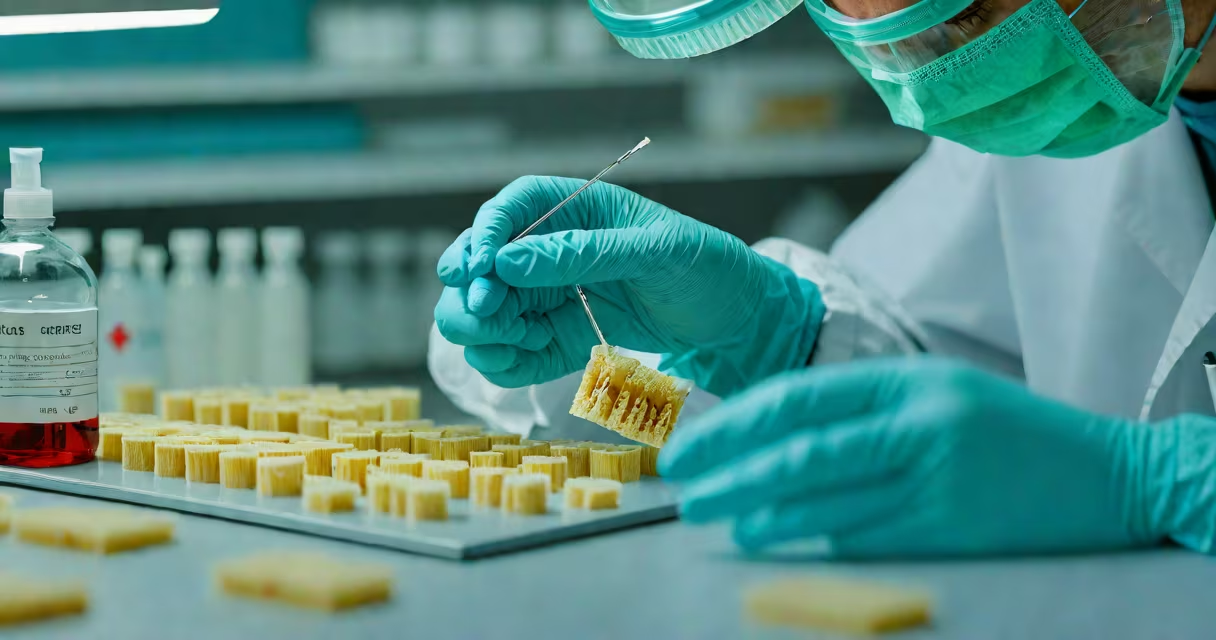
What tissue can be donated refers to specific human tissues harvested after death or during surgery that can be transplanted to repair or replace damaged body parts. These tissues include corneas, skin, bone, heart valves, and tendons, and they are used to restore mobility, vision, and structural integrity in recipients.
Tissue donation occurs after death, but some tissues can also be donated while alive. The most common sources are deceased donors who have consented to donation through state registries or advance directives. Living donors may contribute certain tissues such as bone marrow or peripheral blood stem cells, though these are not classified as solid tissue grafts in the traditional sense.
Unlike organs, which sustain life, donated tissues primarily improve quality of life. A single donor can provide up to 75 tissue transplants, according to the American Association of Tissue Banks (AATB). This high yield stems from the durability and processing stability of many tissues, allowing them to be stored for months and distributed nationally.
After a donor's death is confirmed, medical teams assess viability based on time since cardiac arrest, cause of death, and absence of infectious disease. Tissues are recovered within 24 hours to preserve integrity. Recovery is performed by trained procurement specialists under strict sterile conditions.
Once collected, tissues undergo rigorous screening. Blood tests rule out HIV, hepatitis B and C, syphilis, and other transmissible infections. Tissue samples are cultured and analyzed for bacterial contamination. Only tissues meeting safety standards proceed to processing.
Processing varies by tissue type. Bone is freeze-dried or frozen to remove cellular material, leaving a scaffold for new bone growth. Corneas are preserved in nutrient solution and transplanted within days. Skin grafts are processed into sheets or sheets with growth factors. All tissues are labeled with unique identifiers and stored in certified tissue banks.
The following tissues are routinely donated and transplanted:
| Type | Primary Use | Source | Processing Method |
|---|---|---|---|
| Bone | Spinal fusion, trauma repair, joint reconstruction | Long bones, pelvis, vertebrae | Freeze-dried or gamma irradiated |
| Cornea | Restores vision in corneal blindness | Eye bank recovery | Preserved in medium, transplanted within 14 days |
| Skin | Treatment of burns, chronic wounds | Full-thickness or split-thickness | Processed into allograft sheets |
| Heart valve | Replaces diseased aortic or pulmonary valves | Heart tissue from cadavers | Chemically treated to prevent calcification |
| Tendon | Reconstructs ACL, rotator cuff injuries | Patellar or Achilles tendon | Dehydrated and sterilized |
Each tissue type requires specialized handling. For example, corneal transplants must be performed within 14 days of recovery due to rapid degradation of endothelial cells. In contrast, bone allografts can be stored for up to two years at -80°C.
A lesser-known fact: some tissues, like fascia lata (a thick band of connective tissue from the thigh), are used in hernia repairs and pelvic floor reconstruction. These are often overlooked in public discussions but are among the most frequently transplanted tissues in reconstructive surgery.
Tissue transplantation saves lives indirectly by reducing infection risk, shortening hospital stays, and enabling faster rehabilitation. A burn patient receiving a skin graft can return to work in weeks rather than months. A spinal surgeon using cadaveric bone grafts avoids harvesting bone from the patient's hip, reducing pain and recovery time.
According to the U.S. Department of Health and Human Services, over 100,000 tissue transplants occur annually in the United States. More than 80% of these come from deceased donors. The National Organ Procurement and Transplantation Network (OPTN) tracks all tissue donations and ensures equitable distribution across transplant centers.
One example: in 2022, a 65-year-old man in Texas received a cadaveric heart valve replacement after being diagnosed with severe aortic stenosis. He had previously declined surgery due to high surgical risk. The donated valve allowed him to resume walking, gardening, and playing with his grandchildren-activities he feared losing forever.
People often confuse tissue donation with organ donation. While both occur after death, organs support important functions (like kidneys or hearts), whereas tissues do not. A liver cannot be donated for tissue repair, but its bile ducts can be used in reconstructive procedures.
Another misconception: tissue donation disfigures the body. This is false. Recovery is performed with surgical precision. The body is closed and prepared for viewing, just as in standard funeral practices. Families are not charged for donation.
Some believe only young people can donate tissue. However, age is not a barrier. A 92-year-old woman in Florida donated her corneas and skin, which were successfully used in two separate surgeries. The AATB confirms that tissue viability depends more on health status and time since death than on chronological age.
I once observed a tissue recovery team at a major medical center. They retrieved bone and skin from a donor who died of stroke. The process took less than two hours. The team wore sterile gowns and masks, handled instruments with care, and documented every step. Their work was quiet, precise, and deeply human.
Understanding what tissue can be donated clarifies its role in modern medicine. It is not about saving lives in the immediate sense, but about restoring dignity, movement, and independence. The impact is profound-even if unseen.