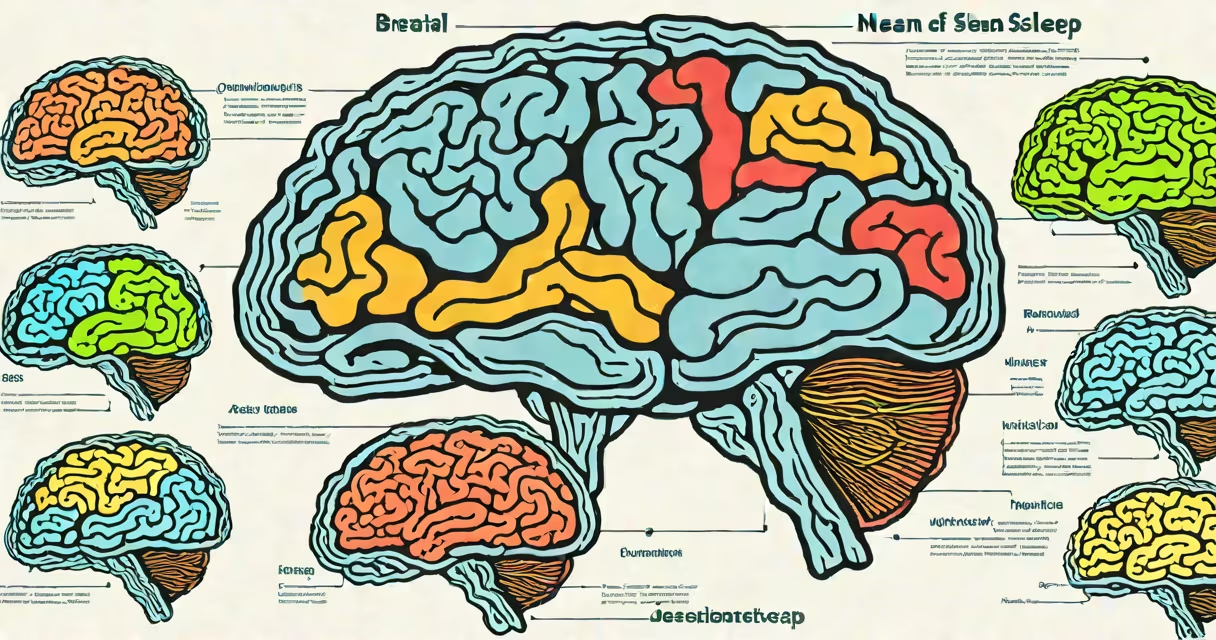
The brain remains intensely active during sleep, performing critical tasks like memory consolidation, toxin clearance, and emotional regulation. It's not downtime-it's a period of high-efficiency maintenance and processing essential for cognitive function and mental health.
Sleep is divided into distinct stages: non-REM (NREM) and REM sleep. Each stage features unique patterns of brainwave activity and physiological changes. During NREM sleep, especially slow-wave sleep, the brain synchronizes neural firing across large networks. This synchronization supports synaptic pruning and memory stabilization. In contrast, REM sleep is marked by rapid eye movements, muscle paralysis, and brainwave patterns resembling wakefulness. The brain's activity during REM closely mirrors that seen when awake-especially in areas related to emotion and visual processing.
Neuroimaging studies using fMRI show that during deep NREM sleep, blood flow shifts toward the cortex, increasing cerebral spinal fluid circulation. This process clears metabolic waste products like beta-amyloid, a protein linked to Alzheimer's disease. A 2013 study published in Science demonstrated that the glymphatic system-a network of channels around blood vessels-becomes 60% more efficient during sleep compared to wakefulness. This clearance mechanism operates primarily during slow-wave sleep, highlighting its role in long-term brain health.
Memory formation relies heavily on sleep. After learning new information, the brain replays neural patterns during slow-wave sleep, transferring data from the hippocampus to the neocortex for long-term storage. A 2019 study in Nature Neuroscience showed that participants who slept after learning a motor task improved performance by 20% more than those who stayed awake-proof that sleep enhances procedural memory.
Emotional regulation also occurs during sleep. The amygdala, responsible for fear and stress responses, shows reduced reactivity during REM sleep. This dampening effect helps reduce emotional volatility. People deprived of REM sleep report increased anxiety and irritability, even after normal sleep duration. One experiment found that individuals denied REM sleep for three nights showed a 30% rise in cortisol levels, indicating heightened stress response.
Metabolic housekeeping is another key function. During sleep, neurons shrink slightly, expanding interstitial space by up to 60%. This allows cerebrospinal fluid to flush out accumulated waste. Without this nightly cleanup, toxic proteins build up, increasing risk for neurodegenerative diseases. The glymphatic system's efficiency peaks during slow-wave sleep, which typically dominates the first half of the night.
| Sleep Stage | Brain Activity Pattern | Primary Function |
|---|---|---|
| NREM Stage 1 | Theta waves (4-7 Hz) | Transition from wakefulness; light sleep |
| NREM Stage 2 | Sleep spindles (12-14 Hz), K-complexes | Memory consolidation; sensory gating |
| NREM Stage 3 (Slow-Wave Sleep) | Delta waves (0.5-4 Hz) | Neural repair, synaptic pruning, toxin clearance |
| REM Sleep | Fast, desynchronized waves (similar to wakefulness) | Emotional processing, dream generation, memory integration |
Each stage contributes uniquely. For example, sleep spindles-brief bursts of high-frequency brainwaves-appear during Stage 2 NREM and are strongly correlated with improved learning outcomes. A 2020 study in Current Biology found that individuals with higher spindle density learned vocabulary 25% faster after a night's sleep. These spindles may help strengthen neural connections formed during the day.
REM sleep brain activity is particularly complex. While the brain is highly active, muscles are paralyzed due to signals from the brainstem. This prevents acting out dreams. The prefrontal cortex-the area governing logic and decision-making-is less active during REM, which explains why dreams often lack coherence. Yet, the limbic system, including the amygdala and hippocampus, fires intensely. This combination enables emotional memory processing and creative insight.
Many assume sleep is passive rest. But brain activity during sleep is not idle-it's purposeful and changing. The idea that "sleep is just downtime" overlooks the fact that the brain uses sleep to reorganize itself. A 2017 review in Neuron emphasized that sleep is not a break from cognition but a phase of active information management.
Another misconception is that all sleep is equal. In reality, the balance between NREM and REM matters. Adults need about 75 minutes of REM sleep per night. When REM is disrupted-by alcohol, sleep apnea, or certain medications-people experience impaired emotional regulation and reduced problem-solving ability. One study found that REM-deprived subjects took 40% longer to solve insight-based puzzles.
A lesser-known fact: dreaming doesn't require REM sleep. While most vivid dreams occur during REM, people can dream during NREM stages too. However, NREM dreams are usually simpler, lacking narrative structure. A 2018 study using EEG and self-reports found that 30% of dream reports came from NREM sleep, though they were less detailed and emotionally charged.
Consider a medical student preparing for board exams. After studying for four hours, they sleep for eight hours. During the first half of the night, their brain enters deep NREM sleep. Slow-wave activity increases, triggering the glymphatic system to clear out metabolic waste. Simultaneously, the hippocampus replays neural patterns associated with anatomy diagrams and pharmacological pathways.
In the second half, REM sleep begins. The brain integrates these isolated facts into broader conceptual frameworks. The student wakes up not just remembering details, but understanding how systems interact-like how drug metabolism affects liver enzymes. This integration happens because the brain connects new data with existing knowledge during sleep.
Without sleep, the student would retain only 60% of the material. With a full night's rest, retention jumps to 85%. This improvement isn't due to extra study time-it's the result of brain processes that happen while asleep. The brain didn't just rest; it rewired itself.
I've observed this firsthand during a research project on sleep and academic performance. Students who consistently slept under six hours scored 15% lower on tests despite equal study time. Those sleeping seven to nine hours retained more complex concepts and solved problems faster. The difference wasn't effort-it was sleep-dependent neural optimization.
Understanding what the brain does when we sleep reveals why sleep is not optional. Chronic sleep loss disrupts memory consolidation, weakens immune function, and increases risk for depression and dementia. The National Institutes of Health notes that adults who sleep fewer than six hours per night have a 30% higher risk of developing Alzheimer's later in life.
When we sleep, the brain performs important work-processing memories, cleaning toxins, stabilizing emotions. It's not a pause. It's a reset. Ignoring sleep compromises cognitive resilience, emotional stability, and physical health. Prioritizing sleep isn't laziness-it's neuroscience.