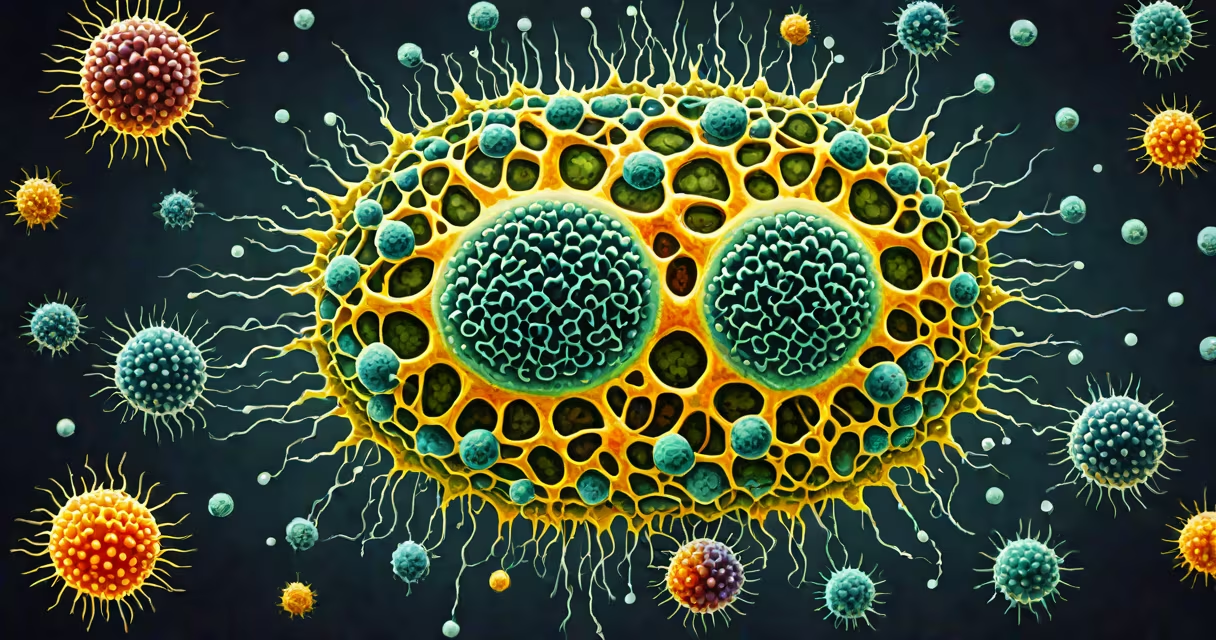
Viruses cause many human diseases by invading host cells and hijacking their machinery to replicate. These infections can lead to acute illness, chronic conditions, or long-term complications. The most common viral diseases include influenza, HIV/AIDS, hepatitis B, Ebola, and rabies.
Viruses are submicroscopic agents that consist of genetic material (DNA or RNA) enclosed in a protein coat. They cannot reproduce on their own and must enter living cells to multiply. Once inside, they redirect cellular processes to produce new viral particles, often damaging or killing the host cell in the process. This disruption triggers immune responses and symptoms such as fever, fatigue, and organ-specific dysfunction.
According to the World Health Organization (WHO), about 70% of emerging infectious diseases are caused by viruses. The Centers for Disease Control and Prevention (CDC) notes that viral infections account for approximately 15% of all global deaths annually, with respiratory and neurological viruses being major contributors.
Viral diseases spread through direct contact, airborne droplets, contaminated surfaces, vectors like mosquitoes, or bodily fluids. Transmission routes determine how quickly a virus spreads and which populations are most vulnerable. For example, influenza spreads rapidly during winter months via coughs and sneezes, while HIV spreads primarily through unprotected sexual contact or shared needles.
After entering the body, a virus travels to target tissues based on receptor compatibility. Influenza targets respiratory epithelial cells, leading to coughing and congestion. HIV attacks CD4+ T cells in the immune system, weakening defenses over time. This leads to opportunistic infections and cancers characteristic of AIDS.
Not all viral infections result in immediate symptoms. Some viruses establish latent infections, remaining dormant for years. Herpes simplex virus (HSV), for instance, can lie inactive in nerve cells and reactivate during stress or illness, causing cold sores or genital lesions.
The following table outlines five major viral diseases, their transmission methods, key symptoms, and global burden.
| Disease | Transmission | Key Symptoms | Global Cases (Annual Estimate) |
|---|---|---|---|
| Influenza | Airborne droplets, contact | Fever, muscle pain, cough, sore throat | ~1 billion |
| HIV/AIDS | Blood, semen, vaginal fluids, breast milk | Chronic fatigue, swollen lymph nodes, opportunistic infections | ~1.3 million new cases |
| Hepatitis B | Blood, sexual contact, perinatal transmission | Jaundice, abdominal pain, dark urine | ~296 million chronic carriers |
| Measles | Airborne, close contact | Rash, high fever, conjunctivitis, cough | ~140,000 deaths |
| COVID-19 (SARS-CoV-2) | Airborne, fomites | Fever, shortness of breath, loss of taste/smell | Over 700 million confirmed cases |
Each of these diseases has distinct clinical patterns and public health implications. Measles, though preventable by vaccination, still causes outbreaks in under-immunized communities. SARS-CoV-2, which emerged in late 2019, led to a global pandemic due to its high transmissibility and variable severity across age groups.
Viruses are classified by genome type, structure, and replication method. DNA viruses (e.g., herpesviruses) typically replicate in the nucleus and cause slower-onset infections. RNA viruses (e.g., influenza, coronaviruses) mutate rapidly, enabling evasion of immunity and frequent strain changes.
Enveloped viruses like HIV and Ebola have lipid membranes derived from host cells. This envelope helps them enter cells efficiently but also makes them susceptible to detergents and disinfectants. Non-enveloped viruses such as norovirus and poliovirus are more stable in the environment and often survive on surfaces for days.
One lesser-known fact: some viruses may contribute to chronic conditions beyond acute infection. Epstein-Barr virus (EBV), linked to mononucleosis, has been associated with increased risk of multiple sclerosis and certain lymphomas. Research published in Nature Immunology suggests EBV may trigger autoimmune responses in genetically predisposed individuals.
Many people confuse viral diseases with bacterial infections. Antibiotics do not treat viral illnesses. Using antibiotics for viral conditions like the common cold contributes to antibiotic resistance. Antiviral medications exist but are specific to certain viruses-oseltamivir treats influenza, tenofovir manages HIV, and remdesivir was used early in the COVID-19 pandemic.
Another misconception is that all viral infections are severe. Most people recover from mild viral illnesses within days. However, immunocompromised individuals, young children, and older adults face higher risks of complications. For example, rotavirus causes severe diarrhea in infants but rarely affects healthy adults.
I once observed a community outbreak of dengue fever in Southeast Asia. Local clinics reported a surge in febrile patients with joint pain and rash. Rapid testing confirmed dengue virus serotype 2. The outbreak peaked during rainy season when mosquito breeding sites increased. Vector control and public education reduced transmission within six weeks.
Vaccination remains the most effective way to prevent many viral diseases. The WHO estimates routine childhood immunization prevents 2-3 million deaths annually. Vaccines train the immune system to recognize and neutralize viruses before they cause illness. Examples include the measles vaccine (90% effective), HPV vaccine (reduces cervical cancer incidence by 90%), and mRNA-based COVID-19 vaccines (over 90% efficacy in preventing severe disease).
Antiviral drugs work by blocking viral entry, inhibiting replication, or disrupting assembly. Unlike antibiotics, they are not broad-spectrum. Resistance can develop quickly-HIV treatment requires combination therapy to suppress viral load and prevent mutations.
For diseases without cures, management focuses on symptom relief and preventing transmission. Chronic hepatitis B is monitored regularly and treated with nucleoside analogs to reduce liver damage. Rabies, once symptomatic, is nearly always fatal-post-exposure prophylaxis within 24 hours of exposure is critical.