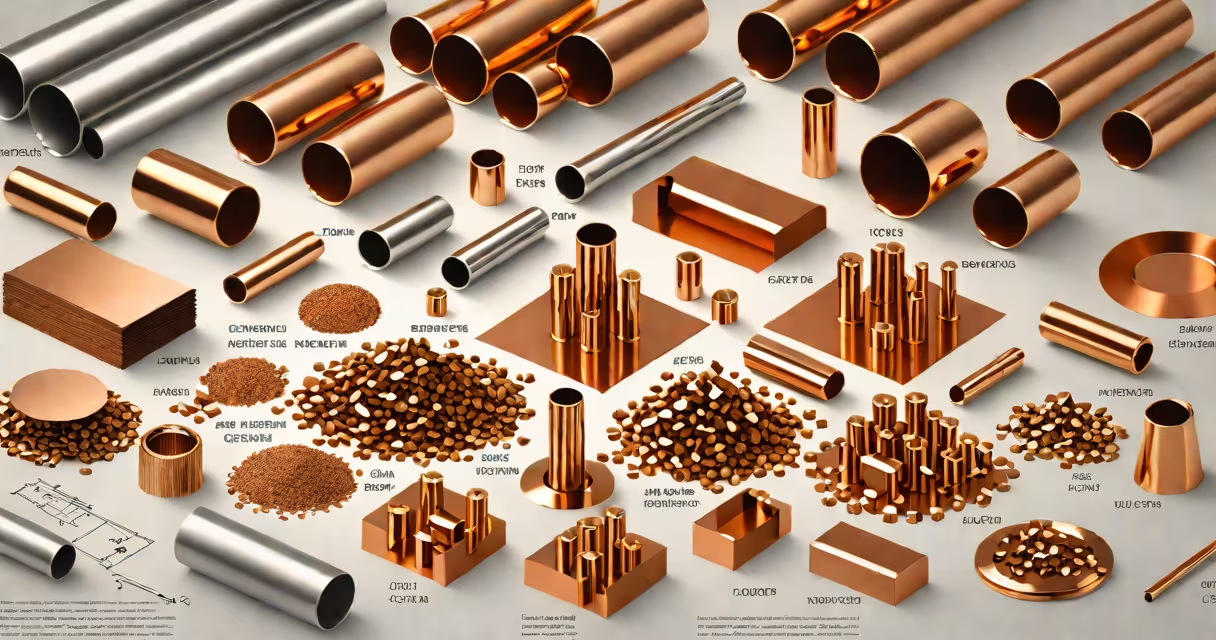
Metallic elements exhibit distinct physical traits like high electrical conductivity, malleability, and luster, along with chemical behaviors such as forming cations and reacting with acids. These properties arise from metallic bonding and electron delocalization.
Metals share core physical characteristics due to their atomic structure. Their atoms release valence electrons to form a "sea" of mobile electrons. This electron cloud enables efficient heat and electricity transfer. For example, copper conducts electricity at 5.96 × 10⁷ S/m, making it ideal for wiring. Metals also deform under pressure without fracturing-copper can be drawn into wires thinner than human hair. Most metals reflect visible light, producing a shiny surface known as metallic luster.
Chemical properties stem from electron loss during reactions. Metals tend to oxidize, losing electrons to form positive ions. Iron rusts in moist air, forming hydrated iron(III) oxide (Fe₂O₃·nH₂O). Sodium reacts violently with water, releasing hydrogen gas and heat: 2Na + 2H₂O → 2NaOH + H₂. These behaviors depend on ionization energy and electronegativity. Low ionization energy allows easy electron loss, increasing reactivity. Alkali metals like sodium have the lowest ionization energies among elements, explaining their extreme reactivity.
| Property Type | Definition | Example |
|---|---|---|
| Physical | Observable without changing composition | Copper melts at 1085°C |
| Chemical | Observed during transformation into new substances | Iron forms Fe³⁺ in acidic solution |
Physical properties include density, melting point, thermal expansion, and hardness. Density varies widely-osmium (22.59 g/cm³) is the densest known element, while lithium (0.534 g/cm³) floats on oil. Melting points range from mercury's −38.83°C to tungsten's 3422°C. Thermal expansion causes metals to swell when heated; steel expands ~12 µm/m·°C. Hardness is measured on the Mohs scale-tungsten scores 7.5, making it resistant to scratching.
Chemical properties involve reactivity patterns. Metals displace less reactive metals from solutions. Zinc displaces copper from CuSO₄: Zn + Cu²⁺ → Zn²⁺ + Cu. Reactivity decreases down the activity series. Gold and platinum resist oxidation and remain unreactive even in strong acids. Some metals form protective oxide layers-aluminum develops Al₂O₃, which prevents further corrosion. This passivation layer makes aluminum suitable for outdoor structures.
Common misconceptions confuse physical and chemical changes. Shaping a metal bar alters only its form-this is physical. Burning magnesium ribbon produces MgO, a new compound-this is chemical. Another error assumes all metals are solid at room temperature. Mercury is liquid, used in thermometers and barometers. Gallium melts in hand at 29.76°C, demonstrating low melting point among metals.
Metals differ in group trends. Alkali metals (Group 1) react vigorously with water and oxygen. Lithium ignites in air, forming lithium oxide (Li₂O). As atomic number increases down the group, reactivity rises due to decreasing ionization energy. The physical properties of alkali metals show decreasing density and melting point-cesium melts below body temperature. Transition metals like iron and nickel retain strength and resistance to deformation, important for structural applications.
One non-obvious distinction: not all metals conduct equally well. Silver leads in thermal conductivity (429 W/m·K), followed by copper (401 W/m·K). Lead, despite being a metal, conducts poorly (35 W/m·K)-its high electron scattering limits efficiency. This affects material selection in electronics, where silver is preferred in high-performance circuits.
I once tested conductivity using a 12V battery and LED circuit. Copper wire lit the LED instantly. Aluminum wire caused a dim glow-its higher resistance reduced current flow. This hands-on test confirmed theoretical differences in electron mobility between metals.
Understanding the chemical and physical properties of metals informs material selection. Steel's tensile strength (up to 2000 MPa) suits construction. Titanium's high strength-to-density ratio (4.5 g/cm³) makes it ideal for aerospace components. Corrosion resistance determines use in marine environments-nickel alloys withstand saltwater exposure better than carbon steel.
These properties govern everything from household appliances to spacecraft. Knowing how metals behave under stress, heat, and chemical attack ensures safe, effective design. The chemical and physical properties of metals remain foundational to materials science and engineering.