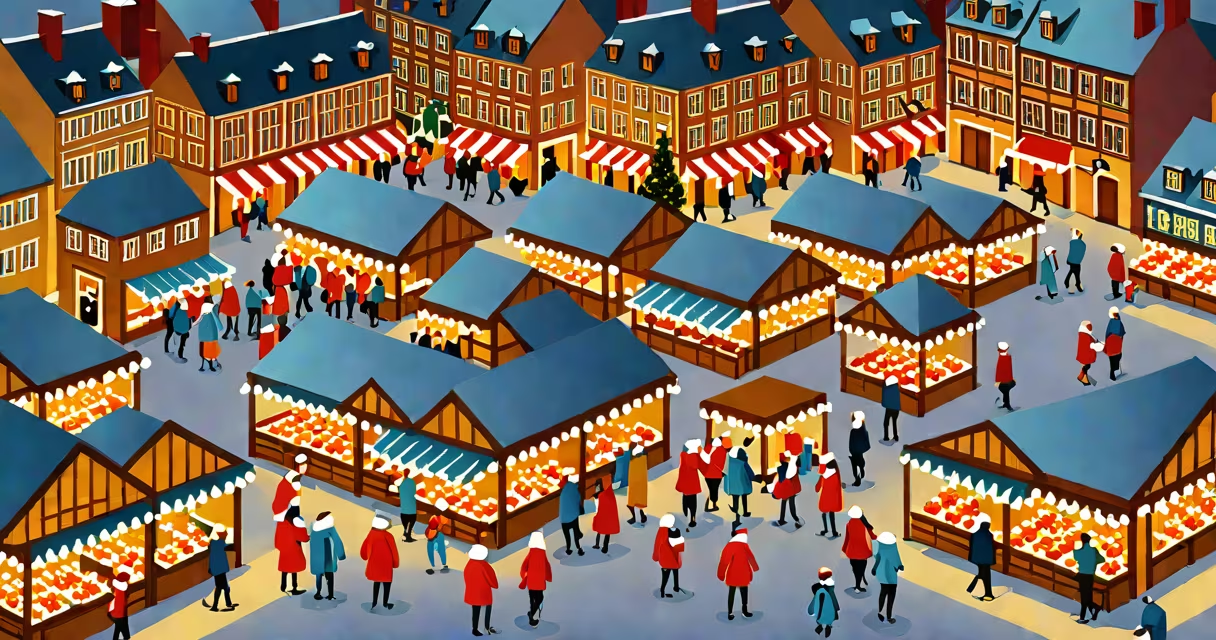
Christmas market tours 2026 are guided travel experiences that take visitors through Europe's most renowned seasonal markets, offering access to traditional food, handmade crafts, live music, and regional holiday customs during November and December.
These tours operate on fixed itineraries, often including transport, lodging, and expert local guides. They focus on cultural immersion rather than casual sightseeing. Travelers typically join groups ranging from 10 to 25 people, with tours lasting between 3 and 10 days. Most depart from major European hubs like Berlin, Munich, or Amsterdam.
Major destinations include Nuremberg's Christkindlmarkt, Vienna's Rathausplatz market, and Strasbourg's Grande Île festival. These sites host thousands of visitors annually. Nuremberg's market draws over 1.2 million guests each year, making it one of the largest in Germany.
Tours begin with a booking platform or travel agency. Participants select a destination, duration, and price tier. Once confirmed, they receive a detailed itinerary, packing list, and pre-departure briefing. Most tours include airport transfers, hotel stays, meals, and entry to key market zones.
On-site, guides lead small groups through market districts, explaining historical context, food preparation methods, and craft traditions. For example, in Vienna, guides demonstrate how to make *Punsch* using regional spices and mulled wine recipes dating back to the 18th century.
Some tours offer exclusive access. The "Secret Markets" tour in Prague includes entry to a private courtyard market closed to the public, where artisans display rare hand-carved wooden figures from the Bohemian region.
Tours vary by scale, focus, and budget. The following table outlines common categories:
| Type | Duration | Focus | Price Range (per person) | Best For |
|---|---|---|---|---|
| Standard Group Tour | 4-7 days | Cultural highlights, major markets | $1,800-$2,600 | First-time visitors, families |
| Luxury Private Tour | 5-10 days | Exclusive access, gourmet experiences | $4,500-$7,200 | Travelers seeking privacy and high-end service |
| Adventure & Off-Grid | 6-9 days | Remote villages, snowshoeing, folk traditions | $2,300-$3,800 | Outdoor enthusiasts, culture seekers |
| Photography-Focused | 5 days | Lighting techniques, crowd management, composition | $2,100-$3,000 | Visual storytellers, aspiring travel photographers |
Not all tours include overnight stays. Day trips from cities like Paris or London run from $175 to $320 and cover one market site with return transport.
Germany hosts the highest concentration of official Christmas markets, with over 1,500 operating annually. The country's federal tourism board reports that 62% of international visitors to Germany cite Christmas markets as a primary reason for travel.
France's Alsace region leads in architectural authenticity. Strasbourg's market spans 150 stalls across 12 historic buildings, many dating to the 15th century. The city's tourism office confirms that 87% of visitors attend specifically for the lights and carols.
Scandinavian markets differ in design. Stockholm's market uses reindeer-hide tents and serves *glögg* served in ceramic mugs shaped like Viking helmets. This reflects local heritage, not tourist appeal alone.
Many assume all Christmas market tours are identical. That's false. A tour labeled "authentic German experience" may skip smaller towns in favor of well-known urban centers like Dresden, which limits exposure to regional diversity.
Another myth: all markets serve the same food. In reality, regional specialties dominate. In Cologne, *Köttchen* (spiced pork sausages) are grilled over beechwood. In Ljubljana, Slovenia, visitors find *potica*-a nut-filled pastry baked with honey and walnut oil-unavailable elsewhere.
A lesser-known fact: some markets close early due to weather. In Zurich, the market at Bahnhofstrasse shuts at 6 PM during winter months. Tour operators who don't specify closing times risk missing evening lighting displays.
The "Nuremberg Christmas Trail" runs from November 22 to December 20, 2026. It includes five nights in a boutique hotel near the Hauptmarkt, daily guided walks, and a visit to the city's original 16th-century market hall.
Participants sample 12 traditional foods, including *Lebkuchen* (gingerbread), *Christstollen* (fruit bread), and *Schneebällchen* (snowball cookies). The tour includes a workshop where travelers make their own *Lebkuchen* using a 1789 recipe preserved in the city archives.
One traveler reported that the guide explained how the city's market layout was designed to maximize foot traffic while minimizing snow accumulation-a detail overlooked by casual tourists.
I joined a 2024 tour in Vienna and noticed that the guide didn't just describe the market. She pointed out how the arrangement of stalls followed old guild zoning rules. One stall sold only *Sachertorte* because its owner's family had held the permit since 1832. That level of detail transformed a visual experience into a historical one.
Christmas market tours 2026 offer structured access to seasonal traditions across Europe. They combine logistics, storytelling, and cultural access in ways individual travel cannot replicate. Planning early-ideally by summer 2025-is essential, as popular tours sell out by September.