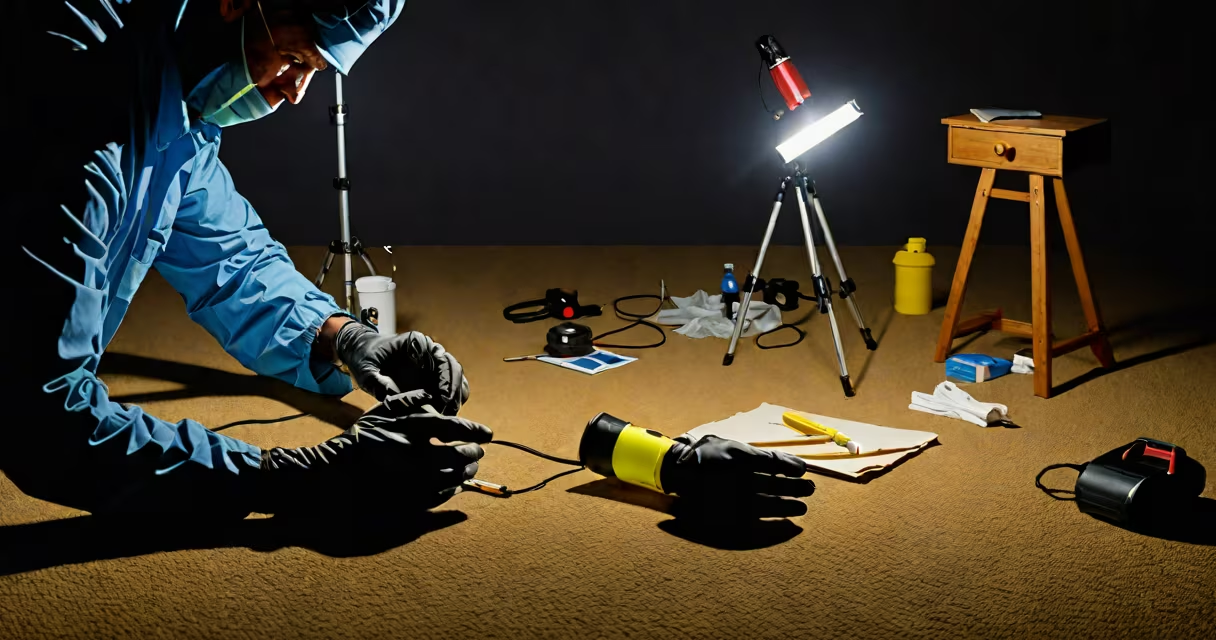
A crime scene investigator career path involves collecting, preserving, and analyzing physical evidence from crime scenes to support criminal investigations. Professionals in this role typically hold a bachelor's degree in forensic science or a related field and work under law enforcement agencies or private forensic labs.
Crime scene investigators (CSIs) are trained to document and process scenes with precision. They photograph evidence, collect fingerprints, gather trace materials like hair or fibers, and package items for laboratory analysis. Their findings help prosecutors build cases and judges determine guilt or innocence. The U.S. Bureau of Labor Statistics reports that employment for forensic science technicians, which includes CSIs, is projected to grow 14% from 2021 to 2031-faster than average for all occupations.
Not all CSIs are uniformed officers. Many enter the field through civilian hiring, especially in larger departments or state forensic units. The role requires attention to detail, emotional resilience, and the ability to work independently under pressure. A single misstep in evidence handling can compromise an entire case.
When a call comes in about a potential crime scene, a CSI team responds within hours. Upon arrival, they secure the area, mark entry points, and begin documenting everything visible. Cameras capture wide-angle shots, close-ups, and scale references. Digital photos are timestamped and stored in encrypted databases.
Field tools include lifting kits for fingerprints, swabs for DNA samples, and evidence bags labeled with chain-of-custody codes. Each item collected is logged in a digital tracker. For example, a bloodstain found near a door handle is photographed, measured, swabbed, and placed in a sterile container. The container is sealed with a tamper-evident label and signed by the investigator.
After processing, the CSI writes a detailed report summarizing observations, methods used, and evidence collected. This report becomes part of the official case file. In court, CSIs may testify about their procedures and findings. Their credibility hinges on consistency, accuracy, and adherence to protocol.
Most crime scene investigator positions require at least a bachelor's degree in forensic science, biology, chemistry, or criminal justice. Coursework often includes anatomy, toxicology, microscopy, and legal standards for evidence handling. Some states mandate additional certification through the International Association for Identification (IAI).
The IAI offers the Certified Forensic Crime Scene Investigator (CFCSI) credential. To qualify, applicants must have two years of field experience and pass a written exam covering scene documentation, evidence collection, and ethics. As of 2023, over 3,500 professionals held this certification, according to IAI records.
Technical skills include operating digital imaging software, using Luminol for blood detection, and applying alternative light sources to reveal latent prints. Non-technical skills such as clear communication, stress management, and ethical judgment are equally critical. One mistake in labeling a sample can lead to wrongful convictions.
| Education Level | Typical Duration | Common Majors | Post-Graduation Path |
|---|---|---|---|
| Bachelor's degree | 4 years | Forensic science, biology, chemistry | Entry-level CSI position or graduate school |
| Master's degree | 2 years | Advanced forensic analysis, criminalistics | Specialized roles, lab leadership, teaching |
| Doctoral degree | 4-6 years | Forensic genetics, behavioral science | Research, policy advising, expert witness testimony |
Many aspiring CSIs start as police officers or lab assistants. In my experience, working as a campus security officer while pursuing a forensic science degree gave me access to real crime scene simulations and mentorship from a retired FBI agent. That hands-on exposure helped me land a probationary role in a county crime lab.
Crime scene investigator career path is often misunderstood as glamorous or fast-paced. Television shows like *CSI: Miami* depict rapid results and dramatic reveals. In reality, most evidence takes days or weeks to analyze. DNA samples may require multiple rounds of testing. Some cases remain unsolved for years due to degraded samples or lack of suspects.
Another misconception is that CSIs conduct interrogations or make arrests. They do not. Their role ends when evidence is collected and handed over to detectives or prosecutors. The investigative process continues beyond the scene, but the CSI's responsibility is limited to accurate documentation and preservation.
It's also important to distinguish between a crime scene investigator and a forensic pathologist. While both work with evidence, the pathologist performs autopsies and determines cause of death. The CSI collects traces left at the scene-such as shoe impressions or tool marks-that may later link to a suspect. These roles complement each other but are distinct in function and training.
Crime scene investigator career path is essential in solving violent crimes, property offenses, and missing persons cases. In 2022, the FBI reported that 68% of homicide investigations relied on physical evidence collected by CSIs. Without proper scene processing, suspects were less likely to be identified or convicted.
Law enforcement agencies hire CSIs at federal, state, and local levels. The FBI's Evidence Response Team (ERT) deploys nationwide for high-profile incidents like mass shootings or terrorist attacks. State-level crime labs often handle routine cases, such as burglary or assault. Private forensic firms also offer services to defense attorneys and insurance companies.
For example, in 2021, a CSI team in Oregon processed a home invasion scene involving a broken window and scattered jewelry. They recovered partial fingerprints from a glass shard and matched them to a known offender via the National Crime Information Center (NCIC). The arrest was made within 72 hours. This case illustrates how meticulous scene work leads to swift outcomes.
After entering the field, crime scene investigators advance through specialization. Some focus on digital forensics, extracting data from phones and computers. Others master bloodstain pattern analysis or fire debris examination. Continuing education is mandatory in many jurisdictions.
Professionals can pursue advanced certifications such as the IAI's Certified Fire and Explosion Investigator (CFEI) or the American Board of Criminalistics' certification in forensic toxicology. These credentials improve credibility and open doors to higher-paying roles in federal agencies or consulting.
As the demand for forensic accuracy grows, so does the need for trained CSIs. With evolving technologies like 3D scanning and portable DNA analyzers, the profession continues to modernize. However, the core principle remains unchanged: preserve the truth as found at the scene.
Understanding the crime scene investigator career path helps clarify the rigorous training and ethical obligations behind the work. Whether in a rural sheriff's office or a federal task force, CSIs play a important role in justice systems worldwide.