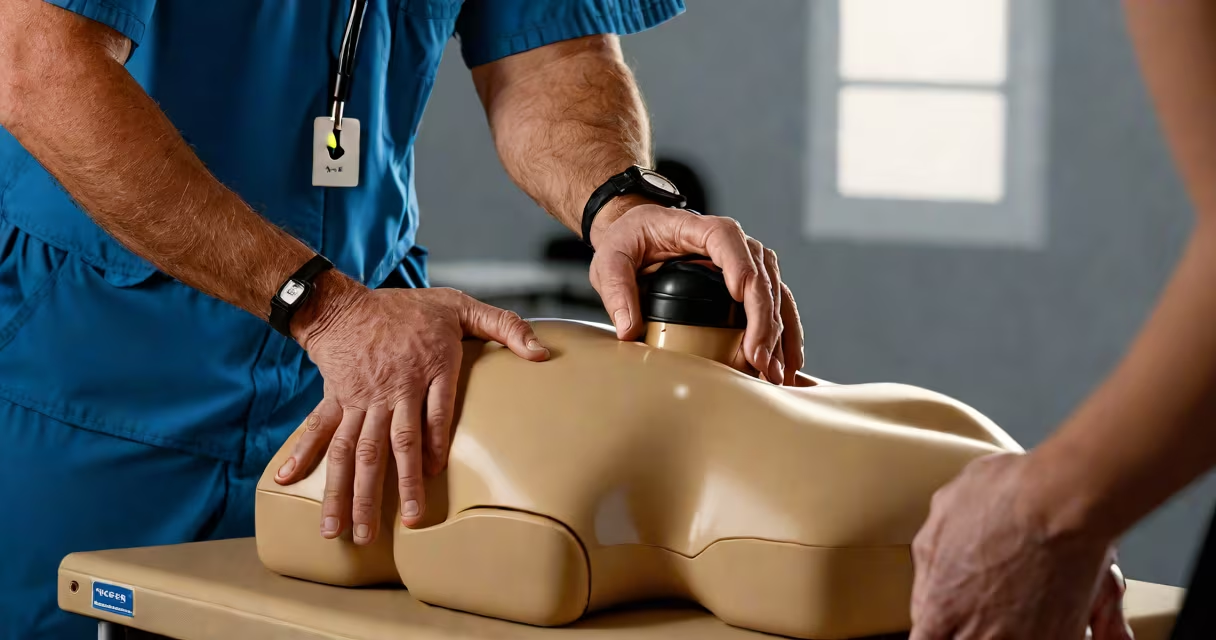
To become a CPR instructor, you must complete a certified training program through an accredited organization like the American Red Cross or the American Heart Association, achieve instructor-level certification, and pass a skills evaluation. You then teach CPR courses to individuals and groups, ensuring learners meet national safety standards.
CPR instruction is not a standalone role-it requires formal accreditation. The process begins with becoming a certified CPR provider. Most organizations require current certification in Basic Life Support (BLS), Heartsaver CPR AED, or equivalent. These certifications typically involve completing a course, passing a written exam, and demonstrating hands-on skills such as chest compressions, rescue breathing, and automated external defibrillator (AED) use.
After meeting the basic certification requirement, candidates apply to an instructor training program. These programs last between 6 and 12 hours and cover teaching methodology, adult learning principles, and how to deliver standardized content. For example, the American Red Cross offers a "CPR Instructor Course" that includes lesson planning, simulation practice, and feedback from experienced instructors. Completion leads to official instructor status and access to training materials, student manuals, and digital resources.
Each certifying body sets specific prerequisites. The American Red Cross requires applicants to have a current CPR/AED and first aid certification, be at least 18 years old, and possess strong communication and organizational skills. Some local chapters may also require a background check or proof of liability insurance.
The American Heart Association's BLS Provider Course is another widely accepted pathway. Their instructor program includes a two-day workshop focused on adult, child, and infant CPR, as well as team-based resuscitation scenarios. Instructors learn how to assess performance using objective criteria and provide constructive feedback during skill stations.
A key difference between providers and instructors lies in assessment ability. While a CPR provider learns how to perform life-saving techniques, an instructor must demonstrate the ability to evaluate others' technique under pressure. This includes recognizing improper hand placement, inadequate compression depth (at least 2 inches), and insufficient rate (100-120 per minute).
| Requirement | American Red Cross | American Heart Association |
|---|---|---|
| Minimum Age | 18 | 18 |
| Current Certification | Heartsaver CPR/AED & First Aid | BLS Provider |
| Training Duration | 6-12 hours | 16 hours (over two days) |
| Assessment Method | Live skill demonstration, teaching demo | Video submission, live teaching evaluation |
CPR instructors work in diverse settings: schools, workplaces, healthcare facilities, community centers, and online platforms. Many train employees in workplace safety programs, especially in industries with high physical risk-construction, transportation, and emergency services.
For example, a company with 50 warehouse staff may contract a certified CPR instructor to conduct biannual training sessions. The instructor delivers a 3-hour course covering scene safety, recognition of cardiac arrest, and proper use of AEDs. After the session, participants receive a wallet-sized card verifying their completion.
Some instructors specialize in pediatric or infant CPR. The American Red Cross offers a "Pediatric CPR and First Aid" course designed for childcare providers. Instructors in this track must master techniques like modified chest compressions for infants (using two fingers, not hands) and airway management in small bodies.
One widespread misunderstanding is that anyone with CPR training can teach it. That's false. Teaching CPR requires more than personal competence-it demands pedagogical skill. An individual who performs chest compressions correctly may fail to explain why depth matters or how to adjust for different body types.
Another misconception is that online-only certification qualifies someone to teach. While many organizations offer blended learning options, the instructor certification itself always includes a live component. The American Heart Association explicitly states that remote-only training does not grant instructor credentials. Instructors must be evaluated in person to ensure they can manage real-time learner errors.
I once observed a volunteer attempt to lead a CPR class using only a video and a clipboard. When a participant collapsed during a simulation, the instructor froze. He had never practiced managing a crisis in real time. The session ended early. This moment reinforced that effective teaching isn't about memorizing scripts-it's about adapting to human behavior under stress.
Once certified, CPR instructors can build a career by offering services to businesses, schools, and nonprofits. Rates vary by region: $100-$200 per half-day session is common in urban areas. Some instructors earn additional income by developing custom curricula or delivering workshops at conferences.
Advanced opportunities exist within national training networks. The American Red Cross allows certified instructors to apply for "Master Instructor" status after five years of consistent teaching and peer review. This role involves mentoring new instructors and contributing to curriculum updates.
Finally, remember that being a CPR instructor isn't just about passing a test. It's about saving lives through clarity, consistency, and confidence. Every time you teach, you're preparing someone to act when seconds count. That responsibility shapes every aspect of the role-from how you explain hand position to how you respond when a learner panics.
Understanding how to become a CPR instructor begins with meeting the core requirements. Once trained, you join a network of professionals dedicated to preventing death through immediate, correct action. The skills you teach are universal, but your ability to deliver them effectively makes all the difference.