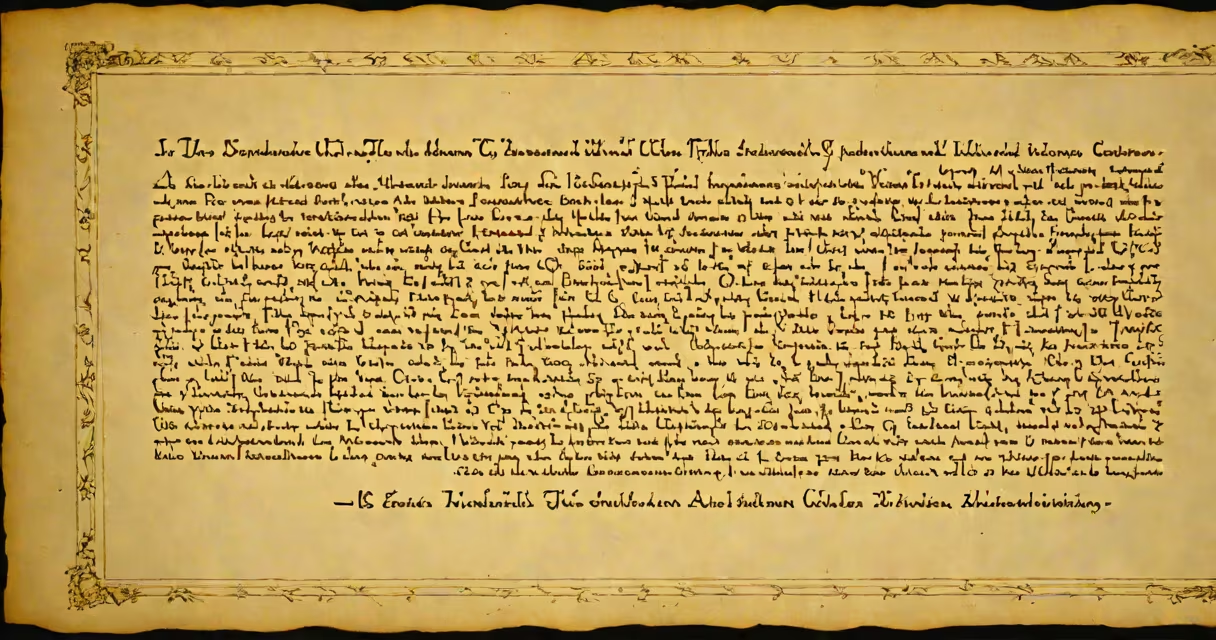
The description of the 13th amendment to the United States Constitution permanently bans slavery and involuntary servitude throughout the country, except as punishment for a crime. Ratified in December 1865, it was the first of three Reconstruction Amendments and formally ended chattel slavery in the U.S., making it the legal foundation for all subsequent civil rights advancements.
This amendment did not merely free enslaved people-it rewrote the nation's legal structure. Before its passage, slavery was protected under state laws and federal precedent, including the Dred Scott decision. The 13th amendment removed that protection by declaring slavery unconstitutional nationwide. Its language is unambiguous: "Neither slavery nor involuntary servitude, except as a punishment for crime whereof the party shall have been duly convicted, shall exist within the United States, or any place subject to their jurisdiction."
Enacted during the Civil War's aftermath, the amendment was proposed by Congress in January 1865 and ratified by the required three-fourths of states by December 6, 1865. President Abraham Lincoln supported it, though he died before ratification. The amendment's passage marked the formal end of a system that had legally bound millions of Black Americans to forced labor since the colonial era.
The amendment operates as a constitutional prohibition. It applies to all states and territories under U.S. authority. Any law or practice that forces someone to work without consent violates the amendment. Courts have consistently ruled that even forms of coerced labor-such as prison labor or debt bondage-must meet strict legal standards to avoid violating the clause.
For example, in 1953, the Supreme Court upheld a conviction under the 13th amendment in *United States v. Kozminski*. The case involved a farm owner who confined migrant workers through threats and physical isolation. The Court ruled that psychological coercion and confinement constituted involuntary servitude, affirming the amendment's reach beyond physical chains.
The amendment's exception-"except as a punishment for crime"-has been widely debated. Some argue it allows modern prison labor systems to persist, raising concerns about exploitation. In 2018, the U.S. Department of Justice reported that over 1 million incarcerated individuals perform unpaid or low-paid labor in federal and state prisons. Critics cite this as a loophole that undermines the amendment's intent.
The amendment has two distinct parts: the abolition clause and the exception clause. The abolition clause is absolute-slavery cannot exist anywhere in the U.S. The exception clause permits forced labor only when a person has been legally convicted of a crime. This distinction shapes how courts interpret modern cases involving labor coercion.
| Clause Type | Text Reference | Legal Effect | Real-World Example |
|---|---|---|---|
| Abolition Clause | "Neither slavery nor involuntary servitude... shall exist..." | Prohibits all forms of forced labor | Convict leasing in Southern states after 1865, which exploited formerly enslaved people under legal pretense |
| Exception Clause | "...except as a punishment for crime..." | Allows labor in criminal justice system | Prison inmates working in textile factories in Alabama, paid $0.10 per hour in 2022 |
Historically, the exception clause was weaponized. After the 13th amendment passed, Southern states enacted Black Codes that criminalized minor offenses-like loitering or vagrancy-then leased Black men to private companies. These practices continued until the 1940s. The U.S. Supreme Court finally ruled in *United States v. Classic* (1941) that such systems violated the amendment's spirit, though enforcement remained inconsistent.
Many assume the 13th amendment freed all enslaved people immediately. That is incorrect. While the amendment abolished slavery nationwide, enforcement varied. In some areas, former slaveholders resisted emancipation through violence, intimidation, or economic coercion. The Freedmen's Bureau documented over 1,000 incidents of violence against newly freed families in 1865 alone.
Another myth is that the amendment ended racial discrimination. It did not. The 13th amendment targeted slavery, not systemic racism. Jim Crow laws, voter suppression, and housing segregation persisted for nearly a century. The Civil Rights Act of 1964 and the Voting Rights Act of 1965 were later efforts to address those gaps.
A lesser-known fact: the 13th amendment was not the first attempt to abolish slavery. The 1861 Confiscation Acts allowed Union forces to free enslaved people in Confederate territory. But it wasn't until the 13th amendment that abolition became permanent and enforceable across all states. Without it, emancipation would have been reversible if the war had ended differently.
The amendment remains central to modern civil rights litigation. In 2016, the U.S. Supreme Court cited the 13th amendment in *United States v. Alvarez-Machain* to rule that forced labor in human trafficking cases constitutes a violation. The Court emphasized that the amendment's reach extends beyond historical contexts to protect vulnerable populations today.
I once attended a public hearing in Montgomery, Alabama, where descendants of formerly enslaved people testified about generational trauma tied to forced labor. One woman described her great-grandfather being arrested for "vagrancy" and sent to a chain gang. His story mirrored patterns documented in the Equal Justice Initiative's 2018 report, which found that over 100,000 Black Americans were imprisoned under similar charges between 1865 and 1950.
Today, the 13th amendment continues to influence debates on prison reform, labor rights, and racial justice. Advocacy groups like the NAACP Legal Defense Fund reference it in challenges to exploitative labor practices in jails and detention centers. The amendment's core principle-that no person may be held in bondage against their will-remains a living standard for human dignity.