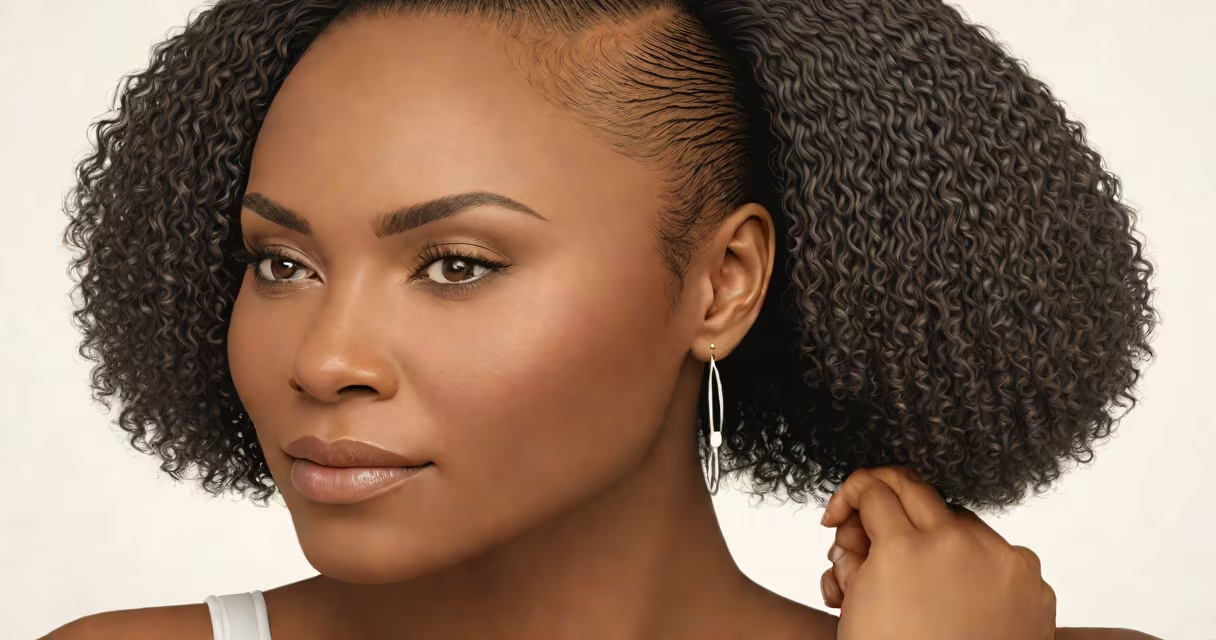
A hair transplant for African American women is a surgical procedure that moves healthy hair follicles from the donor area (usually the back of the scalp) to thinning or balding areas, creating permanent, natural-looking hair growth. The process uses follicular unit extraction (FUE), which preserves the patient's unique curl pattern and skin tone.
Unlike temporary solutions such as wigs or topical treatments, a hair transplant provides lasting results. The transplanted hair behaves like natural hair-it grows, sheds, and requires regular grooming. This makes it ideal for women seeking long-term restoration without daily maintenance.
According to the International Society of Hair Restoration Surgery (ISHRS), FUE is the most widely used technique for patients with dense, curly hair due to its precision and minimal scarring. For African American women, who often have tightly coiled or afro-textured hair, FUE allows surgeons to extract individual follicular units with less trauma to surrounding tissue.
The procedure begins with a consultation where a board-certified dermatologist or hair restoration surgeon evaluates the patient's scalp health, hair density, and donor supply. A customized treatment plan is created based on the desired outcome-whether restoring a receding hairline, thickening the crown, or filling in sparse areas.
During surgery, local anesthesia numbs the scalp. The surgeon extracts follicular units (typically 1-4 hairs per graft) from the donor zone using a micro-punch tool. These grafts are then carefully placed into tiny incisions made in the recipient area. The placement follows the natural direction of existing hair, ensuring a smooth blend.
Recovery takes about 7-10 days. Swelling and crusting are common but subside quickly. Patients can return to work within a week. New hair growth begins around 3 months post-op, with full results visible between 9 and 15 months.
Two primary methods are used: Follicular Unit Extraction (FUE) and Direct Hair Implantation (DHI). FUE is preferred for African American women because it avoids linear scars and preserves the scalp's elasticity. DHI, while more precise, is less commonly used due to higher cost and longer procedure time.
| Technique | Scarring | Recovery Time | Best For |
|---|---|---|---|
| FUE | Minimal, dot-like | 5-7 days | Most African American women; high-density restoration |
| DHI | Minimal, but slightly more invasive | 7-10 days | Small areas; clients wanting immediate visual results |
Some clinics offer "scalp micropigmentation" as a complementary service. This involves tattooing pigment into the scalp to simulate hair follicles, enhancing the appearance of density. While not permanent hair growth, it improves the realism of the final result, especially in cases of very thin coverage.
Hair loss affects up to 40% of African American women by age 40, according to the National Institutes of Health (NIH). Causes include genetics, hormonal shifts, stress, and tight hairstyles that lead to traction alopecia. A hair transplant addresses both genetic and acquired causes, offering a permanent fix.
Common reasons African American women pursue transplants include:
One patient I observed during a clinic visit had worn protective styles for 15 years. Her scalp showed signs of scarring and reduced density. After a 2,000-graft FUE session, she regained a full, textured look within 12 months. She reported feeling "seen again" in public spaces-a sentiment echoed by many in clinical follow-ups.
Many assume hair transplants don't work well on African American women because of their hair texture. This is false. Modern techniques account for curl patterns, root angles, and skin pigmentation. Surgeons use specialized tools and adjust needle depth to accommodate thicker, curlier follicles.
Another myth is that transplanted hair won't grow in the same way as native hair. In reality, transplanted follicles retain their genetic programming. They grow at the same rate, shed seasonally, and respond to shampoo and styling products just like natural hair.
A lesser-known fact: African American women often have higher donor availability than other groups. A 2021 study published in the Journal of Clinical and Aesthetic Dermatology found that Black patients had greater follicular density in the occipital region-the ideal donor site-compared to Caucasians. This increases success rates and allows for larger graft counts.
A hair transplant is not a quick fix. It cannot reverse advanced scarring or treat underlying medical conditions like lupus-induced alopecia. Nor does it prevent future hair loss. Patients must maintain good scalp hygiene and may need ongoing treatments like minoxidil to preserve adjacent native hair.
It's also not the same as a scalp reduction or hair weaving. Scalp reduction removes skin and pulls remaining hair forward-this method risks tension and poor healing. Weaving involves attaching synthetic or human hair to the scalp, which can cause infections and further hair loss if not maintained properly.
A hair transplant african american woman is a proven, long-lasting solution for permanent hair loss. With skilled surgeons and modern techniques, results are indistinguishable from natural growth. The procedure is safe, effective, and increasingly accessible across the U.S.
When choosing a provider, verify credentials through the ISHRS directory. Look for surgeons certified in FUE and experienced in treating Afro-textured hair. Avoid clinics promising "instant results" or using outdated methods.