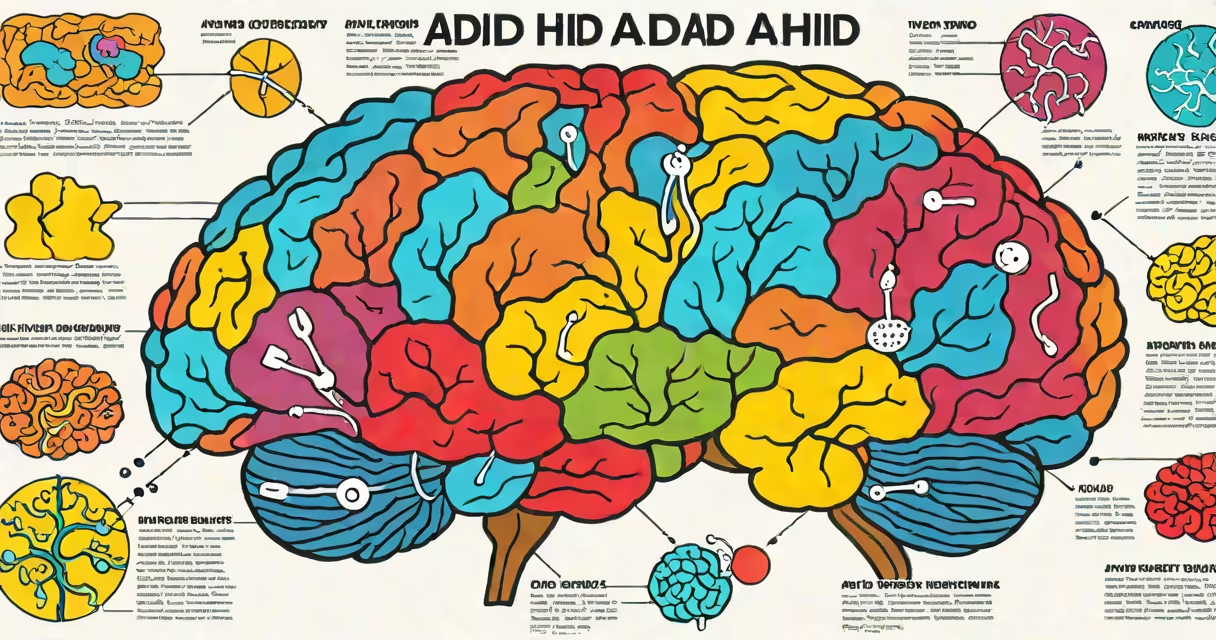
ADHD stands for Attention Deficit Hyperactivity Disorder - a recognized neurodevelopmental condition characterized by persistent patterns of inattention, hyperactivity, and impulsivity that interfere with functioning or development.
The term ADHD was formally adopted in the Diagnostic and Statistical Manual of Mental Disorders, Fifth Edition (DSM-5), published by the American Psychiatric Association in 2013. It replaced earlier classifications such as ADD (Attention Deficit Disorder), which had been used before hyperactivity was understood as part of the clinical picture.
ADHD is not a behavioral choice or a result of poor parenting. It is a clinically diagnosable condition rooted in differences in brain structure and function, particularly involving dopamine and norepinephrine regulation in the prefrontal cortex.
Diagnosis requires symptoms to appear before age 12, persist for at least six months, and occur in multiple settings - such as home and school or work. The DSM-5 outlines specific symptom checklists for children and adults.
For inattention, symptoms include difficulty sustaining focus, failing to finish tasks, avoiding mentally demanding activities, and being easily distracted. For hyperactivity and impulsivity, signs include fidgeting, excessive talking, interrupting others, and blurting out answers.
A clinician evaluates whether six or more symptoms from either category are present in individuals under 17, or five or more in adults. Symptoms must impair daily life - for example, academic performance, job productivity, or relationships.
ADHD is categorized into three presentations based on symptom dominance:
| Type | Primary Symptoms | Prevalence |
|---|---|---|
| Inattentive Type | Difficulty focusing, forgetfulness, disorganization | ~40% |
| Hyperactive-Impulsive Type | Constant movement, blurting, restlessness | ~10% |
| Combined Type | Both inattention and hyperactivity/impulsivity | ~50% |
Most individuals receive a combined-type diagnosis. The inattentive type is often overlooked in boys due to less disruptive behavior, leading to delayed identification until adolescence or adulthood.
ADHD is frequently misunderstood as simply "being overly active" or "lacking discipline." This mischaracterization overlooks the neurological basis of the condition. Research shows people with ADHD have measurable differences in brain volume and connectivity, especially in areas responsible for executive function.
One common error is assuming ADHD only affects children. While symptoms typically emerge in childhood, they can persist into adulthood. The National Institute of Mental Health reports that about 60% of children with ADHD continue to meet diagnostic criteria into their twenties.
Another misconception is that ADHD results from sugar intake or screen time. While diet and environment can influence symptom severity, they do not cause ADHD. A 2018 meta-analysis in Journal of the American Academy of Child & Adolescent Psychiatry found no causal link between sugar consumption and ADHD symptom expression.
Consider a 10-year-old student who struggles to complete homework, loses belongings frequently, and interrupts classmates during lessons. Teachers report he talks excessively and cannot wait his turn. His parents confirm he has trouble sitting still during meals or car rides.
A pediatric psychologist administers the Conners Complete Behavior Rating Scale. The child scores above threshold on both inattention and hyperactivity subscales. After reviewing teacher and parent reports, the clinician diagnoses Combined Presentation ADHD using DSM-5 criteria.
Medication (such as methylphenidate) and behavioral therapy are prescribed. Within eight weeks, the child shows improved focus, fewer classroom disruptions, and better academic engagement - evidence of effective treatment targeting core symptoms.
ADHD is not synonymous with low intelligence or laziness. Individuals with ADHD often have average or above-average IQs. In fact, many excel in creative problem-solving and rapid idea generation - traits linked to divergent thinking.
It is also not a modern invention. Historical records describe behaviors consistent with ADHD as far back as the 18th century. Dr. Alexander Crichton, a Scottish physician, described "mental restlessness" in his 1798 book *An Inquiry into the Nature and Origin of Mental Diseases* - a detailed account of what we now recognize as ADHD.
ADHD is not a personality flaw. It is a medical condition with genetic and environmental contributors. Twin studies show heritability rates of ~70%, according to the National Institutes of Health.
I once observed a high school student with ADHD during a group project. He struggled to stay on task, frequently changed topics, and interrupted peers. But when asked to sketch a concept map of the assignment, he produced a detailed, visually rich diagram that captured complex relationships others missed. His ability to see connections quickly revealed a strength often masked by executive dysfunction.
Understanding ADHD benefits from context with other medical abbreviations. For example:
These acronyms differ in origin and purpose. ADHD is a psychiatric diagnosis; CF and CKD are genetic and degenerative conditions respectively. Confusing them leads to errors in clinical communication.
ADHD stands for Attention Deficit Hyperactivity Disorder - a well-defined medical condition with established diagnostic criteria, biological underpinnings, and evidence-based treatments. It is not a label applied casually. Accurate understanding prevents stigma and ensures timely access to support.