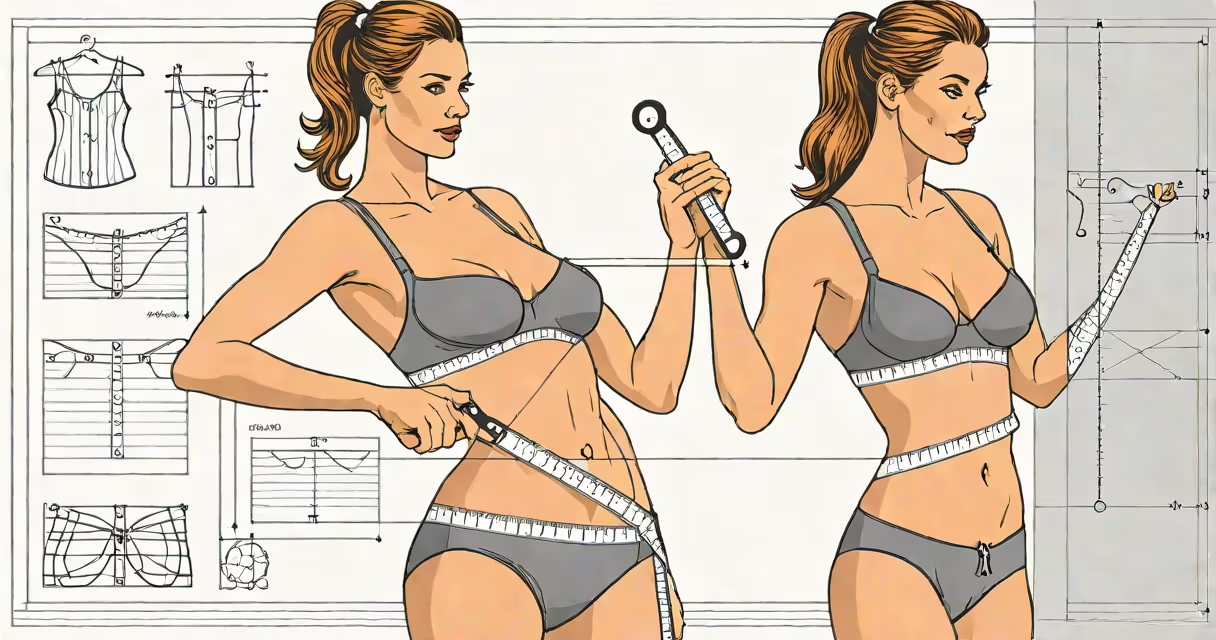
To work out your bra size, measure your ribcage just below the bust while wearing a non-padded bra, then measure around the fullest part of your bust. The band size is the ribcage measurement rounded to the nearest even number. The cup size is the difference between bust and band measurements-each inch equals one cup size.
Bra sizing follows a standardized system: the band size is the number, and the cup letter represents volume. A 34B means a 34-inch band and a B cup. This system applies globally, though sizing varies slightly between brands. According to the American Academy of Dermatology, ill-fitting bras affect up to 85% of women, leading to discomfort and poor posture.
Use a flexible measuring tape, not a rigid ruler. Stand upright with arms relaxed at your sides. Wrap the tape snugly around your torso, just under the breasts. Ensure it's level and not digging in. For accuracy, take the measurement after exhaling. If the number is odd, round up to the nearest even number-this becomes your band size.
Measure around the fullest part of your bust, keeping the tape parallel to the floor. Avoid pulling too tight. This measurement should be taken with your arms down and breathing normally. Do not wear a padded or push-up bra during this step.
For example, if your band measures 32 inches and your bust measures 36 inches, the difference is 4 inches. That corresponds to a D cup. So your size is 32D. If the difference were 3 inches, it would be a C cup. Each inch beyond the band size increases the cup size by one letter.
The National Association for the Advancement of Colored People (NAACP) Health Initiative notes that many women wear bras two sizes too small, which contributes to chronic shoulder and back pain. Measuring correctly prevents this.
Cup sizes increase alphabetically: AA, A, B, C, D, DD, DDD/E, F, FF/G, and so on. Not all brands use the same letter progression-some skip letters or label differently. Always check the brand's size chart.
Band size must fit snugly-not loose, not tight. When worn properly, the band should sit flat against your back and not ride up. The underwire should lie flush against your ribcage. If the band lifts at the back, it's too big. If it digs in, it's too small.
Try on multiple sizes. A 34B from Brand A may fit like a 36A from Brand B. Always consult the specific brand's size chart. Some brands offer extended sizes-like 38DD or 40F-for larger frames.
| Bust Measurement | Band Measurement | Size | Cup Letter |
|---|---|---|---|
| 38 inches | 34 inches | 34 | D |
| 37 inches | 33 inches | 34 | C |
| 40 inches | 36 inches | 36 | D |
When measuring, don't rely on past sizes. Body changes due to weight shifts, pregnancy, or aging. Re-measure every 6-12 months or after significant life events.
Many assume that a higher cup letter always means a larger breast volume. But cup size is relative to band size. A 34D is smaller than a 36C. The same cup letter on different bands represents different volumes.
Another myth: "I wear a 34C because I've always worn it." But if your current band is 36 inches, you're likely wearing a size that's too large. A 34C on a 36-inch band means the band is too loose, causing the bra to sag and the cups to stretch.
Some women think they need a larger cup because their breasts appear full. But if the band fits well and the bust measurement is only 2 inches larger than the band, a B cup is correct. Overestimating cup size leads to poor support and visible bulging.
Sarah, a 35-year-old office worker, measured her band at 33 inches. She rounded up to 34 inches. Her bust measured 38 inches. The difference was 5 inches-so she needed an E cup. Her correct size is 34E.
She tried a 34D at a store and felt the band was too tight. The 34E fit better-her shoulders stayed relaxed, and the underwire sat flat. She later confirmed the fit with a professional fitter at a lingerie boutique.
I once helped a friend measure her size after years of wearing ill-fitting bras. She had always worn a 36B. Her actual measurement was 34 inches for the band and 39 inches for the bust-making her 34C. After switching to the correct size, she reported less back pain and improved confidence.
Weight gain or loss, pregnancy, menopause, and hormonal fluctuations alter breast size. If you've gained or lost 10 pounds, reassess your size. Breast tissue changes with age-volume often decreases, but shape shifts, affecting fit.
After childbirth, many women find their bra size changes. The American Council on Exercise reports that 60% of new mothers need a new bra size within six months postpartum. Lactation causes swelling, altering both band and cup dimensions.
If you're shopping online, use the size chart on the product page. Enter your measurements and match them to the brand's recommendations. Don't assume your usual size applies across all brands.
Measure at the same time of day-preferably in the afternoon, when breast size is most stable. Avoid measuring after exercise or in hot weather, which can cause temporary swelling.
Wear a non-padded bra or no bra during measurement. Padded bras distort the bust measurement. Use a soft tape measure, not a metal one. Keep the tape parallel to the floor and avoid twisting.
Once you have your size, try on several styles. Full-coverage bras may require a different fit than plunge or wireless styles. Always check the back closure-three hooks are standard, but some offer four for extra support.
Knowing how to work out your bra size ensures comfort, proper support, and long-term health. Use real numbers, not assumptions. Measure accurately, try on multiple sizes, and trust the process.