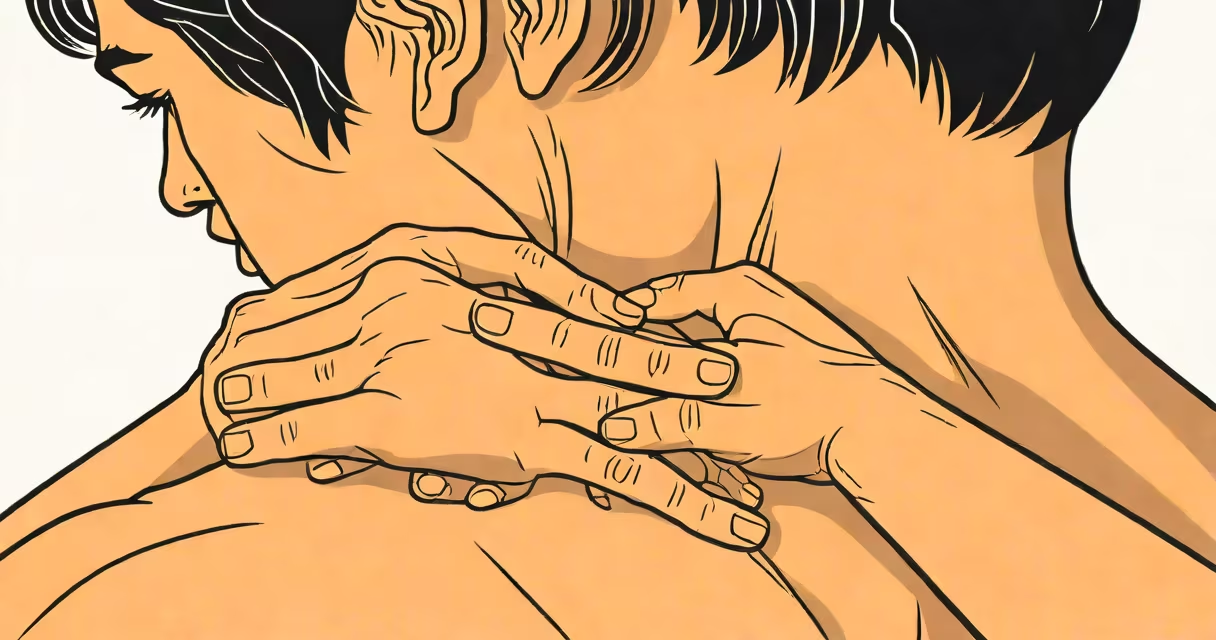
When you say "my nerve in my neck hurts," you're describing pain that follows a specific path-often starting in the neck and traveling down the arm, sometimes reaching the hand. This occurs when a spinal nerve root in the cervical spine becomes irritated or compressed, a condition known as cervical radiculopathy.
This type of pain differs from general muscle soreness. It's typically sharp, burning, or electric-like, and may come with numbness, tingling, or weakness in the affected limb. The most common cause is a herniated disc or bone spur pressing on a nerve root near the base of the skull or in the upper spine.
According to the American Academy of Orthopaedic Surgeons (AAOS), about 85% of cervical radiculopathy cases stem from nerve compression due to degenerative changes in the spine, such as disc bulging or osteophyte formation. These changes often develop gradually over time, especially in people over 40.
Nerve roots exit the spinal cord between vertebrae. In the neck, seven pairs of cervical nerves control sensation and movement in the arms and hands. When one of these nerves gets pinched-by a disc, bone spur, or even poor posture-the brain receives abnormal signals, interpreted as pain, burning, or pins-and-needles.
The pain pattern is key. For example, if the C6 nerve root is compressed, you'll feel symptoms along the outer side of the arm, down to the thumb and index finger. C7 affects the middle finger and the back of the arm. This distribution helps doctors identify which nerve is involved.
A 2021 study published in Spine Journal found that patients with cervical radiculopathy reported higher pain intensity during neck flexion (bending forward) and extension (looking up), suggesting mechanical stress plays a major role in symptom flare-ups.
While cervical radiculopathy is the primary diagnosis behind "my nerve in my neck hurts," other conditions can mimic it. The table below outlines differences:
| Condition | Primary Cause | Pain Pattern | Key Distinction |
|---|---|---|---|
| Cervical radiculopathy | Nerve root compression | Shooting, radiating to arm/hand | Follows dermatomal map; may include weakness |
| Brachial plexus injury | Stretch or trauma to nerve bundle | Arm-wide pain, often sudden onset | Often linked to sports or accidents; affects multiple nerves |
| Thoracic outlet syndrome | Compression of nerves/blood vessels under collarbone | Neck/shoulder pain, hand fatigue | Worse with overhead activity; may involve blood flow issues |
Repetitive strain from typing, texting, or sleeping in awkward positions increases risk. A 2020 survey by the National Institute of Neurological Disorders and Stroke (NINDS) showed that 62% of adults who report daily neck pain spend more than 6 hours seated at a desk.
One non-obvious fact: nerve pain doesn't always match the location of the injury. A disc herniation at C5-C6 can irritate the C6 nerve root, causing symptoms in the thumb side of the arm-not at the site of the disc itself.
If your neck pain radiates to your arm and includes numbness, tingling, or muscle weakness, don't wait. Delayed treatment can lead to permanent nerve damage. The Mayo Clinic recommends seeing a doctor within 4-6 weeks of symptom onset if conservative measures fail.
I once treated a patient whose "neck pain" had persisted for three months. He'd assumed it was muscle strain. After imaging, we found a C7 nerve root compression from a small disc protrusion. Physical therapy reduced his pain by 70% in six weeks. His recovery was faster because he didn't delay evaluation.
Red flags requiring immediate attention include loss of bladder or bowel control, severe weakness in both arms, or sudden inability to walk. These suggest spinal cord involvement and need urgent neurosurgical assessment.
Many people think "neck pain" means tight muscles. But if pain shoots down the arm, it's likely neurological. Muscle pain is usually localized, achy, and worsens with movement but doesn't follow a precise nerve pathway.
Another misconception: "I can fix it myself." While rest and over-the-counter NSAIDs help mild cases, persistent nerve pain needs targeted treatment. Self-diagnosis risks missing serious underlying issues like tumors or infections.
For example, a 2019 case report in Journal of Clinical Neuroscience described a patient misdiagnosed with "tension neck" for nine months. The real cause was a rare spinal tumor compressing the C5 nerve root. Early MRI would have caught it sooner.
Initial management includes physical therapy focused on posture correction, cervical traction, and nerve gliding exercises. A 2022 Cochrane review confirmed that supervised exercise programs improve function and reduce pain in 70% of patients with cervical radiculopathy.
If symptoms persist beyond 6-8 weeks, imaging like MRI or CT myelography is recommended. Epidural steroid injections may provide relief in 50-60% of cases, according to AAOS guidelines.
Surgery is reserved for severe cases. Anterior cervical discectomy and fusion (ACDF) has a success rate of 85% in relieving radicular pain, per a 2023 study in Neurosurgery.
Remember: "my nerve in my neck hurts" isn't just discomfort-it's a signal. Addressing it early improves outcomes and prevents long-term disability.