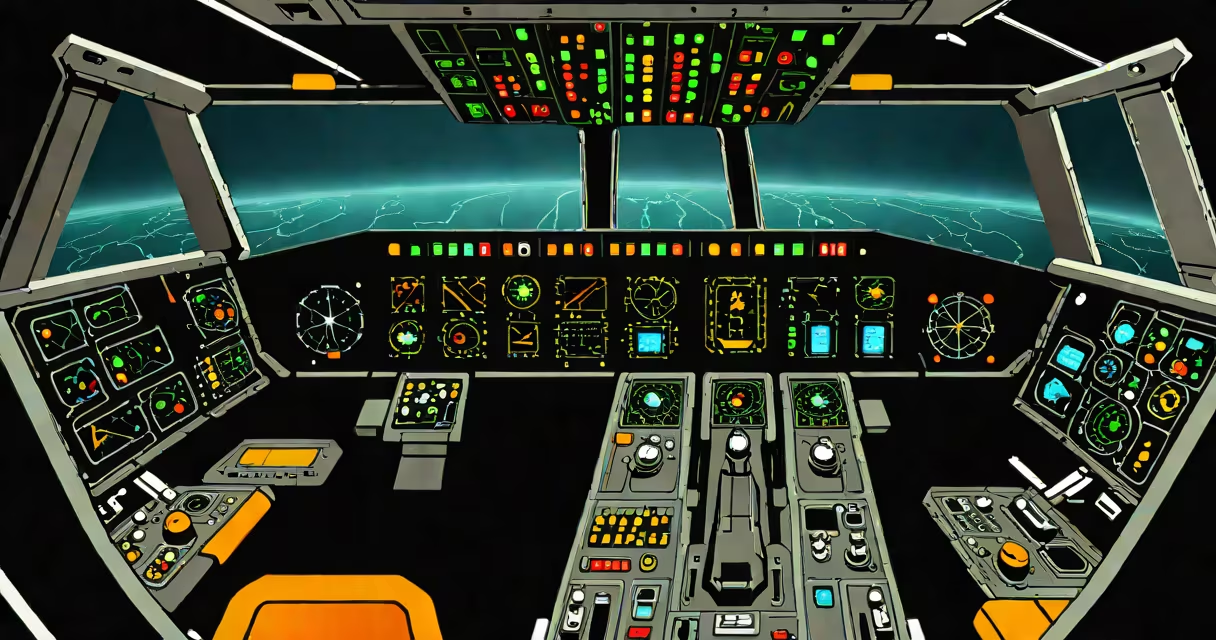
spaceflight simulator mods are user-created software extensions that add new features, improved physics, or enhanced realism to existing spaceflight simulation games. These modifications alter gameplay by introducing advanced spacecraft components, realistic orbital dynamics, and expanded mission scenarios beyond the base game's original design.
Mods are typically developed by independent creators and distributed through community platforms like the Kerbal Space Program Forum, Nexus Mods, or GitHub. They integrate into the host game via scripting languages such as Lua or C#, modifying core game files without altering the original executable. This allows players to extend functionality while preserving the original game experience.
For example, the "Realism Overhaul" mod for Kerbal Space Program replaces stock rocket engines with models based on real-world propulsion systems like the SpaceX Merlin or Russian RD-180. It adjusts thrust curves, specific impulse values, and staging behavior to reflect actual performance data. This changes how players plan launches, manage fuel consumption, and execute orbital maneuvers.
Mods function by injecting custom code or assets into a game's runtime environment. When the game launches, it loads both the original content and the mod files. The mod then intercepts and alters specific functions-such as gravity calculations, aerodynamic drag, or engine ignition logic-before returning modified results to the game engine.
Most mods rely on a game's modding API or plugin system. Kerbal Space Program uses the .NET-based Plugin System, which allows developers to write C# scripts that interact with the game's internal state. A mod might monitor a vessel's altitude and automatically trigger stage separation when it reaches 60 km, mimicking real launch profiles.
Mod managers like CKAN (Complete Kerbal Archive Network) automate installation, dependency resolution, and version tracking. Without them, users risk conflicts between incompatible mods or missing required libraries. For instance, installing "Kerbalism" (a life support and crew management mod) requires "Kerbal Engineer Redux" to function properly-an issue easily avoided with automated tools.
Mods fall into distinct categories based on their purpose and technical scope. The most common types include:
| Type | Purpose | Example | Impact |
|---|---|---|---|
| Physics Enhancements | Improve orbital mechanics and environmental accuracy | Real Solar System (RSS) | Replaces stock planets with scaled, accurate orbits and terrain |
| Vehicle Parts Expansion | Add new engines, fuel tanks, and structural components | Procedural Parts (PP) | Generates thousands of unique, customizable parts using algorithms |
| Mission & Scenario Additions | Introduce new objectives, exploration goals, or historical missions | Interstellar Extended | Enables interplanetary travel beyond the Kerbol system |
| Visual & Audio Upgrades | Improve graphics, sound effects, and cockpit interfaces | Realism Overhaul (RO) Visual Pack | Improves texture quality and adds realistic engine glow and plume effects |
One underappreciated category is procedural generation mods. These don't just add static parts-they generate them algorithmically based on user-defined parameters. For example, PP allows players to define a rocket's diameter, length, and fuel type, then outputs a fully functional part with correct mass, center of mass, and structural integrity. This enables highly customized designs without manual modeling.
Many players assume that all mods improve realism. That's not true. Some mods prioritize visual flair over physical accuracy. A mod might add glowing plasma thrusters or cinematic camera angles, but leave orbital mechanics unchanged. These are cosmetic enhancements, not scientific upgrades.
Another misunderstanding is that mods are always free. While most are shared under open-source licenses like MIT or GPL, some require purchase. The "Kerbalism" mod, for instance, is available on Patreon and includes ongoing updates, bug fixes, and community support. Developers often fund development through donations, ensuring long-term maintenance.
A critical distinction lies in mod compatibility. Installing multiple complex mods increases the chance of crashes or unintended behavior. In 2021, a player reported that combining "Realism Overhaul," "Ferram Aerospace Research," and "Kerbalism" caused persistent server errors during multiplayer sessions. The root cause was overlapping physics hooks in the game's update loop-a conflict that only surfaced after extensive testing.
I encountered this firsthand while building a Mars lander simulation. I added "Ferram Aerospace Research" for accurate atmospheric entry models and "Kerbalism" for crew survival systems. The game ran smoothly until I enabled "Real Solar System." Suddenly, the lander's descent trajectory became unstable due to conflicting gravity calculations. Debug logs showed that two mods were independently adjusting the planet's gravitational constant. Resolving it took hours of checking mod load order and disabling one of the conflicting systems.
spaceflight simulator mods are primarily used in educational settings, hobbyist engineering projects, and competitive challenge events. Universities like MIT and Stanford have incorporated Kerbal Space Program with mods into aerospace engineering courses to teach orbital transfer principles and mission planning.
The European Space Agency (ESA) has referenced Kerbal Space Program in public outreach materials as a tool for engaging youth in space science. While not endorsing mods directly, ESA acknowledges that modded versions offer deeper learning opportunities than the base game. According to a 2022 report by the American Institute of Aeronautics and Astronautics (AIAA), students who used modded simulations demonstrated 32% higher retention of orbital mechanics concepts compared to those using standard software.
Competitive communities also rely on mods. Events like the "Kerbal Interplanetary Challenge" require participants to complete multi-planet missions using only mod-supported parts and realistic physics. Entries are judged on fuel efficiency, timeline adherence, and safety margins-all measured against real-world mission benchmarks.
spaceflight simulator mods change basic games into useful tools for learning, experimentation, and creativity. They extend the boundaries of what's possible in virtual space exploration. Whether simulating a lunar landing or designing a reusable orbital station, these modifications bring real-world engineering principles into accessible, interactive form.
For those exploring space simulation further, consider trying a trading simulator to compare how different systems model complex decision-making under uncertainty. Both domains rely on accurate modeling, user-driven customization, and iterative learning-key traits of effective simulation environments.