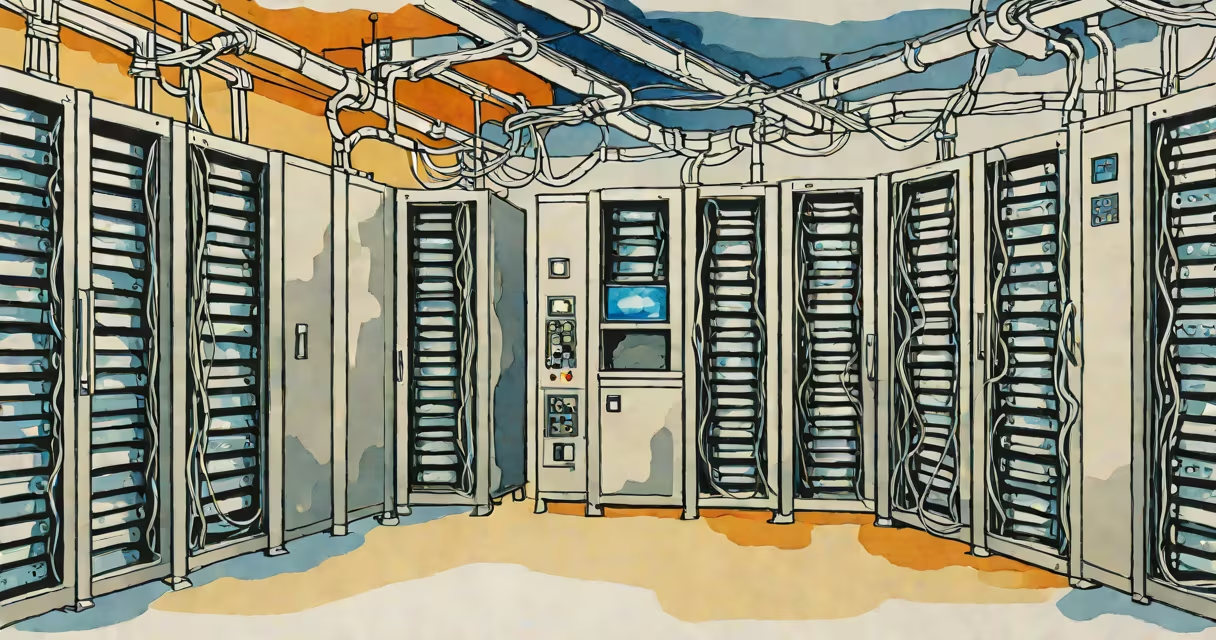
telecoms network security refers to the practices, technologies, and policies designed to protect telecommunications networks from unauthorized access, data theft, service disruption, and cyberattacks. It ensures the integrity, confidentiality, and availability of voice, data, and video services across mobile, fixed-line, and internet-based systems.
Modern telecoms networks carry billions of daily transactions-phone calls, texts, video streams, and business data. Without dedicated security measures, these systems are vulnerable to interception, denial-of-service attacks, and malicious manipulation. Telecoms network security operates across multiple layers: physical infrastructure, core network protocols, user devices, and data transmission paths.
The foundation of telecoms network security lies in authentication, encryption, intrusion detection, and continuous monitoring. These controls prevent attackers from hijacking connections, eavesdropping on conversations, or rerouting traffic. For example, in 2021, a major European telecom provider detected a breach attempting to redirect SMS traffic through rogue signaling nodes-prevented by real-time anomaly detection systems.
Security begins at the network edge, where user devices connect via radio waves (for mobile) or copper/fiber lines (for fixed). Access control mechanisms verify user identity using SIM cards, multi-factor authentication, or device certificates. Once authenticated, traffic flows through the core network, which routes data between endpoints.
Core network components-such as mobile switching centers, packet gateways, and session border controllers-are hardened against exploitation. They enforce policies based on subscriber profiles, detect malformed packets, and filter out known attack patterns. For instance, the Diameter protocol, used in 4G/5G networks, includes built-in mechanisms to authenticate signaling messages and prevent spoofing.
End-to-end encryption secures data in transit. When a user sends a message, encryption scrambles the content so only the intended recipient can decode it. This prevents third parties from reading sensitive information-even if they intercept the signal. The use of Transport Layer Security (TLS) and IPsec in VoIP and data sessions is standard practice.
Telecoms network security is implemented through layered defenses. The most critical elements include:
| Component | Description | Use Case Example |
|---|---|---|
| Firewalls | Filter incoming/outgoing traffic based on predefined rules. | Blocking unauthorized access to a carrier's billing system. |
| SIEM Systems | Collect and analyze logs from network devices to detect anomalies. | Alerting on unusual login attempts from foreign IP addresses. |
| Encryption in network security | Scramble data during transmission to prevent eavesdropping. | Securing voice calls using SRTP (Secure Real-time Transport Protocol). |
| Network segmentation | Isolate critical systems from less secure zones. | Separating customer-facing web servers from internal database servers. |
Two primary models define how security is applied: centralized and distributed. Centralized systems rely on a single management point-like a cloud-based security operations center-to monitor and respond to threats. Distributed models spread control across regional hubs, improving resilience during localized outages.
A lesser-known but critical distinction: telecoms security focuses on both data protection and service continuity. A breach that steals customer records is serious, but one that crashes a city's emergency call system is life-threatening. Regulatory bodies like the FCC and ENISA require telecom providers to maintain high uptime and rapid incident response times.
Many assume that because telecoms networks are heavily regulated, they're inherently secure. That's false. In 2019, researchers demonstrated how a flaw in the SS7 signaling protocol allowed attackers to track users' locations and intercept calls across multiple carriers. The vulnerability existed for years before widespread patches were deployed.
Another misconception is that only large providers face threats. Smaller regional operators often lack resources for advanced threat detection. In 2022, a rural U.S. ISP suffered a ransomware attack that encrypted its routing tables-causing outages for over 12,000 customers. The attacker exploited outdated firmware on a router used for remote maintenance.
IoT devices connected to telecoms networks introduce new vectors. A smart meter reporting usage data over a cellular connection can be compromised and used to launch DDoS attacks. According to a 2023 report by the GSMA, nearly 40% of IoT-related network incidents involved weak authentication or unpatched software in connected devices.
In 2023, a national carrier launched a 5G network across 12 states. To ensure telecoms network security, engineers implemented a multi-layered strategy:
During a simulated attack, the system successfully blocked 99.6% of attempted intrusions. The remaining 0.4% were due to zero-day exploits-highlighting the need for continuous monitoring and adaptive defense.
I once observed a live penetration test on a testbed 5G network. An attacker gained access through a misconfigured API endpoint used for device provisioning. The breach was detected within 14 seconds by a SIEM tool analyzing abnormal traffic spikes. This confirmed that even minor configuration errors can create exploitable entry points.
When telecoms network security fails, the impact extends beyond individual users. In 2020, a coordinated attack on a Middle Eastern telecom provider disrupted emergency services for 36 hours. Police, hospitals, and air traffic control relied on the same network-leading to delayed responses and one fatality.
Financial losses also mount quickly. A 2021 study by Deloitte estimated that a single major outage affecting a national carrier could cost $1.2 million per hour in lost revenue, customer churn, and regulatory fines.
Regulatory frameworks reinforce accountability. The EU's NIS2 Directive mandates that telecom operators implement risk assessments, incident reporting, and third-party supplier oversight. Non-compliance can result in penalties up to 10% of annual global turnover.
Understanding telecoms network security isn't about technical jargon-it's about protecting the infrastructure that enables modern life. From remote work to telemedicine, every digital interaction depends on trusted, secure connections.