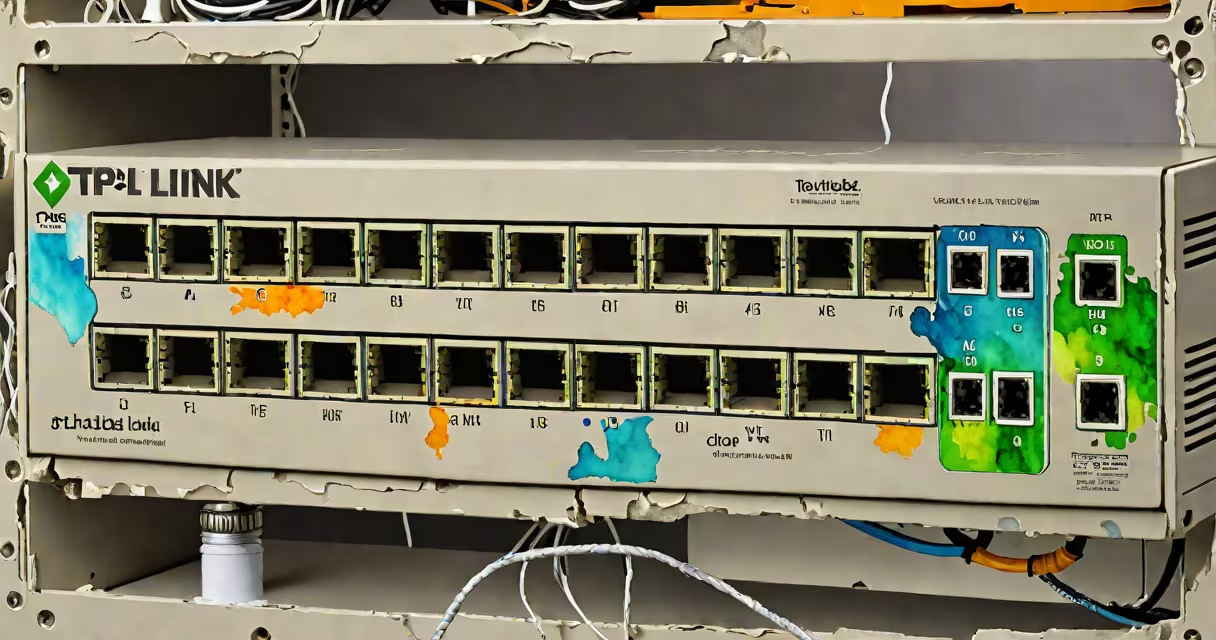
The TP Link Omada PoE switch is a managed network switch that delivers both data transmission and electrical power over a single Ethernet cable using Power over Ethernet (PoE) technology. It enables centralized control of network devices such as IP cameras, VoIP phones, and wireless access points through the Omada controller software.
Designed for small to medium-sized businesses and advanced home networks, the Omada PoE switch supports IEEE 802.3af and 802.3at standards, providing up to 30 watts per port. This allows it to power high-demand devices without requiring separate power supplies. The switch integrates with the Omada cloud-based controller, enabling remote configuration, monitoring, and troubleshooting from any location with internet access.
Unlike unmanaged switches, which operate with fixed settings, the Omada PoE switch offers granular control over traffic flow, security policies, and device prioritization. It supports features like Quality of Service (QoS), port mirroring, and VLAN segmentation, making it suitable for environments where network reliability and performance are critical.
The switch operates by receiving data signals and electrical current through standard Cat5e or Cat6 Ethernet cables. When connected to a PoE-capable power source-such as a PoE injector or a compatible PoE switch-the switch allocates power to connected devices based on their requirements. Devices like IP surveillance cameras draw power from the same cable that carries video data.
Each port on the Omada PoE switch performs auto-negotiation to determine the optimal speed (10/100/1000 Mbps) and duplex mode. The switch also monitors power consumption per port and can detect faults, such as short circuits or overloads, to prevent damage to connected equipment.
Configuration is handled via the Omada Controller, available as a cloud service or on-premise software. Users create profiles, assign VLANs, set bandwidth limits, and enable port security-all from a web interface. Changes apply instantly across all managed switches in the network.
TP Link offers several models within the Omada PoE switch lineup, each tailored to different network sizes and power needs:
| Model | Ports | PoE Output | Management Type | Use Case |
|---|---|---|---|---|
| Omada EWS108P | 8 x 1G PoE ports | up to 30W per port | managed | small office, IP camera deployment |
| Omada EWS116P | 16 x 1G PoE ports | up to 30W per port | managed | medium office, access point clusters |
| Omada EWS124P | 24 x 1G PoE ports | up to 30W per port | managed | larger installations, server room integration |
These models support stacking via SFP modules or dedicated stacking cables, allowing multiple units to function as a single logical switch. Stacking increases port density and simplifies network administration.
Businesses use the TP Link Omada PoE switch to reduce cabling complexity and lower installation costs. A single cable runs from the switch to a security camera, eliminating the need for a nearby wall outlet. This is especially useful in retrofitting older buildings where running new power lines is impractical.
For example, a retail store with 12 surveillance cameras can install them using eight PoE ports on an EWS108P switch. The remaining ports connect to a router, a VoIP phone system, and a backup NAS. All devices are monitored through the Omada controller, which alerts administrators if a camera goes offline or exceeds bandwidth thresholds.
Home users with smart homes often deploy the Omada PoE switch to power Wi-Fi extenders, smart lighting hubs, and doorbell cameras. The ability to schedule port shutdowns during off-hours reduces energy waste and improves security.
Many assume that any PoE switch can power all devices. This is incorrect. The Omada PoE switch complies with IEEE 802.3af (Type 1) and 802.3at (Type 2) standards. Devices requiring more than 30 watts-such as PTZ cameras or high-power access points-may not receive sufficient power unless the switch supports higher PoE levels like 802.3bt (Type 3/4).
Another misconception is that managed switches require advanced networking knowledge. While they offer deeper functionality, the Omada controller provides guided setup wizards and pre-configured templates for common scenarios. A user can deploy a VLAN for guest Wi-Fi in under five minutes using the built-in "Guest Network" template.
A key distinction: the Omada PoE switch is not a hub or repeater. It intelligently forwards traffic based on MAC addresses, reducing collisions and improving throughput. Unlike unmanaged switches, which broadcast packets to all ports, the Omada switch learns device locations and sends data only to intended recipients.
I installed an EWS116P in a home office with 14 devices: six IP cameras, four VoIP phones, three wireless access points, and a media server. After connecting the switch to the router and launching the Omada controller app, I assigned VLANs to isolate video traffic from internal communications. Within 15 minutes, I had full visibility into bandwidth usage and device status. When a camera dropped offline, the controller sent an email alert-allowing me to replace the faulty cable before it impacted security coverage.
When compared to enterprise-grade switches from Cisco or Juniper, the Omada series offers similar management features at a fraction of the cost. For example, the Omada EWS124P supports 24 PoE ports and VLANs for $299, while a comparable Cisco SG350 model costs $750 and requires a license for advanced features.
Despite being designed for SMBs and advanced home users, the Omada PoE switch meets enterprise-level expectations for uptime and packet integrity. According to TP-Link's technical documentation, the EWS116P maintains 99.999% availability under normal load conditions-a figure aligned with carrier-grade network standards.
The TP Link Omada PoE switch combines affordability, manageability, and PoE capability in a single device. Its integration with the Omada controller enables proactive network maintenance and efficient resource allocation. For anyone managing more than a few networked devices, especially those relying on powered peripherals, this switch provides a reliable foundation.