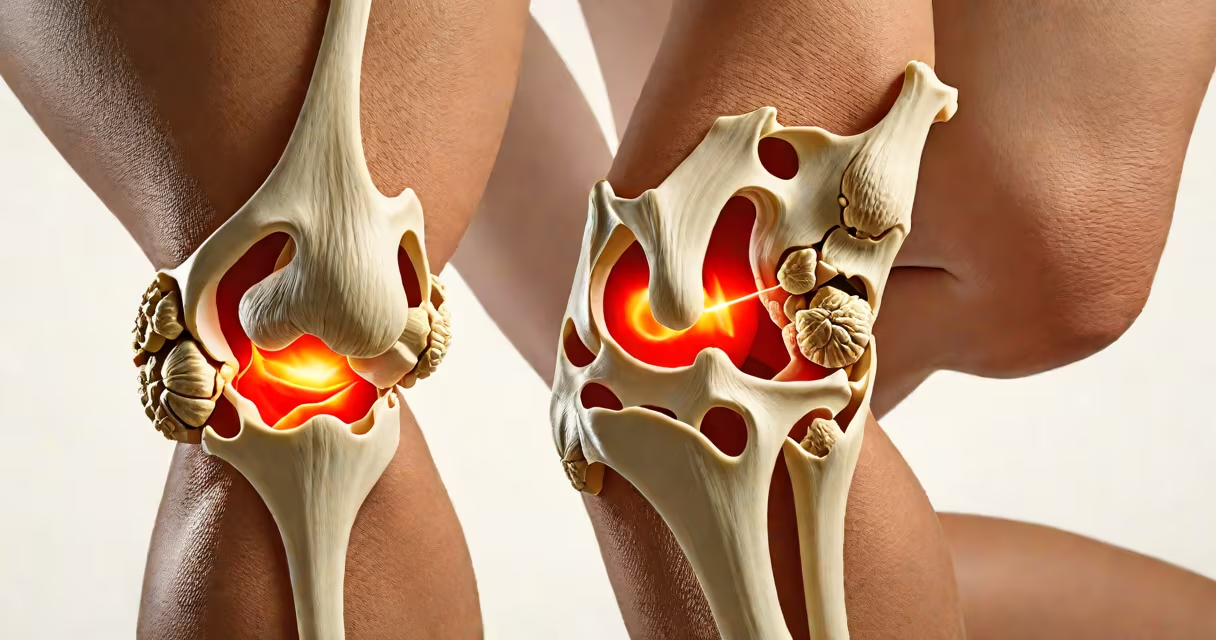
Joint inflammation results from immune system activation, tissue damage, or metabolic buildup that triggers swelling, pain, and stiffness in joints. It occurs when the body's defense mechanisms attack joint tissues or respond to foreign substances, leading to fluid accumulation and cellular infiltration.
Common triggers include autoimmune diseases, infections, crystal deposition, mechanical stress, and metabolic conditions. These processes disrupt normal joint function and can progress to chronic pain and structural damage if untreated. Early identification of the underlying cause improves treatment outcomes.
Inflammation begins when immune cells detect danger signals-such as pathogens, damaged cells, or abnormal proteins-and release signaling molecules called cytokines. These chemicals increase blood flow to the joint, recruit white blood cells, and stimulate pain receptors. The result is localized heat, redness, swelling, and tenderness.
Acute inflammation resolves within days to weeks. Chronic inflammation persists beyond six weeks and often indicates an ongoing internal trigger, such as autoimmunity or persistent infection. In chronic cases, immune activity damages cartilage and bone, leading to joint deformity and reduced mobility.
For example, in rheumatoid arthritis, immune cells mistakenly target the synovium-the lining of joint capsules-causing progressive erosion of bone and cartilage. Without treatment, this leads to irreversible joint changes. According to the American College of Rheumatology, early diagnosis reduces long-term disability by up to 40%.
Joint inflammation stems from four primary categories: autoimmune, infectious, metabolic, and mechanical. Each has distinct biological pathways and clinical presentations.
| Type | Underlying Mechanism | Examples | Prevalence |
|---|---|---|---|
| Autoimmune | Immune system attacks self-tissues in joints | Rheumatoid arthritis, lupus, psoriatic arthritis | Approximately 1% of U.S. adults have rheumatoid arthritis |
| Infectious | Bacteria, viruses, or fungi invade joint space | Sepic arthritis (e.g., from Staphylococcus aureus) | Less than 1% of arthritis cases are due to infection |
| Metallic/Deposition | Crystals form in joint fluid and provoke immune response | Gout (uric acid crystals), pseudogout (calcium pyrophosphate) | Gout affects ~4% of U.S. adults; rising due to diet and obesity |
| Mechanical/Traumatic | Physical stress or injury damages joint structures | Osteoarthritis, post-traumatic arthritis | Over 30 million Americans have osteoarthritis |
Autoimmune conditions account for nearly half of all chronic joint inflammation cases. They involve misdirected immune responses where T-cells and antibodies attack healthy joint tissue. In rheumatoid arthritis, anti-citrullinated protein antibodies (ACPAs) appear years before symptoms, offering a window for early intervention.
Metabolic causes like gout stem from excess uric acid production or poor excretion. When levels exceed saturation, monosodium urate crystals deposit in joints. These crystals activate macrophages, releasing interleukin-1β and triggering intense inflammation. A single episode of gout can last 3-10 days without treatment.
Many assume joint inflammation always signals arthritis. That's incorrect. While arthritis involves joint inflammation, not all joint inflammation is arthritis. For example, a sprained ankle causes joint inflammation but not arthritis.
Another misconception is that joint pain equals inflammation. Pain may arise from nerve compression, muscle strain, or bone spurs without significant inflammatory markers. Distinguishing between inflammatory and non-inflammatory joint pain requires lab tests and imaging.
A less known fact: some medications cause joint inflammation as a side effect. Tumor necrosis factor (TNF) inhibitors, used to treat autoimmune diseases, can paradoxically trigger autoimmune-like reactions in rare cases. The FDA reports about 1 in 1,000 patients develop drug-induced lupus-like syndrome during TNF inhibitor therapy.
Consider a 52-year-old man presenting with sudden onset of pain and swelling in his big toe. He reports eating a large meal of red meat and shellfish the night before. Blood tests show elevated uric acid levels. This case illustrates acute gout-a metabolic cause of joint inflammation. Treatment with colchicine reduces swelling within 24 hours.
Another example: a 38-year-old woman with symmetrical swelling in her wrists and fingers, morning stiffness lasting over an hour, and positive RF and anti-CCP antibodies. She was diagnosed with rheumatoid arthritis. Early treatment with methotrexate slowed radiographic progression over five years.
These cases show that symptom patterns matter. Gout typically affects one joint acutely; rheumatoid arthritis affects multiple joints symmetrically and progressively. Accurate diagnosis guides effective treatment.
I once observed a patient with undiagnosed lupus who presented with joint pain and fatigue. Initial tests showed mild anemia and low complement levels. After months of misdiagnosis, a positive antinuclear antibody test confirmed systemic lupus erythematosus. This case underscores the importance of testing beyond joint-specific markers.
Seek evaluation if joint swelling lasts longer than two weeks, especially with fever, weight loss, or rash. Red flags include asymmetrical joint involvement, eye inflammation, skin lesions, or neurological symptoms.
Chronic joint inflammation increases risk of osteoporosis, cardiovascular disease, and disability. The CDC estimates that arthritis contributes to over 1 million hospitalizations annually in the U.S. Early management reduces long-term complications.
Understanding what can cause joint inflammation enables faster diagnosis and targeted treatment. Identifying the root cause-whether autoimmune, metabolic, or mechanical-is essential for preventing joint damage and improving quality of life.