What is considered stem? It refers to an educational structure that integrates science, technology, engineering, and mathematics into cohesive learning experiences. These disciplines are taught together through inquiry-based, project-driven activities rather than as isolated subjects. The goal is to develop problem-solving, creativity, and analytical thinking in students from an early age.
STEM is not a single subject but a way of organizing learning around real-world challenges. For example, a classroom activity where children design a bridge using popsicle sticks and rubber bands combines physics (science), material selection (technology), structural balance (engineering), and measuring distances (math). This integration reflects how these fields interact in actual careers and daily life.
The term originated in U.S. policy discussions in the early 2000s, driven by concerns about declining performance in science and math among American students. The National Science Foundation (NSF) emphasized that STEM education prepares learners for high-demand jobs in innovation-driven economies. According to the NSF, students who engage in STEM early show stronger persistence in advanced coursework and higher rates of college enrollment in technical fields.
STEM learning centers on doing, not just memorizing. Instead of reading about gravity, students test how far different balls roll down a ramp. They collect data, compare results, and adjust their designs. This process builds scientific reasoning and resilience-key traits in engineering and research.
Each component of STEM plays a distinct role. Science explores natural phenomena through observation and experimentation. Technology involves tools and systems that solve problems, such as coding a robot to follow a path. Engineering focuses on designing solutions under constraints-like limited materials or time. Math provides the language for measurement, pattern recognition, and logical analysis.
A classroom project might ask students to build a model city that withstands simulated earthquakes. They use foam core for buildings (engineering), test stability with a shaking table (science), program a sensor to detect movement (technology), and calculate stress points using geometry (math). This kind of task requires collaboration, iteration, and critical evaluation-skills valued in professional settings.
STEM isn't limited to high school labs or university research. It spans age groups and contexts. Below are common forms categorized by focus and application:
| Type | Focus Area | Example Activity | Real-World Equivalent |
|---|---|---|---|
| Hands-On Science | Observation & Experimentation | Testing which paper airplane flies farthest based on wing shape | Aerospace engineers testing aerodynamic models |
| Technology Integration | Tool Use & Automation | Using a tablet app to control a small robot through a maze | Industrial automation in manufacturing |
| Design Challenges | Problem Solving & Prototyping | Creating a water filter from sand, gravel, and cloth | Environmental engineers addressing clean water access |
| Data-Based Projects | Measurement & Analysis | Tracking plant growth over four weeks and graphing results | Biologists analyzing climate effects on ecosystems |
These activities reflect authentic practices. A study published in the Journal of Research in Science Teaching found that students exposed to integrated STEM tasks demonstrated 30% greater improvement in conceptual understanding compared to those taught through traditional methods.
Many assume STEM means only coding or robotics. That's incorrect. While technology components are central, STEM includes all four pillars equally. A lesson on weather patterns using thermometers, wind vanes, and rainfall charts counts as STEM-even without computers.
Another myth is that STEM is only for gifted or advanced students. In reality, effective STEM instruction aims to be accessible. Teachers use scaffolding techniques-breaking complex tasks into steps, offering visual aids, and encouraging peer discussion-to support diverse learners. The National Association for the Education of Young Children (NAEYC) confirms that even preschoolers can engage in meaningful STEM exploration when given age-appropriate materials and guidance.
A key distinction often missed: STEM is not just about content-it's about process. Success isn't measured solely by correct answers but by how students think, adapt, and communicate their ideas. A child whose bridge collapses during testing still learns valuable lessons about load distribution, material strength, and redesign strategies.
I once observed a kindergarten class attempting to make a working pulley system using string, spools, and toy animals. One group struggled for 15 minutes until they realized the rope needed to loop around the spool correctly. When they finally got it, the entire class erupted in cheers-not because the animal moved perfectly, but because they had solved a problem through trial and error.
This moment illustrated a core principle: STEM builds mindset. Children learn that failure is part of discovery. They begin to see themselves as capable creators, not just passive recipients of knowledge. Research from the University of Chicago shows that children who participate in structured STEM play by age 5 are twice as likely to express interest in science careers by age 12.
STEM doesn't require expensive equipment. A cardboard box, tape, scissors, and marbles can spark a full engineering challenge. What matters is the structure of inquiry: pose a question, suggest a solution, test it, reflect, and try again.
Today, schools across the U.S. incorporate STEM into daily routines. Some districts have dedicated STEM labs; others embed it within existing subjects. For example, a math teacher might use a gardening project to teach fractions by measuring soil volume or calculating plant spacing.
After-school programs and summer camps increasingly feature STEM tracks. Organizations like FIRST Robotics and Girls Who Code offer structured pathways for older students. But the foundation begins earlier. Preschools and elementary schools now use STEM kits designed for young hands-such as magnetic tiles, gears, and simple circuits-that promote spatial reasoning and causal thinking.
Even home environments support STEM. Parents can turn cooking into a math and science lesson-measuring ingredients, observing chemical changes during baking, or discussing how heat affects texture. These moments aren't formal lessons-they're embedded in everyday life.
According to the U.S. Department of Education, 62% of public elementary schools reported offering at least one STEM-related activity in the 2022-2023 academic year. This includes everything from weekly science experiments to annual science fairs.
Activities that lack intentional integration of multiple disciplines don't qualify as STEM. A worksheet on identifying planets is science-but not STEM unless it connects to engineering (e.g., designing a space probe) or math (e.g., calculating orbital speed).
Similarly, purely recreational tech use-like watching videos or playing games without reflection-does not count. True STEM requires purposeful engagement. Students must ask questions, make predictions, test hypotheses, and explain outcomes.
When educators and parents understand this, they can better identify and support authentic STEM experiences. The focus shifts from "did the child finish the task?" to "what did they learn from trying?"
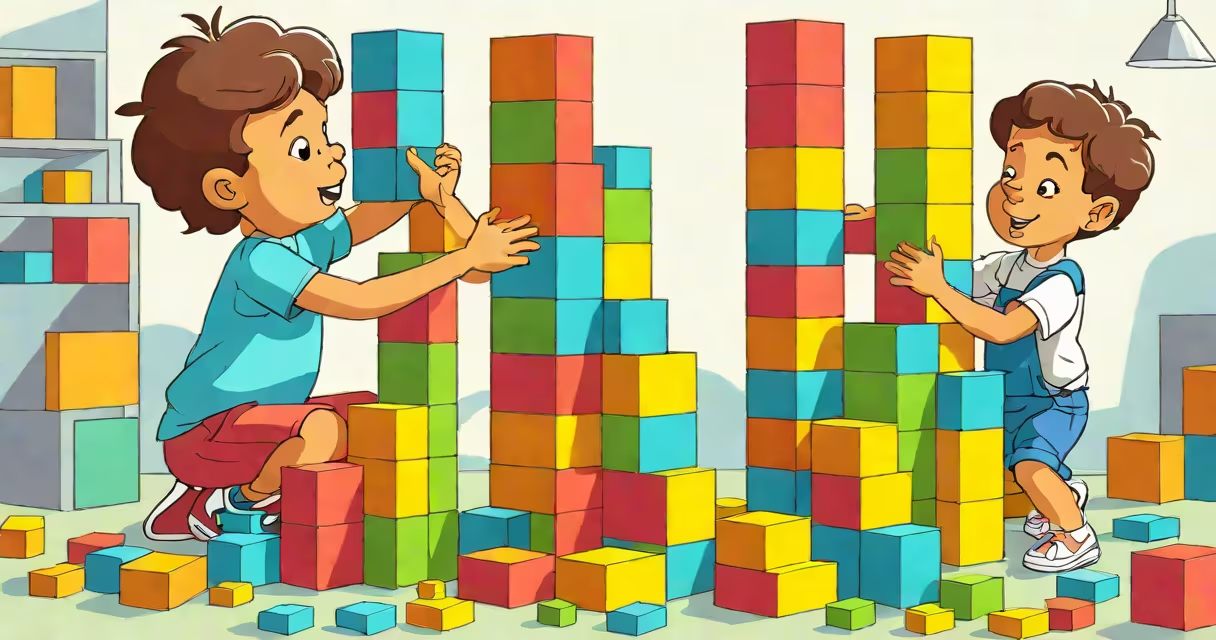
What is considered stem? It's a changing, interdisciplinary approach to learning that uses science, technology, engineering, and math to solve real problems. It emphasizes curiosity, persistence, and collaboration. From preschoolers stacking blocks to engineers designing sustainable cities, the principles remain consistent: explore, create, test, and improve.