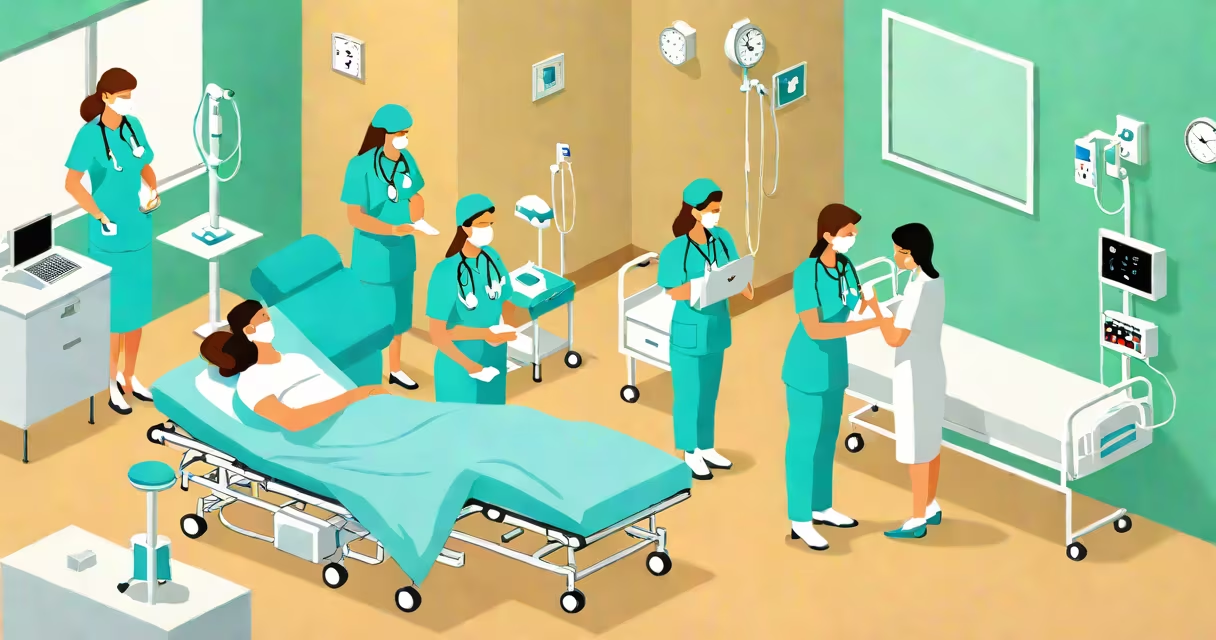
"RN nurse" means registered nurse-a licensed healthcare professional trained to assess patients, administer medications, perform procedures, and coordinate care in hospitals, clinics, and home settings. The title "registered nurse" signifies successful completion of state board certification and licensure.
Registered nurses work under medical supervision but often make independent clinical decisions. They may specialize in areas like pediatrics, critical care, or mental health. Their duties include monitoring important signs, updating medical records, educating patients on treatment plans, and collaborating with doctors and therapists.
The term "RN" appears frequently in job postings, medical charts, and hospital signage. It's not a nickname or slang-it's a formal designation. Misunderstandings arise when people confuse RNs with LPNs (licensed practical nurses) or CNAs (certified nursing assistants), who have different scopes of practice and training levels.
RNs begin their day with patient rounds, reviewing medical histories and current treatment goals. They interpret lab results, adjust IV drip rates, and respond to changes in patient condition. For example, if a post-op patient's blood pressure drops, the RN checks for bleeding, reviews medication logs, and notifies the physician within minutes.
They also manage care teams. In a busy ER, an RN might assign tasks to a CNA, supervise a student nurse, and ensure that all equipment is calibrated. During emergencies, RNs lead resuscitation efforts using protocols like ACLS (Advanced Cardiac Life Support).
Every state in the U.S. requires RNs to pass the NCLEX-RN exam administered by the National Council of State Boards of Nursing (NCSBN). This standardized test covers pharmacology, patient safety, and clinical judgment. The passing rate for first-time test-takers was 88% in 2023, according to NCSBN's annual report.
RNs differ by education level, specialization, and work environment. The most common paths include:
| Type | Education Requirement | Common Work Settings | Example Role |
|---|---|---|---|
| Associate Degree RN (ADN) | 2-year program | Emergency rooms, long-term care | Administering vaccines in a community clinic |
| Bachelor of Science in Nursing (BSN) | 4-year degree | Hospitals, public health agencies | Leading infection control initiatives in a pediatric ward |
| Advanced Practice Registered Nurse (APRN) | Master's or doctoral degree | Specialty clinics, private practice | Diagnosing and treating chronic conditions as a nurse practitioner |
While ADN-prepared RNs can work in many settings, BSN graduates are increasingly preferred for leadership roles. The American Association of Colleges of Nursing (AACN) reports that 60% of new RN hires in 2023 were BSN-prepared, up from 40% in 2015.
Hospitals employ the highest number of RNs. According to the U.S. Bureau of Labor Statistics (BLS), 58% of RNs work in hospitals, where they handle acute care, surgical recovery, and intensive monitoring. In outpatient clinics, RNs focus on preventive care, chronic disease management, and patient education.
Long-term care facilities rely on RNs to oversee medication administration and manage complex cases involving dementia or multiple comorbidities. In schools, RNs screen students for vision and hearing issues, respond to asthma attacks, and maintain immunization records.
A non-obvious distinction: RNs are not always bedside caregivers. Many work in administrative roles-developing staffing schedules, auditing compliance reports, or designing patient safety programs. A former ICU RN I met in 2022 transitioned into a quality assurance role at a regional health system, where she analyzed readmission rates and recommended process improvements that reduced patient falls by 22% over six months.
People often mistake "RN" for a job title rather than a credential. You don't "become" an RN-you earn it through education and licensing. An RN cannot legally perform surgery or prescribe controlled substances without additional certification. Only nurse practitioners (NPs), who hold advanced degrees, can do so in most states.
Another error: assuming all nurses are RNs. LPNs and CNAs provide essential support but lack the authority to assess patients independently or start IV lines. In 2022, the National Council of State Boards of Nursing reported that 12% of nursing-related errors involved misclassification of staff roles-such as assigning an LPN to administer chemotherapy, which is outside their scope.
"RN" is not interchangeable with "nurse." A nurse is anyone in the profession. An RN is a subset. Saying "I'm a nurse" doesn't specify your responsibilities or qualifications. When someone says "I'm an RN," they're stating they've passed the NCLEX-RN and are licensed to practice.
Most RNs enter the field through an associate or bachelor's degree program. After completing coursework, students take the NCLEX-RN exam. Passing scores vary by state, but the minimum is typically 75 out of 100 scaled points.
For those seeking advancement, transitioning from an ADN to a BSN is common. This path allows access to leadership positions and higher pay. According to the BLS, median annual earnings for RNs were $81,220 in 2023, with BSN-prepared nurses earning 10-15% more on average.
Understanding "what is rn nurse mean" clarifies both the role and its boundaries. RNs are essential to patient outcomes, but their impact depends on accurate recognition of their training, responsibilities, and legal scope.